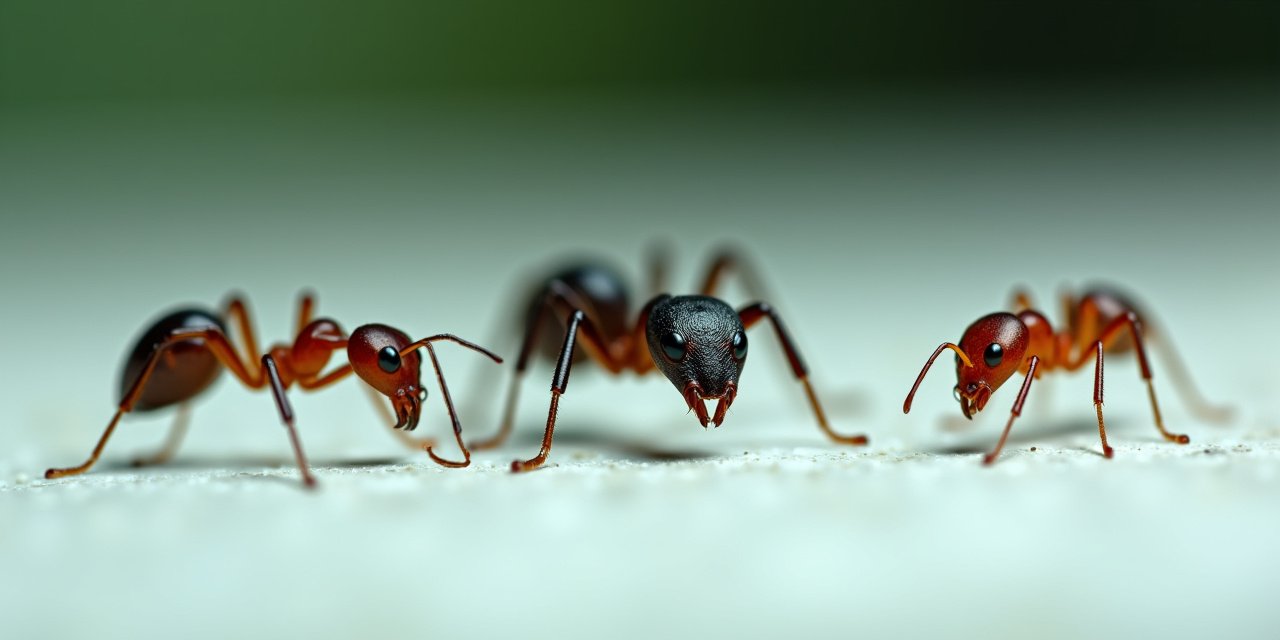
Most homeowners buy a can of spray, hit the trail, and assume the problem is solved. Two weeks later, the ants are back. The reason isn't usually that the product failed. It's that they used the wrong product for the species they were dealing with.
Three ant species account for the vast majority of home infestations in Westchester County: the pavement ant, the carpenter ant, and the odorous house ant. They look different, nest in different locations, cause different levels of damage, and respond to completely different treatment approaches. Here's how to tell them apart before you spend a dollar on treatment.
The Quick Visual Test
Start with size. It's the fastest differentiator you have without a magnifying glass.
If the ant is noticeably large (bigger than a watermelon seed), you're almost certainly looking at a carpenter ant. They run 1/4 to 3/4 of an inch, which is huge compared to almost every other house ant species. They're usually black or very dark reddish-black, and when you look at the thorax from the side, it has an evenly curved, dome-like profile.
If the ant is tiny (small enough to walk through a crack in your window seal without noticing), you're dealing with either a pavement ant or an odorous house ant. Both run around 1/8 of an inch or smaller. Here's the trick: crush one. Odorous house ants release a distinctive rotten-coconut smell when crushed. Pavement ants don't. That smell test is the fastest way to separate these two without a microscope.
For a more complete breakdown, see the comparison widget below.
| Characteristic | Pavement Ant | Carpenter Ant | Odorous House Ant |
|---|---|---|---|
| Size | ~1/8 inch | 1/4 – 3/4 inch | ~1/16 – 1/8 inch |
| Color | Dark brown to black; head/thorax striations | Black or dark reddish-black | Dark brown to black |
| ID Trick | Parallel lines (grooves) on head and thorax | Evenly rounded thorax; large size | Rotten coconut smell when crushed |
| Nest Location | Under slabs, driveways, foundation edges | Moist or decayed wood (inside walls, sills) | Wall voids, under floors, soil near structure |
| Damage Risk | Low: nuisance/food contamination | High: structural wood damage over time | Low: nuisance/food contamination |
| Colony Size | 3,000 – 5,000 workers | 2,000 – 10,000+ workers | 10,000 – 100,000+ workers (multiple queens) |
| Treatment Approach | Granular bait near entry points; perimeter spray | Protein bait; void injection; moisture correction | Sweet gel bait placed carefully; colony elimination |
Pavement Ants: The Foundation Intruders
Pavement ants are everywhere in Westchester. They get their name from where they nest: under driveways, sidewalks, and concrete slabs. You'll often notice a small pile of fine sand or soil pushed up through an expansion joint or a crack in your driveway. That's a pavement ant colony at work.
They come inside foraging, not to nest. Kitchen counters, baseboards near the foundation, and any crumbs near a door are common sighting spots. Because they trail in from outside, treatment that doesn't address the outdoor colony will fail repeatedly. Learn more about targeted pavement ant treatment options specific to this nesting pattern.
One important note: pavement ants can trail into homes year-round but are most active from spring through fall. If you're seeing them in winter coming through the basement floor, the colony may have moved indoors under the slab, which is harder to treat without professional help.
Carpenter Ants: The One That Actually Damages Your House
Of the three species here, carpenter ants are the only one that can cause real structural damage. They don't eat wood. They excavate it to build galleries for nesting. Over months and years, that can compromise sills, joists, and framing, especially in older homes with any moisture history.
You'll typically find evidence before you see the ants themselves: coarse sawdust-like debris called frass near baseboards, in crawlspaces, or under window frames. The ants themselves are most active at night, which is why people often don't see them during the day even with an active infestation.
Our guide to how to identify carpenter ants goes deeper on the frass clues and gallery patterns. And if you're wondering whether what you have might actually be termites, the carpenter ants vs termites comparison is worth reading before you call anyone.
Treatment for carpenter ants is fundamentally different from other ant species. Sweet baits do almost nothing. Professionals target them with protein-based bait, direct void injection, and in many cases, moisture remediation to make the nesting site inhospitable. Read more about carpenter ant control approaches.
Odorous House Ants: The Persistent Ones
These are the ants that drive people crazy. Colonies can contain tens of thousands of workers with multiple queens. You kill one trail, another appears two feet away. You bait them, they stop taking the bait and find a new food source. They're small, fast, and extremely adaptable.
The coconut smell when crushed is the definitive field test. It's not subtle: if you smell it, you know. They nest in wall voids, under flooring, in soil near the foundation, and occasionally inside insulation. Colonies can split and relocate when disturbed, which is why aggressive spraying sometimes makes the problem worse by triggering "budding" (the colony splitting into two or more new colonies elsewhere in the house).
Treatment requires patience. Slow-acting gel baits placed on their active trails, left undisturbed, carried back to the colony. If you've been spraying contact insecticides and wondering why the ants keep coming back, this is often the reason.
Not sure which ant you have?
A licensed tech can ID the species on-site and recommend the right treatment approach the first time.
Call (877) 938-6799Why Getting the ID Right Matters Before Treatment
Here's the practical issue: the wrong bait for the wrong species wastes 2 to 3 weeks while the infestation grows. Sweet baits are useless on carpenter ants. Contact sprays disrupt odorous house ant colonies and cause budding. Granular products applied outdoors do nothing for a carpenter ant nesting in your rim joist.
Professional pest control services start with a species confirmation before placing anything. It's not just about being thorough. The treatment protocols are genuinely different. If you're planning to try a DIY approach, at least make sure you've correctly identified the species first. Use the comparison table above, the smell test, and the size test together.
If you're dealing with an ant problem that keeps coming back, a professional inspection will tell you more in 20 minutes than most homeowners figure out in a month of trial and error.
Frequently Asked Questions
How can I tell carpenter ants from other ants without a magnifying glass?
Size is the fastest indicator. Carpenter ants are noticeably large (1/4 to 3/4 of an inch) and uniformly black or dark with an evenly rounded thorax when viewed from the side. If the ant you're looking at is bigger than a watermelon seed, it's almost certainly a carpenter ant. Pavement ants and odorous house ants are both small enough to mistake for crumbs at first glance.
Do odorous house ants actually smell like coconut?
Yes, consistently. Crush one between your fingers or on a hard surface and you'll notice a distinct rotten-coconut or bleu-cheese smell. It comes from a compound called methyl ketone released from their glands. It's the most reliable field ID test for this species. No other common house ant produces it.
Are pavement ants dangerous?
Pavement ants don't damage wood and don't carry known disease pathogens in any meaningful way. They're a nuisance pest: they contaminate food, trail across countertops, and can enter in large numbers. Their main risk is food contamination. They can sting if handled, but it's mild. The bigger concern is that pavement ant colonies near your foundation can be persistent year after year.
Can I use the same ant bait for all three species?
No, and this is exactly why ID matters before treatment. Carpenter ants prefer protein-based baits and void injections. Sweet sugar baits are largely ineffective on them. Odorous house ants will take sweet baits readily but can be finicky and abandon bait if the formula is wrong. Pavement ants respond well to both granular bait near entry points and perimeter sprays. Using a sweet bait on a carpenter ant problem will waste weeks.
I have multiple ant types in my house at once. Is that common?
It happens, especially in older Westchester homes with a mix of basement, crawlspace, and landscaped yard. Pavement ants can trail in through the foundation while odorous house ants come in through a wall void. A professional inspection will differentiate them and treat each appropriately. Trying to address them with one product typically fails on at least one species.