"Are these termites?" is one of the most common pest calls exterminators get in Westchester every April and May. Homeowners find winged insects near a window, or sawdust-like material near a door frame, or what looks like damaged wood in the basement. The first question is always whether it's the more serious (and more expensive) of the two culprits.
The two pests are often confused because they share several surface-level similarities: both produce winged swarmers in spring, both damage wood, both are most active in warm humid weather, and both are most commonly discovered in the same locations: basements, door frames, window sills, and wood near moisture. That's where the similarity ends.
Getting the identification right before calling anyone matters financially. Termite treatment in Westchester typically costs $1,200 to $3,500. Carpenter ant treatment runs $250 to $600. Committing to a termite treatment for what turns out to be carpenter ants wastes money and doesn't solve the actual problem. This guide gives you the tools to make that call yourself, and to know when you still need a professional to confirm it.
Body Shape: The Fastest ID Method
You don't need wings or frass to identify these insects. Body shape alone is usually enough if you can get a clear look at one specimen.
Carpenter ants have the classic ant body plan: three distinctly segmented body sections (head, thorax, abdomen), with a sharply pinched waist between the thorax and abdomen. This constriction (called the petiole) is obvious even to the naked eye. The antennae are elbowed: there's a clear bend or joint partway along each antenna, making them look like a bent arm. Workers range from 1/4 to 3/4 inch, which makes them noticeably larger than most other ant species you'll encounter indoors, but size overlaps with termite swarmers in some cases.
Termites have a distinctly different silhouette. The body is rectangular and thick. There's no pinched waist anywhere. If you look at a termite from above, it's a continuous cigar shape from head to abdomen with no visible narrowing in the middle. The antennae are straight and bead-like, a series of small round segments without any bend. Up close, this difference from an ant's elbowed antennae is unmistakable. Termite workers are pale, almost translucent white. If you find pale, soft-bodied insects inside wood or under debris, those are termite workers, not carpenter ants (which are black or dark brown).
Wings: The Swarmer Test
If you're seeing winged specimens (which is typical in April and May), wings add a second, highly reliable identification method.
Both species produce winged reproductive forms called swarmers (also called alates). Both have two pairs of wings. That's where the similarity ends.
Ant swarmers have wings of unequal length: the front pair is noticeably longer than the rear pair. This size difference is clearly visible when the wings are laid flat. The wings have a distinct venation pattern and are attached relatively firmly. Ant swarmers don't shed their wings easily, so you typically find dead or dying winged ants still attached to their wings.
Termite swarmers have four wings of nearly equal length. Both pairs are almost identical in size. This is one of the clearest visual cues. More importantly, termite wings snap off at a fracture point near the base almost immediately after the swarmer lands. This is why finding a pile of shed wings on a windowsill (with no insects attached) is one of the most diagnostic signs of termites specifically. The ant wings don't do this. If you're looking at a pile of wings with no bodies, that's termites.
Collect a few wings or specimens in a sealed bag. Photograph them against a white surface. Either one will let a licensed inspector confirm identification immediately.
Frass: What the Evidence Left Behind Tells You
Frass is the material insects push out of the wood they're working in. For pest ID, it's often the most accessible evidence. You'll find it before you find the insects themselves.
Carpenter ant frass looks like coarse sawdust, tan or off-white, sometimes mixed with dead insect parts and other debris from the gallery. It's pushed out through small round exit holes in wood and accumulates in piles below the entry point. If you see what looks like a small pile of sawdust at the base of a door frame, under a window, or near a wooden beam in the basement, and you didn't do any woodworking recently, that's the primary sign of carpenter ants. The key detail: it's dry, fibrous, and looks genuinely like sawdust or pencil shavings.
Subterranean termite evidence is completely different. You won't find sawdust. Subterranean termites consume wood, then pack their galleries with soil and fecal material. The evidence they leave is mud: mud tubes running from soil to wood, and mud-packed galleries inside structural wood. Subterranean termites almost never push material out of the wood in a visible pile. If you see sawdust, you're not looking at subterranean termites.
Drywood termite frass (much less common in Westchester, more typical in the Southeast and Southwest) looks entirely different from both: tiny hexagonal pellets, uniform in shape, about the size of a grain of sand or pepper. If you see tiny uniform pellets below a wood surface, that's drywood termite frass. This is uncommon in Westchester but worth knowing for completeness.
The fast read: sawdust = carpenter ants; mud tubes = subterranean termites; tiny uniform pellets = drywood termites.
Damage Patterns: Inside the Wood
If you have access to damaged wood (through an inspection, a renovation, or visible structural damage), the interior tells you immediately which insect you're dealing with.
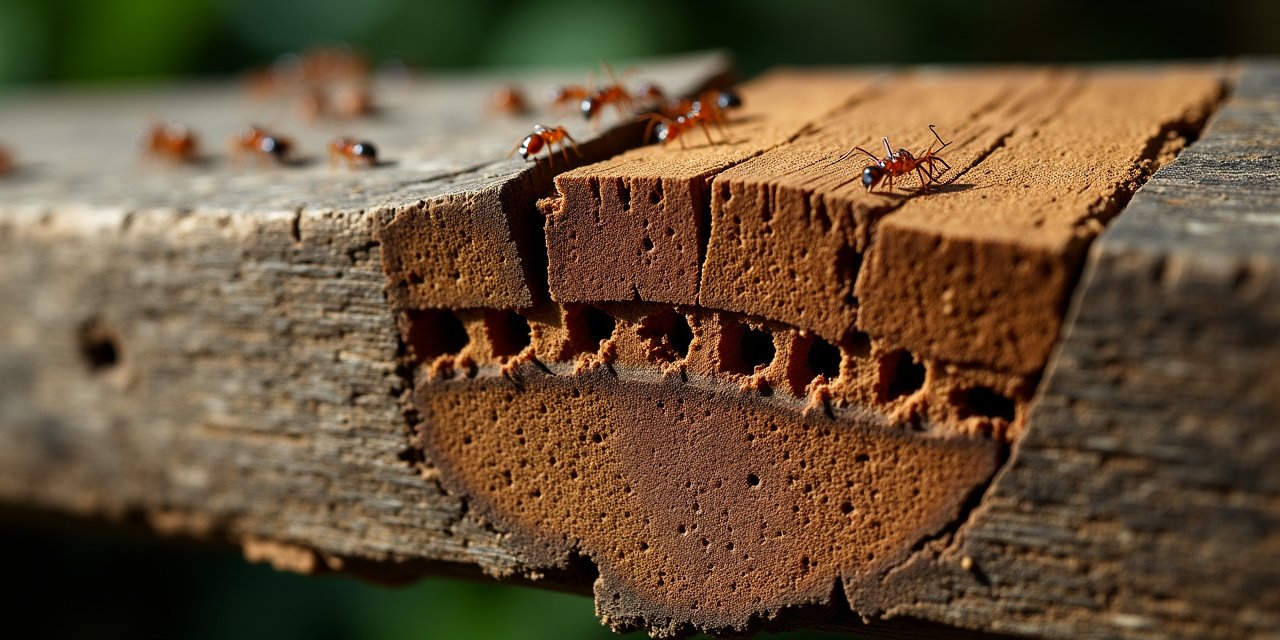
Carpenter ant galleries are clean. The tunnels are smooth-walled, almost sanded in appearance, running primarily with the grain of the wood. There's no soil, no mud, and no debris packed inside. Workers push all material out through exit holes. The wood itself isn't consumed; carpenter ants excavate galleries to live in, not to eat. They preferentially attack wood that's already compromised by moisture: soft, punky, or partially rotted wood is easier to excavate. Finding moisture damage alongside a carpenter ant infestation is very common.
Subterranean termite damage is packed with mud and debris. The galleries are lined with soil, fecal material, and chewed wood fiber. Termites need high moisture to survive, and they maintain it by packing their tunnels. Severely damaged wood has a characteristic "layered" or "laminated" look. Subterranean termites eat across the grain as well as with it, leaving intact hard grain lines surrounded by hollow, consumed wood. The result looks like pages of a waterlogged book. Probe a suspicious area with a screwdriver: if it goes in easily and you find mud-packed channels inside, that's subterranean termite activity.
Both species typically begin in wood that has elevated moisture content. A persistent roof leak, a plumbing leak inside a wall, or chronic condensation in a crawl space creates the conditions both pests exploit first. Finding the moisture source isn't just good pest management. It's structural maintenance.
Professional Pest ID · Scarsdale & Westchester
Still not sure what you have? Get a professional ID before spending on treatment.
Pristine Pest connects Westchester homeowners with licensed inspectors who can positively identify the pest and recommend the right treatment approach. No obligation to book.
Call (877) 938-6799Where and When You'll Find Them
Both species swarm April through May in Westchester, which is the primary source of confusion. Beyond swarming season, their behavior and visibility differ considerably.
Carpenter ants are nocturnal foragers. The workers you see trailing along baseboards, across kitchen counters, or outside on your siding are almost always scouting for food or returning to the nest. They do this primarily after dark. If you're seeing carpenter ants indoors during the day, the nest is likely inside the structure rather than outdoors. Workers from an interior satellite colony don't need to forage far and are active around the clock. A good diagnostic test: tap on wall sections near where you find workers and listen for a crinkling or rustling sound. That's workers responding to the vibration and indicates a gallery in the wall void.
On warm winter days (a January thaw, a warm February afternoon) winged carpenter ants from an interior nest sometimes emerge prematurely. Finding winged ants indoors in winter is strongly suggestive of an established interior nest.
Subterranean termites are almost entirely invisible. Workers live underground or inside wood and avoid light. The swarmers you see in spring are typically your only direct visual encounter with the colony. After swarming, you're back to looking for indirect evidence: mud tubes, damaged wood, hollow sounds when tapping structural members. Termite activity is silent; there's no sound a homeowner can detect through walls. The only exception is that severely damaged floor joists may produce a hollow, soft sound when the floor is walked on.
Why Getting the ID Right Saves You Money
The treatment approaches for carpenter ants and termites share almost nothing in common. Using the wrong one doesn't just waste money. It lets the actual infestation continue while you wait to figure out why the treatment didn't work.
Carpenter ant treatment targets the carpenter ant parent colony (almost always an outdoor nest in a dead tree, stump, or moisture-damaged log) and any satellite colonies inside the structure. Treatment involves perimeter exterior spray targeting foraging workers and nest sites, plus interior bait or void injection for established satellite colonies. Cost range: $250–$600 in Westchester.
Termite treatment requires either an in-ground Sentricon bait system or a liquid termiticide barrier trenched around the entire foundation perimeter, plus annual monitoring. These are licensed, professional-only applications requiring specialized equipment and commercial-grade products. Cost range: $1,200–$3,500 in Westchester, plus annual monitoring fees.
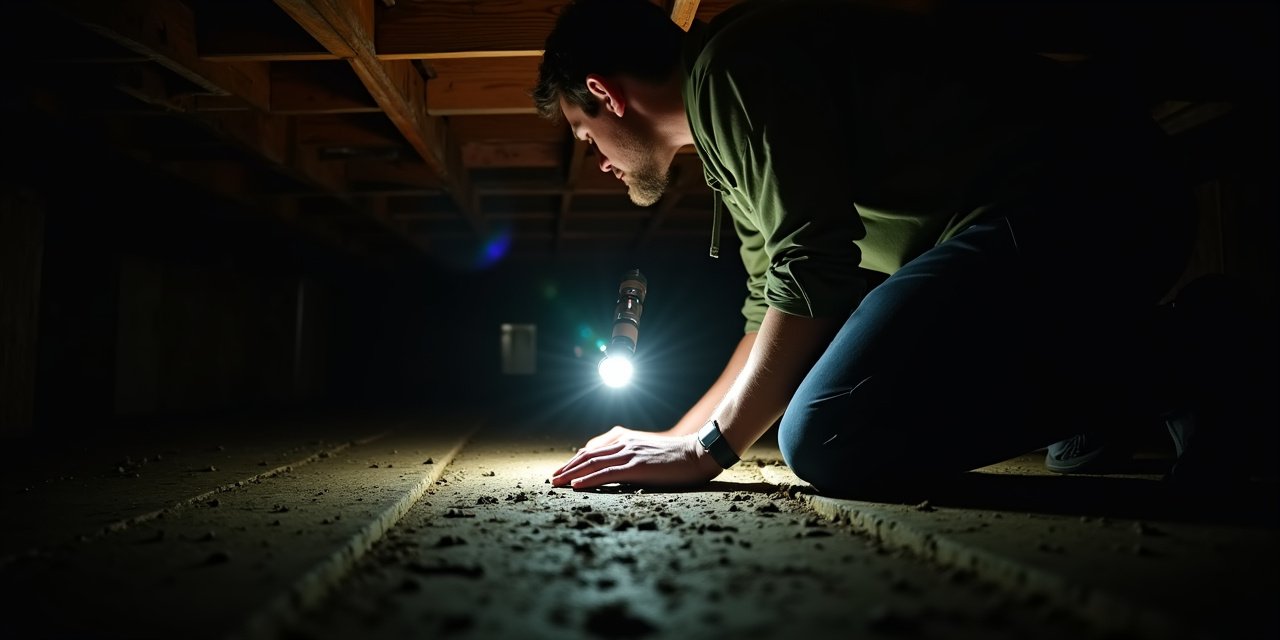
A licensed inspection (typically $75 to $150, with some companies offering free inspections as part of a quote) gives you positive identification and a professional assessment of the scope of activity before you commit to any treatment direction. For any wood-damaging pest in a home this valuable, that's the right first step.
Related Reading
- Termites Are Swarming Right Now. What Scarsdale Homeowners Should Do
- How Bad Is Carpenter Ant Damage? What Westchester Homeowners Actually Find
- Termite Protection Services · Scarsdale & Westchester
- Carpenter Ant Removal · Scarsdale & Westchester
Frequently Asked Questions
I found shed wings on my windowsill. Termites or ants?
If the wings are all roughly the same length and appeared in a pile with no bodies attached, termites are the much more likely culprit. Termite swarmers shed their wings almost immediately after landing. The wings snap off at a fracture point near the base, which is why you find piles of wings with no insects present. Ant wings don't detach nearly as readily. Collect a few wings in a sealed bag and show them to a licensed inspector to confirm.
Can I treat carpenter ants myself with store products?
Consumer sprays will kill carpenter ants you spray directly, but they won't treat the problem. Carpenter ant infestations are driven by a parent colony (almost always located outdoors in dead wood) and satellite colonies inside your home's wall voids. Killing workers with a spray doesn't address either colony. Effective treatment requires locating the parent colony and treating it, plus treating any interior satellite locations with bait or void injection.
How fast do termites cause structural damage?
A colony of 60,000 workers can consume roughly one linear foot of a 2x4 in five months. Established colonies frequently exceed 500,000 workers, dramatically accelerating the timeline. The more important issue is that all of this damage happens invisibly inside structural members until it's severe. Annual inspection matters more than worrying about the exact damage rate.
Do carpenter ants and termites swarm at the same time?
Yes. Both swarm on warm, humid days in April and May in Westchester, which is exactly why this question comes up so often. If you're seeing winged insects indoors in spring, it could be either species. The antennae shape, waist profile, and wing symmetry are your fastest diagnostic tools. When in doubt, capture specimens and have them identified by a licensed professional before committing to a treatment direction.
What if I genuinely can't tell which one I have?
Get a professional identification before spending money on treatment. Most licensed pest control companies in Westchester offer inspections for $75 to $150, and some offer free inspections as part of a quote process. The cost of a misidentified treatment is far higher than the inspection fee. Capture specimens in a sealed container or photograph them closely and bring that to the inspection. A competent inspector will identify the species on sight.