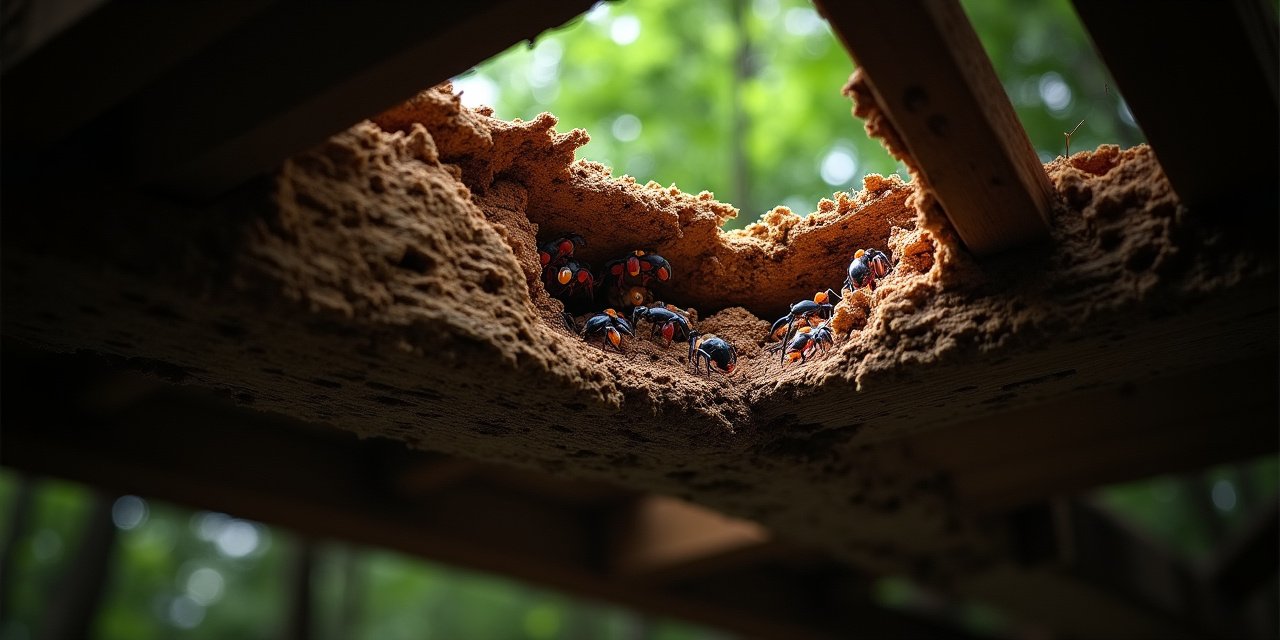
Unlike termites, carpenter ants don't eat wood. They excavate it. They're looking for a place to nest, and they prefer wood that's already been softened by moisture. That's an important distinction because it means there are almost always two problems present: the ant colony and a moisture issue that made the wood attractive in the first place. Fix only one and the other comes back.
By the time you find the evidence (a pile of coarse sawdust below a door frame, a soft spot when you press on a windowsill, the faint sound of rustling when you tap a wall section), the gallery system inside is usually more extensive than what the surface evidence suggests. Carpenter ants excavate outward from an initial entry point into a branching network of tunnels, and they do it quietly. Years can pass between the start of an infestation and the point where a homeowner notices anything.
Here's what to look for, where to look, how to assess the severity, and what professional treatment actually involves.
The Physical Evidence: What to Look For
Frass is typically the first thing homeowners find. Carpenter ant frass looks like coarse sawdust: tan to off-white, fibrous, often mixed with dead ant body parts and other debris from inside the gallery. It's pushed out through small round exit holes (roughly 3–5mm in diameter) and accumulates in a loose pile below the entry point. If you see what looks like a small pile of sawdust at the base of a door frame, below a window sill, near a wooden beam in the basement, or at the base of a porch post (and you haven't done any woodworking nearby), that's the primary field sign of carpenter ants. The frass pile may be small or large depending on how long activity has been ongoing and how recently the hole was cleared by workers.
The entry holes themselves are clean and round. Carpenter ants don't leave the ragged, torn appearance of a wood-boring beetle exit. The opening is smooth-edged, about the diameter of a pencil, and may be partially obscured if the frass hasn't been removed recently. Finding one hole almost always means there are more nearby. Carpenter ants create multiple access points into an established gallery system.
Sound is a useful diagnostic. When you tap firmly on a wall section, wooden beam, or door frame that contains an active gallery, the workers inside respond to the vibration: you may hear a faint rustling or crinkling sound from within the wood. This is one of the most reliable field tests available to a homeowner. Work your way along suspected areas with a screwdriver handle, tapping every few inches, and listen for that response. It's subtle but distinct from the sound of a hollow wall cavity.
Swarmers (the winged reproductive ants that emerge in spring) are another indicator. Finding winged ants indoors in April or May, particularly if they're emerging from a wall void or window frame rather than entering through a door, strongly suggests an established interior satellite colony. Finding winged carpenter ants indoors in winter (during a January thaw, for example) is an even stronger indicator. Outdoor colonies go dormant, but interior satellite colonies remain active year-round in a heated home.
What the Galleries Look Like Inside
If you've ever opened up a wall, replaced a rotted sill plate, or had a contractor do renovation work near a carpenter ant infestation, the galleries are immediately recognizable, and striking in their cleanliness.
Carpenter ant galleries have smooth, almost sanded walls. The tunnels follow the wood grain for much of their length, then branch and expand into chambers. The walls feel polished. There's no debris, mud, or soil inside. Everything gets pushed out through the exit holes. This cleanliness is the single most reliable way to distinguish carpenter ant damage from subterranean termite damage, which is always packed with mud and soil.
The galleries branch. What starts as a single entry point expands into a network: a main corridor with side chambers, often following areas of greater moisture content in the wood. A mature colony creates a gallery system that can span several feet of framing in a wall void, moving from the initial soft-wood entry point into increasingly sound wood as the colony grows and needs more space. The volume of wood removed by a large established colony over several years is substantial.
There are no larvae, eggs, or stored food inside the galleries: these are in separate, protected chambers. What you'll find if you open an active gallery is workers, and possibly pupae (the white, encased pre-adult stage) in the deeper chambers. The workers will respond immediately to the disturbance, streaming out of the opening.
One key observation: if you find mud packed into the tunnels, that's not carpenter ant damage. That's subterranean termite damage, which requires a completely different treatment approach. The two are sometimes found in the same property, but never in the same gallery system. See our full comparison guide if you're not certain which you're dealing with.
Where Carpenter Ant Damage Occurs in Westchester Homes
Carpenter ants don't attack random wood. They target wood with elevated moisture content: either currently wet or historically wet and now soft. In Westchester's housing stock, which includes many pre-1960s homes with original framing, specific locations come up repeatedly.
Around roof leaks: Any area beneath a past or present roof leak accumulates moisture in the framing over time. Rafters, sheathing, and the top plates of exterior walls below a slow leak are common carpenter ant entry points, often not discovered until a renovation exposes the damage.
Window and door frames: Window frames that don't drain properly, or that have failed caulking on the exterior allowing water infiltration, develop soft wood in the sill and lower jamb. This is one of the most common locations for frass discovery: a small pile at the base of a window frame on the interior side.
Basement rim joists: The rim joist (the framing member that runs along the top of the foundation wall) is chronically exposed to moisture from below (concrete wicking) and sometimes from exterior splash-back. Pre-1980s homes rarely have insulated or sealed rim joists, leaving this framing perpetually at elevated moisture content. Carpenter ant activity in rim joists is very common in older Westchester homes and often goes undetected for years because the area isn't regularly inspected.
Deck support posts and stringers: Wood in direct or near-direct soil contact, or wood that collects standing water in joints and end grain, deteriorates quickly and attracts carpenter ants within a few years. Deck posts set in soil or in deteriorating post bases are a frequent outdoor parent colony location.
Wood siding behind gutters: Gutters that overflow or that have gaps at the back channel water down the face of the fascia and behind the siding. The fascia board, frieze, and top courses of wood siding in these areas are commonly compromised. Look for staining on exterior wood below gutter seams as an indicator.
Attached garages: The wall shared between an attached garage and the main house is a common satellite colony location. Garage doors and concrete floors create moisture and condensation conditions that affect the adjacent framing. Carpenter ants established in the garage wall void have direct access to the main structure's wall cavities.
Assessing How Bad It Is
You don't need to open up a wall to get a rough sense of how extensive the damage is. A few simple field tests give you useful information before a professional inspection.
The screwdriver probe is the most practical. Push the tip of a standard flathead screwdriver into wood in the suspect area with moderate hand pressure (not hammered, just firm hand pressure). Sound, healthy framing lumber resists this completely. Wood compromised by carpenter ant galleries yields under this pressure, allowing the tip to penetrate. Wood severely damaged by carpenter ants may collapse or crumble at the surface under minimal pressure. This test works through paint and finished surfaces to an extent, though it's most useful on exposed framing in basements, attics, and crawl spaces.
The tap test complements the probe. Knock firmly on suspected framing with a screwdriver handle or your knuckles. Sound wood produces a solid, dull thud. Hollow or gallery-damaged wood produces a distinctly different sound: higher-pitched, echoing, hollow. Work along the length of a joist or stud, and you'll often hear the point where the sound changes from solid to compromised.
If structural members (floor joists, load-bearing wall studs, ridge beams, or sill plates) produce soft or hollow results from these tests, the next call is to a contractor, not just a pest control company. Moisture damage and carpenter ant excavation together in structural members can compromise the load-bearing capacity of those members. A structural assessment determines whether sistering, sister-joisting, or other repair is needed before or concurrent with pest treatment. Pest treatment alone doesn't restore wood that's been removed. It only stops further removal.
The most important thing to understand about severity assessment: pest treatment does not repair structural damage. The colony is eliminated, but the galleries remain. Addressing the moisture source that originally attracted the ants is equally important. A colony eliminated from a location with persistent moisture can be re-established from the outdoor parent colony the following season.
Carpenter Ant Assessment · Scarsdale & Westchester
Found frass, soft wood, or rustling walls? Get a professional assessment before the gallery extends further.
Pristine Pest connects Westchester homeowners with licensed carpenter ant treatment providers who locate and treat both the outdoor parent colony and any interior satellite colonies. Call to schedule.
Call (877) 938-6799What Professional Treatment Involves
Effective carpenter ant treatment requires addressing two things that DIY products typically reach only one of: the interior satellite colony and the outdoor parent colony. Missing either one produces incomplete results. The colony re-establishes from the untreated source within a season.
A professional inspection starts by confirming the species (large black ants in Westchester are carpenter ants the large majority of the time, but confirmation matters before treatment), then locating active trails to determine where workers are entering and exiting the structure. Trail-following is a diagnostic tool: workers returning to the satellite colony lead you directly to the wall void or structural area where that colony is established.
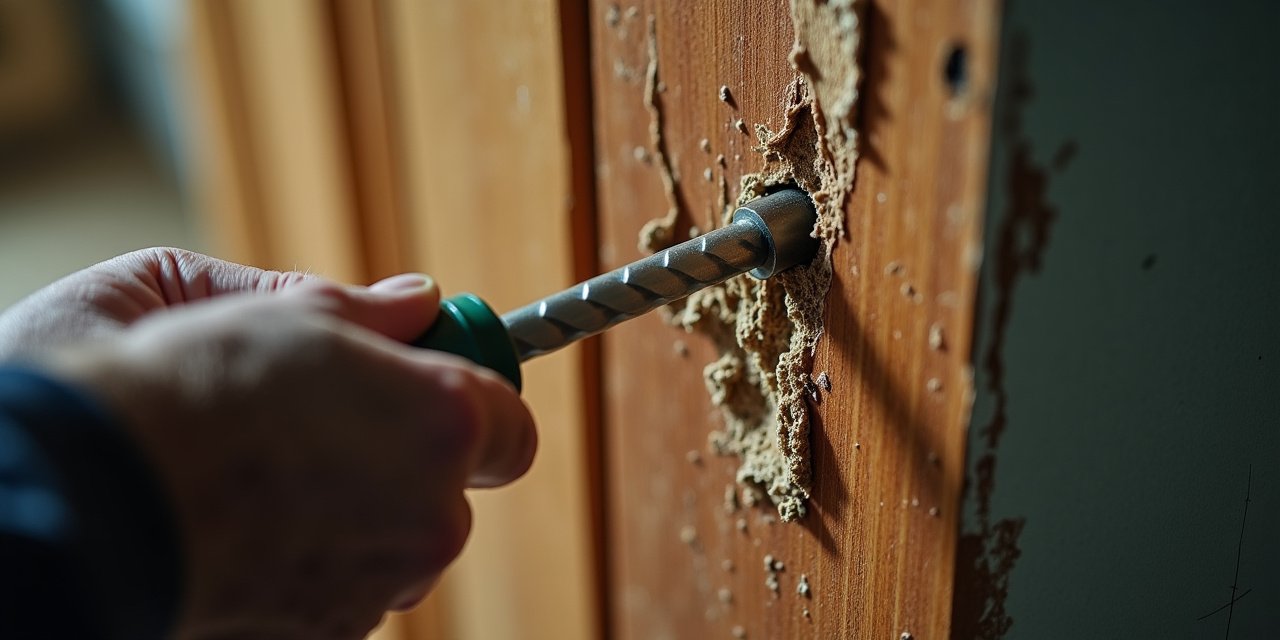
For the interior satellite colony, treatment typically involves void injection: either a residual dust (deltamethrin or diatomaceous earth) blown into the wall cavity through small drilled holes, or an expanding foam formulation that carries active ingredient into the gallery. The product reaches ants inside the void rather than just on the surface. Entry holes are plugged after treatment. In some cases, direct bait placement at active trails is used instead of or in addition to void treatment.
For the outdoor parent colony, the technician looks for the nesting site: typically a dead tree, stump, rotting log, landscape timber, or wood in direct soil contact within 100–300 feet of the structure. Treatment of the parent colony may involve direct application of residual product to the nest site, plus a perimeter exterior spray around the foundation targeting foraging workers. Non-repellent products are preferred because they allow workers to carry active ingredient back into the nest rather than simply repelling workers from the treated surface.
A follow-up inspection 2–3 weeks after initial treatment confirms whether colony activity has declined and whether additional bait placement or void treatment is needed. Reputable providers include this follow-up in the service agreement rather than charging separately.
One point that can't be overstated: pest treatment must be paired with moisture source repair. A carpenter ant treatment without fixing the leaky gutter, repairing the roof flashing, or addressing the basement drainage issue that originally attracted the colony is a temporary solution. The moisture-damaged wood remains attractive to new colonies from nearby parent colonies, and the problem will return.
Frequently Asked Questions
How long does it take carpenter ants to cause real damage?
A satellite colony in a wall void typically takes 2–4 years to cause noticeable structural compromise in sound wood. In moisture-damaged wood, the timeline is much shorter. The more important issue is that damage accumulates invisibly before it's detectable. By the time you find frass or hear rustling, the gallery system is usually more extensive than the external evidence suggests. Early treatment is always less expensive than late treatment.
Can structural damage from carpenter ants be repaired?
Yes, but pest treatment must come first. The repair sequence is: treat the pest problem, confirm the colony is eliminated with a follow-up inspection, fix the moisture source, then repair or sister the damaged framing. For significant structural damage to load-bearing members, a structural engineer's assessment may be warranted before repair work begins.
Why do carpenter ants come back every year?
Because the parent colony outside survives winter and sends new foragers in spring. If a previous treatment eliminated the satellite colony inside but didn't reach the outdoor parent colony, the parent re-establishes a satellite indoors the following season. Lasting control requires treating both the parent colony and any indoor satellite, plus eliminating the moisture source that made your home attractive in the first place.
Are large black ants always carpenter ants?
Not always, but large black ants (1/4 inch or bigger) found near wood, walls, or structural areas in a Westchester home are carpenter ants the large majority of the time. Key indicators: smooth sawdust-like frass below wood surfaces, rustling when tapping infested wood, swarmers indoors in spring, and workers trailing from outside into wall areas rather than toward food. Treat it as a carpenter ant situation until a professional confirms the species.
How do I know if I have a satellite colony indoors?
The strongest indicators: finding workers inside during winter or on cold days (satellite colonies stay active year-round in heated homes while outdoor colonies are dormant); hearing rustling when you tap wall sections; finding frass near wood surfaces indoors (not near food); and seeing workers trailing from wall voids toward the outside. A professional can assess these indicators and determine whether void treatment is needed.