By the time you actually see a pest in your kitchen or living space, dozens or hundreds more are almost certainly already present. Most pest species are nocturnal, secretive, and very good at staying out of sight — which is exactly why early detection depends on recognizing the evidence they leave rather than waiting to spot the animals or insects themselves.
Westchester homes are particularly susceptible during fall entry season (September through November) and spring emergence (March through May), but pest populations can establish year-round in the right conditions. Knowing what to look for — and where to look — lets you catch problems when they're small and manageable rather than when they've had months to grow.
Here are the seven signs that consistently show up before homeowners see a single pest.
Sign 1–2: Droppings and Frass
Pest droppings are almost always present before the infestation becomes visible — and they're often the clearest indicator of both species and population size.
Rodent droppings from house mice are roughly the size of a grain of rice — about 1/4 inch — with pointed ends, dark brown to black when fresh, fading to gray as they dry. Where you find them matters: along walls and baseboards, in the back corners of kitchen and bathroom cabinets, behind the stove or refrigerator, in attic insulation, and along the pipes under sinks. Rodents follow the same routes repeatedly, so droppings accumulate in lines along travel corridors. Never handle droppings with bare hands — rodent feces can carry hantavirus and other pathogens. Use gloves and a disposable mask when cleaning up.
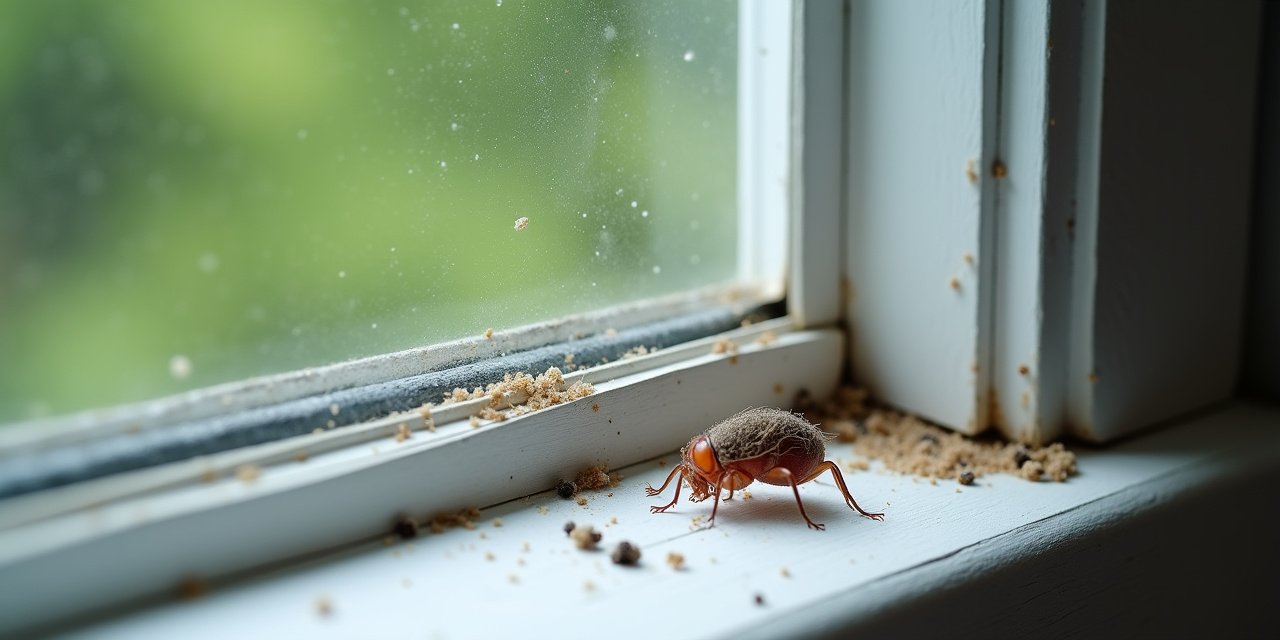
Frass is the insect equivalent. Carpenter ant frass looks like coarse sawdust — tan, fibrous, often mixed with insect body parts — pushed out of small round holes in wood and accumulating in piles below entry points. Termite frass from drywood termites looks completely different: tiny uniform hexagonal pellets, about the size of a grain of salt, often found in small conical piles. Subterranean termites (more common in Westchester than drywood) don't produce visible frass; they leave mud tubes instead. Cockroach frass looks like ground pepper or coffee grounds and accumulates in areas where roaches rest — behind appliances, inside cabinet hinges, along drawer slides.
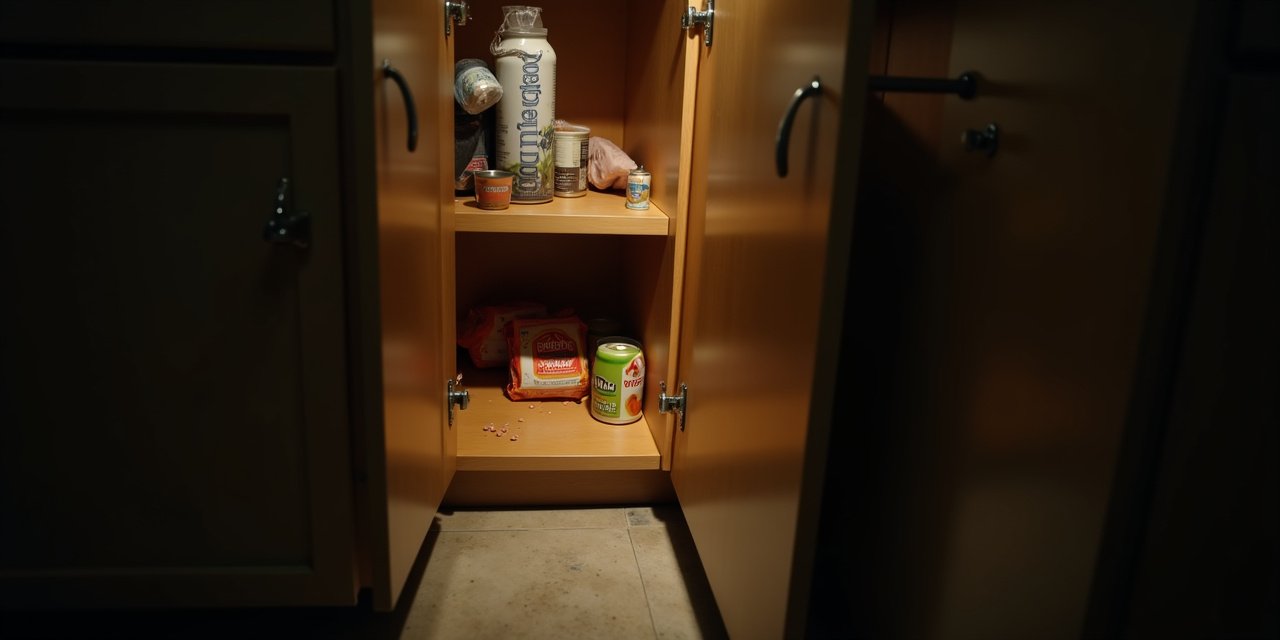
Check these locations specifically: inside cabinet corners at the back, under the sink, along the edge where walls meet floors in utility areas, in the attic (especially near the eaves and along rafters), in the basement along foundation walls, and behind any large appliance that hasn't been moved recently.
Sign 3–4: Gnaw Marks and Structural Damage
Rodents gnaw constantly — not just to access food, but to keep their continuously-growing incisor teeth worn down. This means gnaw evidence shows up on a wide range of materials throughout the home, not just in food storage areas.
Look for gnaw marks on wood (cabinet interiors, baseboards, door frames, structural lumber in the basement), on plastic food containers and packaging, on wiring insulation (this is the fire risk — gnawed wiring is one of the leading causes of house fires attributed to rodents), and on the material around utility penetrations in the foundation or walls where rodents may have enlarged an existing gap to enter. Fresh gnaw marks are pale and light-colored. Older marks darken as the exposed wood oxidizes. Finding both colors tells you the activity is ongoing, not historic.
Structural wood damage is a separate category. Carpenter ant and termite damage produces characteristic signs that don't look like gnawing. Check for soft spots in wood by pressing firmly on door frames, windowsills, basement rim joists, and any wood near areas with past moisture problems. Healthy wood is firm. Wood compromised by carpenter ant galleries or termite feeding has a different feel — it may yield under firm pressure, sound hollow when tapped with a screwdriver handle, or crumble at the edges. If you can probe an area with a screwdriver blade and it sinks in easily, that wood has been significantly compromised. This needs professional assessment before any cosmetic repair.
Harborage areas — dark, undisturbed spaces like the backs of closets, attic corners, and cluttered storage areas — should be checked whenever you're inspecting for pest activity. Pests are drawn to undisturbed spaces, which is also why they're often found late: no one checked.
Sign 5: Unexplained Sounds
Sound is one of the earliest indicators available to homeowners — and one of the most commonly dismissed as "the house settling" until the problem becomes visible.
Mice produce light scratching and scurrying sounds, primarily at night (roughly 11pm to 4am when they're most active). You'll hear it in walls, in ceilings between floors, and in the attic. The sounds are relatively light — rapid, scratchy, intermittent. Mice move in short bursts, so the sound pattern is erratic rather than sustained. A single mouse produces sound out of proportion to its size because it follows hard surfaces (pipes, joists, the inside of wall cavities) that amplify and transmit the noise.
Carpenter ants produce a sound that's easy to miss unless you know what to look for. When you tap on a wall section or wooden beam that contains an active gallery, the workers inside respond to the vibration — you may hear a faint rustling or crackling, like crumpling paper, from inside the wood. This is one of the most reliable field tests for an interior carpenter ant colony. Tap along suspected areas with a screwdriver handle and listen carefully.
Termites are, with rare exceptions, silent. Subterranean termites work inside wood and soil with no audible activity a homeowner can detect through walls. Don't assume absence of sound means absence of termites.
Sign 6: Grease Marks, Runways, and Tracks
Rodents are creatures of habit. Once they establish a travel route — along the base of a wall, across a beam, through a gap — they use it repeatedly. This repetition leaves physical evidence on surfaces.
Grease marks (also called smear marks or rub marks) appear along the routes rodents travel most frequently. Rodent fur contains oils that transfer to surfaces the animal repeatedly brushes against. Look for dark, greasy-looking smudges along the base of walls, at entry points (especially the edges of holes or gaps), along pipes and conduit that rodents use to travel, and on rafters or beams in attics where rodents run. These marks are most visible on lighter-colored surfaces and in areas that are otherwise clean. Fresh marks are dark and slightly shiny; older marks are dull and dusty.
Rodent runways are the packed-down debris paths that form along heavily-used routes — particularly in dusty attics or crawl spaces where accumulated dust, insulation fibers, and other debris get compressed by repeated foot traffic. A clearly defined path through attic insulation, with the insulation parted along a corridor, is a strong indicator of active rodent movement. You may also see actual footprints in dusty areas — five-toed front feet and four-toed back feet.
Entry points are where many of these signs converge. A gap in the foundation surrounded by grease marks, with droppings nearby and gnaw marks at the edges of the opening, is a confirmed active entry point — not just a possibility.
Pest Inspection — Scarsdale & Westchester
Found something that doesn't look right? Get a professional assessment before the infestation grows.
Pristine Pest connects Westchester homeowners with licensed pest inspectors who can confirm what you're dealing with and recommend next steps. Call to schedule.
Call (877) 938-6799Sign 7: Nests, Egg Cases, and Shed Skins
Physical pest structures — nests, egg cases, shed exoskeletons — are among the most definitive evidence available because they require extended presence to produce. Finding these means the pest has been there long enough to establish, not just pass through.
Rodent nests are built from whatever soft material is accessible: shredded paper, fabric, insulation, cardboard, plant material. They're typically found in dark, enclosed, undisturbed locations — the back corner of a seldom-opened storage cabinet, inside a drawer that's rarely pulled out, in attic insulation away from the access hatch, inside the motor housing of a large appliance. The nest looks like a loosely constructed ball of shredded material with a hollow center. Finding a nest means a rodent has been resident in that location long enough to gather material and construct shelter.
Cockroach egg cases (called oothecae) are dark brown, capsule-shaped cases about 1/3 inch long, found in cracks and crevices near harborage areas. German cockroach oothecae are carried by the female until shortly before hatching, then deposited in a protected location. A single case can contain 30 to 48 eggs. Finding even one ootheca confirms an active cockroach population — you do not have a single cockroach.
Spotted Lanternfly egg masses are relevant outdoors but worth checking on your property. They look like smeared gray putty or dried mud on tree bark, fence posts, outdoor furniture, and vehicles — typically 1 to 2 inches long with a waxy coating when fresh. Each mass contains 30 to 50 eggs. SLF is an established invasive in Westchester County and is legally required to be reported and managed.
Frequently Asked Questions
How do I know if I have mice?
Droppings are the most reliable indicator. Mouse droppings are small — roughly the size of a grain of rice, pointed at the ends, dark when fresh and gray when old. You'll find them along walls, in the backs of cabinets, and near food storage. Mice also leave grease smear marks along baseboards and produce light scratching sounds in walls at night.
Are cockroaches common in Westchester homes?
Yes — particularly German cockroaches in kitchens and bathrooms, and American cockroaches in basement and utility areas. German cockroaches are the most challenging because they reproduce extremely rapidly and develop resistance to pesticides with repeated exposure. Westchester's mix of older housing stock and proximity to New York City makes them a real concern. The egg cases are often the first physical evidence found before you see live insects.
Can I ignore small amounts of rodent droppings?
No. Even a small number of fresh droppings indicates an active rodent presence — rodents don't leave a single dropping and move on. Finding a few fresh droppings means there are rodents in that area regularly. A single female mouse can produce 5–10 litters per year. What starts as a couple of mice in October can become a significant infestation by February if entry points aren't sealed and the animals aren't removed. Act on any fresh evidence immediately.
How often should I check for pest evidence?
A basic walk-through of the most likely areas — under sinks, in cabinet corners, along basement walls, in the attic if accessible — every two to three months catches most infestations early. Key times: fall (when rodents seek warmth), early spring (when carpenter ants and termites swarm), and after any renovation that may have disturbed pest populations. If you notice anything unusual — odors, sounds, visible damage — check immediately rather than waiting.