
The pest control aisle at Home Depot is full of products that work. Sometimes. The question isn't whether consumer products can kill pests. It's whether they'll solve your specific problem. Some infestations are genuinely DIY-able. Others get actively worse when you treat them yourself, because the wrong treatment at the wrong stage scatters pests to new areas, causes colonies to split, or creates conditions that make professional treatment harder and more expensive later.
This guide gives you a clear framework for which side of that line your situation falls on, before you buy anything or call anyone.
When DIY Makes Sense
Consumer pest control is genuinely appropriate in a specific set of circumstances. The common thread is accessible, identified, contained problems that don't involve structural damage or pests that are known to respond poorly to consumer treatment.
Pavement ants along the foundation. A trail of small dark ants entering through a foundation crack and heading toward a food source in the kitchen is one of the most manageable pest problems a homeowner can address independently. Gel bait or granular bait placed at active trails, combined with caulking the entry point, resolves most first-year pavement ant problems without professional intervention. The key: use bait, not spray. Repellent sprays on pavement ant trails cause the colony to re-route rather than collapse.
A single mouse in an accessible location. One mouse caught on a snap trap in the garage, with no evidence of additional activity (no droppings elsewhere, no gnaw marks, entry point identified and sealed), is a legitimate DIY situation. Standard snap traps remain the most effective single-mouse removal tool. The important step is finding and sealing the entry point. Without that, you're catching mice but not solving the problem.
Mild outdoor mosquito management in a small yard. Consumer larvicide dunks (Bacillus thuringiensis israelensis, or Bti) in standing water containers are genuinely effective and appropriate for homeowner use. Basic barrier sprays around the yard perimeter have limited duration but are reasonable for one-time event preparation. For ongoing mosquito pressure in a larger property or near natural water sources, professional treatment with longer-lasting products is more cost-effective.
The conditions that make DIY appropriate: you've correctly identified the pest, the infestation is contained and accessible, there's no structural wood involvement, and it's a first-time occurrence. Any deviation from those conditions shifts the math toward professional help.
When You Should Definitely Call a Pro
Some pest problems have no realistic DIY solution. Attempting one doesn't just waste money, it can materially worsen the infestation before professional treatment begins.
Any termite evidence. No consumer product provides adequate termite control. Subterranean termite treatment requires either a Sentricon in-ground bait system or a liquid termiticide barrier trenched around the entire foundation, both requiring licensed applicator equipment and commercial-grade products. Consumer products applied to surface mud tubes without treating the colony produce no lasting effect. If you find mud tubes, shed wings in spring, or wood damage consistent with termites, call a licensed pest control company. This is not a close call.
Carpenter ants with evidence of wood galleries. Frass below door frames or window sills, a hollow sound when tapping wood, or workers visible inside walls requires professional treatment. Consumer sprays kill workers on contact but don't reach interior satellite colonies. Void injection and professional bait placement at active trails are required. See our full guide to carpenter ant damage assessment.
Rodents that have returned after DIY treatment. A recurring rodent problem after your own snap-trap and steel-wool effort means either the entry points weren't fully sealed or the population is larger than one or two mice. A professional rodent inspection includes a full exterior assessment to identify every entry point: including those above the first floor, in the roofline, and at utility penetrations that homeowners commonly miss.
Any pest you can't positively identify. Treatment without identification is guesswork. Guessing wrong wastes money and time. A professional inspection costs $75–$150 and tells you what you're dealing with before you spend anything on treatment.
The DIY Mistakes That Make Infestations Worse
These are not theoretical. They're the documented patterns that pest control professionals encounter repeatedly from homeowners who tried to treat before calling.
Using foggers for cockroaches. Consumer total-release foggers ("bug bombs") have been studied extensively and consistently shown to be ineffective against cockroaches. Cockroaches hide fast in cracks and crevices where the fog doesn't penetrate. Foggers do kill exposed flying insects and leave surface residue, but they don't reach the problem populations hiding in structural voids. They also create a false sense that treatment has been done, delaying professional help.
Applying repellent spray to ant scouts without bait. Killing the visible workers from an ant trail with spray disrupts that trail temporarily. But it may cause the colony to increase scouting activity, find multiple new routes, or (in some species) bud into multiple sub-colonies. The correct sequence for ant treatment is: identify the species, place bait at active trails, don't spray the bait or the trailing area, and let the bait work for 2–3 weeks before evaluating results.
Sealing a rodent entry point while rodents are still inside. If you seal the only entry/exit point while a rodent is inside the wall or attic, it will chew through wiring, insulation, and wood trying to escape, or die inside the wall, creating an odor problem that takes months to resolve. Exclusion must follow trapping and confirmed removal, not precede it.
Using the wrong bait for the wrong ant species. Carpenter ants and odorous house ants respond to different bait formulations: sugar-based vs. protein-based. Placing the wrong bait produces no results and may cause homeowners to conclude bait doesn't work, leading them to switch to spray. If you're unsure of the species, professional identification before bait selection saves time and money.
What to Expect From Professional Treatment
Knowing what a professional engagement actually looks like helps you evaluate what you're being offered and whether it's appropriate for your situation.
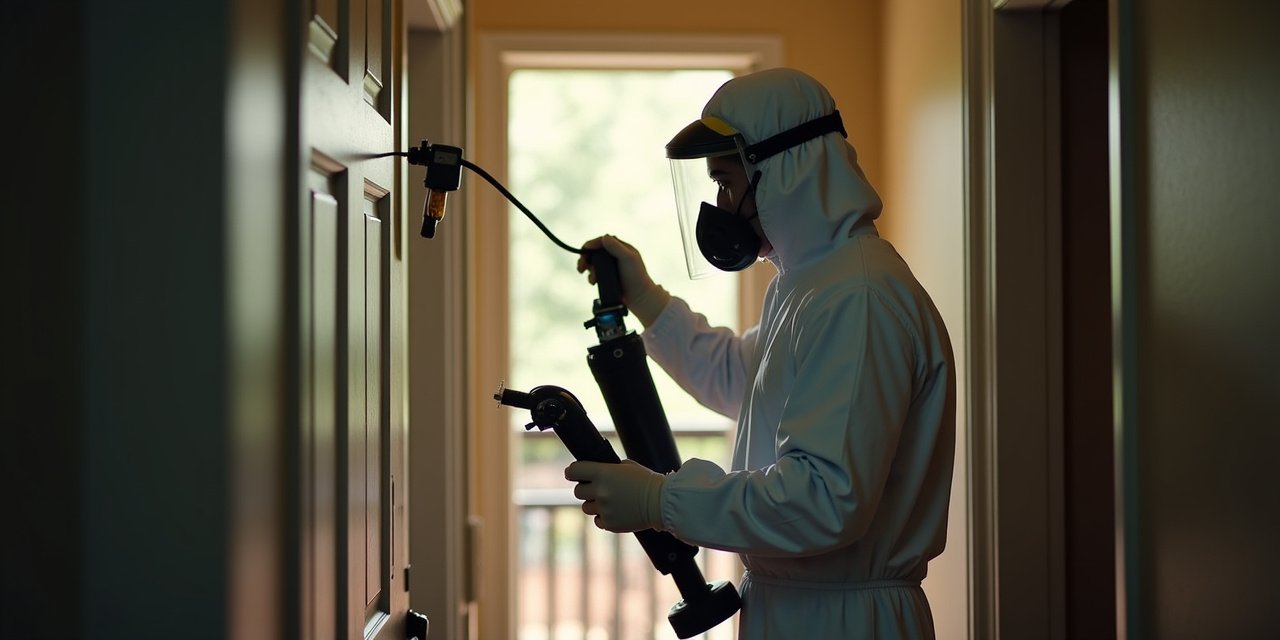
A professional pest control visit starts with inspection. Not treatment. The technician should identify the pest species, assess the extent of the infestation, and locate likely nesting and harborage sites before recommending a treatment approach. If a technician wants to skip inspection and go straight to spraying a package treatment, that's a flag.
The treatment plan should be specific to your pest and your home. It should include: the product name and active ingredient, the application method, the number of visits included, and what triggers a free callback (e.g., activity returns within 30 days). A written plan protects you. An oral quote that doesn't specify products, visit count, or guarantee terms leaves you without recourse.
After treatment, it's normal (and actually expected) to see increased pest activity for a few days as the product works and disrupts the population. For bait treatments, workers are more active while carrying bait back to the colony. For rodent control, surviving mice may explore new areas as their normal routes are disrupted. Brief post-treatment activity is not a sign that the treatment failed.
Follow-up visits matter. A single treatment without follow-up inspection misses the opportunity to confirm colony elimination or catch re-infestation before it re-establishes. The standard professional protocol for most pest problems includes a follow-up 2–4 weeks after initial treatment.
Professional Assessment · Scarsdale & Westchester
Not sure which side of the DIY line you're on? A professional assessment costs less than a failed DIY attempt.
Pristine Pest connects Westchester homeowners with licensed providers who can evaluate your situation and give you an honest recommendation. No obligation to book treatment.
Call (877) 938-6799Choosing the Right Level of Service
Not every pest problem requires an annual service contract. Matching the service level to your actual situation is how you get value from professional pest control rather than overpaying for coverage you don't need.
One-time treatment is appropriate for a contained, first-occurrence problem with a clear cause and a clear fix. A single carpenter ant treatment in a home where the moisture source has been repaired and the parent colony is accessible. A rodent exclusion following confirmed entry-point identification and sealing. When the root cause is addressed, one-time treatment with a 30- to 60-day callback guarantee is often sufficient.
Recurring service plans make sense for homes that have had repeated infestations, properties with persistent conditions that attract pests (wooded lots, older homes with less-than-perfect exclusion, proximity to commercial properties or dense vegetation), or homeowners who want year-round monitoring rather than reactive treatment. If you've called for the same problem three springs in a row, a maintenance plan is almost certainly more cost-effective than annual one-time treatments.
When getting quotes, ask every provider for the same information: license number, product names, visit count, guarantee terms, and what preparation you're responsible for. A quote that includes all of those items is a professional quote. One that doesn't is an estimate from someone who may not have thought through the treatment plan.
Verify licenses before booking. All pest control operators in New York must hold a NYS DEC Commercial Pesticide Applicator License. You can verify any license at the DEC website (dec.ny.gov). An unlicensed operator has no legal authority to apply pesticides and carries no required insurance. If something goes wrong, you have no recourse. This verification takes three minutes and is worth doing before every new hire.
Frequently Asked Questions
How much does a professional pest inspection cost?
In Westchester County, most licensed pest control companies charge $75 to $150 for a standalone inspection. Some companies offer free inspections as part of a treatment quote process. The fee is waived when you book service. Termite inspections are sometimes offered free because the potential treatment sale is larger. Always confirm whether the inspection fee is credited before booking.
What should I do to prepare for a pest control visit?
Preparation depends on the pest. For cockroach or ant treatment: clear under-sink areas and pull items away from walls. For rodent service: note where you've seen evidence. For most general treatments: put away food, secure pet bowls, and plan to be out of the treated area for the time your provider specifies. Your provider should give you a written preparation checklist when you schedule, and if they don't, ask for one.
Are pesticide treatments safe for children and pets?
Licensed professionals use EPA-registered products at label-specified rates, which are tested for safety when applied correctly. The standard protocol is to have children and pets out of treated areas during application and for the re-entry time on the product label (typically 2 to 4 hours). Once dry, treated surfaces are generally considered safe. Let your provider know if you have aquariums, since fish are particularly sensitive to some products.
How quickly does professional treatment work?
It depends on the pest and method. Contact sprays show results within days. Bait treatments for ants and cockroaches take 1–3 weeks. Rodent control takes 1–2 weeks for trapping plus additional time to seal entry points. Your provider should give you a realistic timeline at the initial visit.
Can I be home during treatment?
For exterior-only treatments, you can typically stay home. For interior treatments, most providers ask that adults, children, and pets leave during application and return after the re-entry period (usually 2–4 hours). Your provider will specify requirements when scheduling, and these should appear in any written service agreement.