
You've got a roach problem in the kitchen, carpenter ants in the walls, or mice scratching behind the baseboards. You call a pest control company, they show up in a van with a logo on the side, and within an hour they've sprayed the perimeter and handed you a receipt. Problem solved, or so you hope.
But here's a question most Westchester County homeowners never think to ask: was that technician actually licensed to apply pesticides in New York State? The answer matters more than most people realize. Unlicensed pesticide application is illegal under New York State law, and it can expose you to health risks, property damage, and legal headaches that no roach problem is worth.
This guide explains New York's pest control licensing framework, the difference between types of credentials, how to verify a license online in minutes, and exactly what a proper service contract should include.
Why Licensing Matters in New York State
New York takes pesticide regulation seriously. Under NYS Environmental Conservation Law (ECL) Article 33, the commercial application of pesticides (including all the sprays, baits, and fumigants used by pest control operators) is tightly controlled by the NYS DEC (New York State Department of Environmental Conservation). The law establishes categories of certification, mandates ongoing continuing education, and gives the DEC enforcement authority that includes fines, license revocation, and criminal referral.
The practical consequences of hiring an unlicensed operator are significant:
- Illegal chemical use: Unlicensed applicators may use pesticides not registered for use in New York, or apply registered products in concentrations or settings that exceed label directions, which is itself a federal violation under FIFRA (the Federal Insecticide, Fungicide, and Rodenticide Act).
- Void warranties: If an unlicensed operator applies a termite treatment, any manufacturer warranty or re-treatment guarantee attached to that product is typically void. You will have paid for protection you don't actually have.
- Your own liability: If an unlicensed person applies pesticides at your home and a neighbor's child or pet is harmed, you, as the property owner who knowingly (or unknowingly) hired an illegal operator, may share liability.
- No legal recourse: Contracts with unlicensed operators may be unenforceable. If the treatment fails or causes damage, you have limited legal options because the agreement was predicated on illegal activity.
The IPM approach that reputable Scarsdale exterminators use requires trained, licensed professionals who understand both pest biology and chemical application protocols. Anyone cutting corners on licensing is almost certainly cutting corners elsewhere.
Two Types of NY Pest Control Licenses You Need to Know
New York distinguishes between two primary credential types in the commercial pest control industry. Understanding the difference tells you a great deal about who you're letting into your home.
Commercial Pesticide Applicator
A Commercial Pesticide Applicator has passed NYS DEC certification exams for one or more application categories and holds the highest level of professional credential. For pest control work in residential and commercial structures, the relevant category is typically Category 7F (Structural Pest Control). Applicators can:
- Apply pesticides independently without supervision
- Supervise licensed technicians and uncertified employees
- Take legal and regulatory responsibility for all applications made under their license
- Operate a pest control business (the business itself must also be registered with the DEC)
Additional relevant categories include 6A (Ornamental and Turf), which covers Perimeter Treatment of landscaping areas and lawn pesticide application, important if the company also treats your yard for ticks or mosquitoes.
Commercial Pesticide Technician
A Commercial Pesticide Technician has completed the required coursework and registration but works under the direct, on-site supervision of a certified applicator. Technicians cannot operate independently. The registered applicator is legally responsible for the technician's work.
This is important because many pest control companies send technicians to routine service calls. That is acceptable and legal, provided there is a licensed applicator who is actively supervising. What is not acceptable is a company staffed entirely by technicians with no licensed applicator on the payroll.
When you hire a pest control company, ask specifically: "Is the person coming to my home a certified applicator or a technician? If a technician, who is the supervising applicator, and what is their license number?" A legitimate company will answer this without hesitation.
Additional Certifications Worth Knowing
Beyond the mandatory NYS DEC licensing, several voluntary credentials signal a company that goes above and beyond minimum legal requirements. They are not required, but their presence is a meaningful positive signal when you are comparing providers.
NPMA QualityPro
NPMA QualityPro is a certification program administered by the National Pest Management Association. Companies that earn this designation have passed audits covering business practices, employee screening, service quality, and environmental stewardship. Fewer than 3% of pest control companies in the US have achieved QualityPro status. If a company is QualityPro certified, it means their practices have been independently verified against a national standard.
GreenPro Certification
GreenPro is a subset of the NPMA QualityPro program, focused specifically on environmentally responsible pest management. Companies with GreenPro certification prioritize Integrated Pest Management strategies, use the least-toxic effective products first, and document their environmental decision-making. This is a useful credential if you have children, pets, or sensitivities to chemical exposure.
Green Shield Certified
Green Shield Certified is a third-party certification program for pest management companies that meet rigorous IPM standards. It is particularly relevant for families seeking reduced-chemical approaches. Certified companies are audited annually and must demonstrate that their service protocols minimize Pyrethroid and other chemical reliance in favor of habitat modification, exclusion, and targeted baiting.
Red Flags of Unlicensed or Substandard Operators
Not every pest control company advertising in Westchester is operating above board. Here are the warning signs that should prompt you to walk away before signing anything:
- Cash-only payment requirement. Legitimate businesses accept checks and credit cards and provide receipts. Cash-only operators are often avoiding a paper trail.
- No written estimate. NYS DEC-registered pest control businesses are expected to provide written service agreements. If a company is willing to spray first and discuss terms later, that is a serious red flag.
- Refusal to show a license. Any licensed applicator is required to provide their license number on request. A company that deflects or gets defensive when asked to show credentials has something to hide.
- Products not registered in New York. Ask the technician for the product name and EPA registration number. You can verify that a product is registered for use in New York through the DEC pesticide product database. Unregistered products are illegal.
- Unsolicited door-to-door offers. Some unlicensed operators canvas neighborhoods offering deeply discounted "one-time" sprays. These are high-risk engagements. The products used may be unregistered, and there is no accountability if something goes wrong.
- No physical business address. A company that operates only through a cell phone number and a social media page has no accountable business presence. If a dispute arises, you will have no way to find them.
- Unusually low pricing. A legitimate pest control company pays for licensing, insurance, proper chemical procurement, and trained staff. A bid that is dramatically lower than market rate for Westchester usually means corners are being cut, often on licensing and chemical sourcing.
These are not just theoretical concerns. The NYS DEC regularly investigates and prosecutes unlicensed pesticide applicators, and the fines for both the operator and the property owner can be substantial. See our guide on how to choose an exterminator for a complete vetting framework.
How to Verify a NY Exterminator License Online: Step by Step
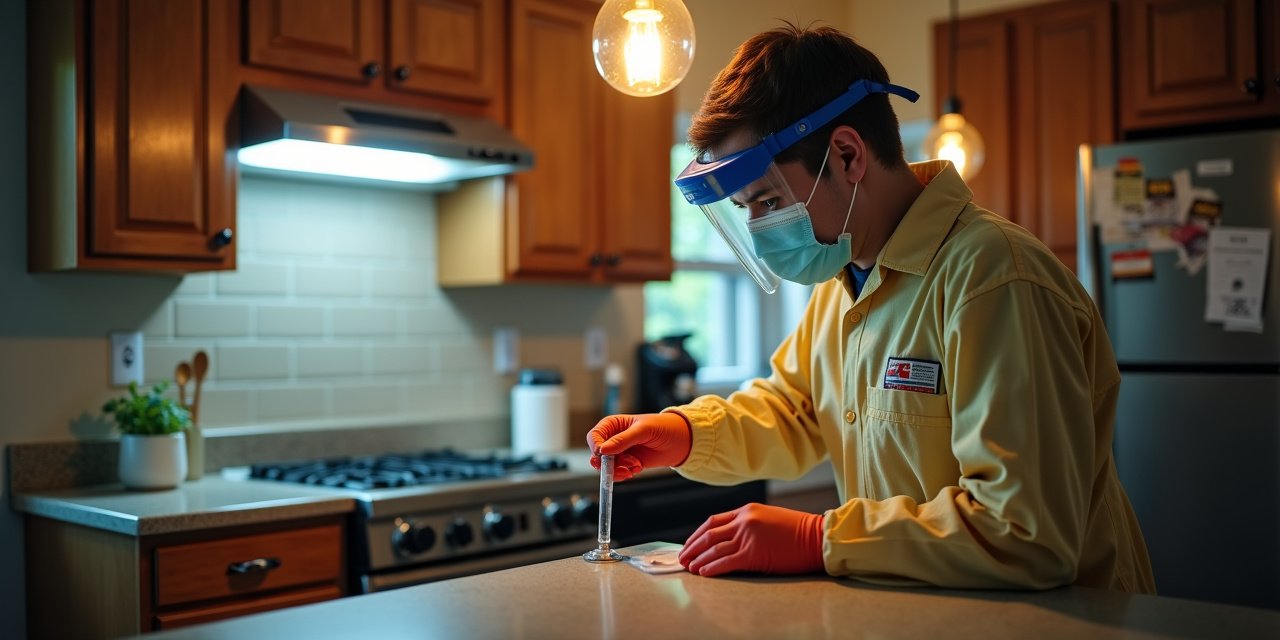
Verifying a pest control license in New York is free, takes about two minutes, and requires no special access. Here is the process:
- Go to the NYS DEC website. Navigate to the New York State Department of Environmental Conservation's main website (dec.ny.gov) and locate the Pesticide Program section, which is listed under the Environmental Remediation or Chemical and Pollution Control sections depending on the current site organization.
- Find the license lookup tool. Within the Pesticide Program pages, look for a link to the "Pesticide Applicator License Lookup" or "License Search" function. This is a publicly accessible database. No login is required.
- Search by name or license number. You can search by the individual technician's name, the company name, or the license number if the company has provided it. The database will return active licenses, categories, and expiration dates.
- Confirm the category. Verify that the license includes Category 7F (Structural Pest Control) for interior pest work, and Category 6A if they are treating your lawn or landscape. An applicator licensed only for ornamental pest control should not be treating the interior of your home.
- Check the expiration date. New York licenses must be renewed periodically. An expired license is the same as no license. If the expiration date in the database is in the past, the company is currently operating illegally.
- Write down the license number. Record the license number and include it in any service contract you sign. This creates a documented basis for your legal rights if something goes wrong.
If a company tells you that their license is "pending renewal" or that the database "hasn't been updated yet," do not accept this explanation. The DEC database reflects current license status. A company that cannot produce an active license in the public database should not be hired.
For cost context once you've confirmed credentials, see our article on pest control costs in New York. Understanding market pricing helps you identify bids that are suspiciously below what licensed operations can afford to charge.
What Your Service Contract Must Include
A proper pest control service contract is not a formality. It is the document that protects you if the treatment fails, causes damage, or if the company sends a different (potentially unlicensed) technician than agreed. At minimum, any contract you sign should contain:
- The licensed applicator's full name and license number. Not just the company name, but the specific individual whose license covers the work.
- The DEC registration number of the pest control business. New York requires businesses (not just individuals) to be registered with the DEC to operate commercially.
- Names of all pesticide products to be applied. Each product should be listed by its full commercial name, not a generic description like "ant spray." You have a right to know exactly what is being applied in your home.
- EPA registration numbers for each product. The EPA number confirms the product is federally registered and the label governs application. If a product lacks an EPA registration number, it should not be applied in your home.
- Target pest and application method. The contract should specify what pest is being treated, where the treatment will be applied (e.g., perimeter exterior, kitchen Bait Station placement, attic entry points), and by what method.
- Re-treatment guarantee language. A legitimate company stands behind its work. The contract should specify the warranty period, what triggers a free re-treatment, and what conditions void the warranty (e.g., failure to address sanitation conditions the technician identified).
- MSDS/SDS availability statement. Material Safety Data Sheets (now called Safety Data Sheets) must be available on request for every product used. The contract should acknowledge this and indicate how to obtain them.
For a complete glossary of pest control terminology that appears in contracts and regulatory filings, visit our Pest Glossary.
Connect With a Licensed Exterminator in Scarsdale
We pre-screen providers for active NYS DEC licensure. Get connected today. No obligation.
Call (877) 938-6799Frequently Asked Questions
Does every exterminator in New York need to be licensed?
Yes. Under New York State Environmental Conservation Law Article 33, any person applying pesticides commercially must hold a valid NYS DEC pesticide applicator or technician registration. Applying pesticides for hire without a license is a violation of state law and can result in fines, civil liability, and criminal penalties for both the operator and the business owner.
How do I look up a pest control license in New York?
You can verify a pest control license through the NYS DEC Pesticide Program's public license lookup tool, available on the DEC website at dec.ny.gov. Search by company name, individual name, or license number. The lookup confirms whether a license is active, the certification category (such as 7F for structural pest control), and the expiration date. The service is free and requires no login.
What's the difference between a pesticide applicator and a pesticide technician in NY?
A Commercial Pesticide Applicator holds the full certification and can work independently, supervise others, and take full legal responsibility for pesticide applications. A Commercial Pesticide Technician works under the direct supervision of a licensed applicator and cannot operate independently. Both must be registered with the NYS DEC, but the applicator is the license holder of record responsible for all work performed.
Can I sue if an unlicensed exterminator damages my property or health?
Yes. Hiring an unlicensed exterminator who causes property damage or health harm can support a civil claim for negligence. Because the operator was performing work illegally, you may also have grounds for a contract claim based on illegality. Document everything (the agreement, chemicals used, and any resulting damage) and consult an attorney. Your homeowner's insurance may also be involved.
Is NPMA QualityPro certification required in New York?
No, NPMA QualityPro certification is voluntary, not required by New York State law. However, it signals a higher standard of professionalism, training, and business practices beyond the baseline DEC licensing requirement. It is a useful additional credential when comparing pest control providers, particularly for families concerned about chemical safety and service quality.
Sources and Further Reading
- New York State Department of Environmental Conservation: Pesticide Program (general regulatory framework and license lookup, dec.ny.gov)
- National Pest Management Association (NPMA): QualityPro Certification standards (npmapestworld.org)
- NYS Environmental Conservation Law Article 33: Pesticides (official statutory text)