Common Ant Species in Scarsdale
Westchester County is home to several ant species that invade homes in pursuit of food, moisture, and shelter. Accurate identification matters: treatment protocols differ significantly by species.
Ant Species Identification: Westchester County
Why DIY Ant Control Fails
The ants you see trailing across your kitchen counter represent only 10–15% of the colony. The remaining 85–90% (including the queen and brood) are hidden inside walls, beneath floors, or underground.
The Pheromone Trail Problem
Ants communicate using pheromone trails: chemical signals that direct workers to food sources and back to the nest. Retail contact sprays kill the trail but leave the chemical signal intact. New workers follow the same route within hours.
Satellite Colonies
Many species, particularly odorous house ants and pavement ants, maintain satellite colonies: multiple nesting sites connected by forager networks. Treating one location simply displaces pressure to another.
Our Ant Treatment Program
Professional Gel Baiting
Gel bait is applied in precise micro-placements at trail sites and nest entry points. Foragers carry the bait back to the colony, where it is shared through trophallaxis (food sharing) and reaches the queen. Full colony elimination typically takes 1–2 weeks.
Perimeter Barrier Treatments
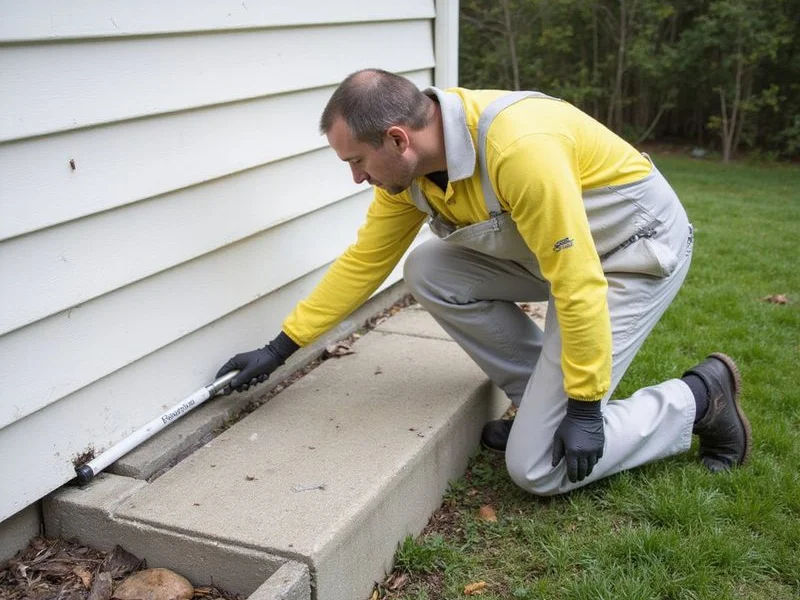
A residual perimeter spray is applied around the foundation, entry points, and along structural joins, creating a chemical barrier that prevents re-entry from outdoor colonies.
Exclusion Recommendations
Technicians identify and flag structural entry points including:
- Gaps around utility penetrations (plumbing, electrical conduit)
- Cracks in foundation walls and expansion joints
- Gaps beneath doors and around window frames
- Vegetation or mulch in direct contact with the structure
Carpenter Ants: A Special Case
If you're seeing large black ants (6mm+) indoors, you likely have carpenter ants. These ants nest in moist or decayed wood, not dry structural lumber. Their presence indicates an underlying moisture issue such as a roof leak, plumbing condensation, or failed flashing.
Our partners provide dedicated carpenter ant removal services including moisture source identification and structural assessment.
Frequently Asked Questions
Why do ants keep coming back after I spray?
Retail sprays kill forager ants on contact but cannot reach the queen. Without eliminating the queen, the colony produces replacement workers within days. Professional baiting is carried back to the nest by foragers and eliminates the entire colony.
How long does ant treatment take to work?
Gel bait treatments typically produce noticeable reduction within 3–5 days and full colony elimination within 1–2 weeks. You may briefly see increased ant activity as workers recruit more foragers to carry bait. This confirms the bait is working.
What is the difference between carpenter ants and termites?
Carpenter ants are large (6–12mm), black, and have a pinched waist. They excavate wood to nest but do not eat it. Termites are smaller, cream-colored, and consume wood as food. Both require professional treatment but involve different protocols.
Stop Ants at the Source
Colony-level elimination is the only permanent solution. Our network of licensed specialists serves Scarsdale and all of Westchester County.
Related Resources
For carpenter ant treatment specifically, see our Carpenter Ant Removal page. For general pest identification, visit our Pest Glossary.