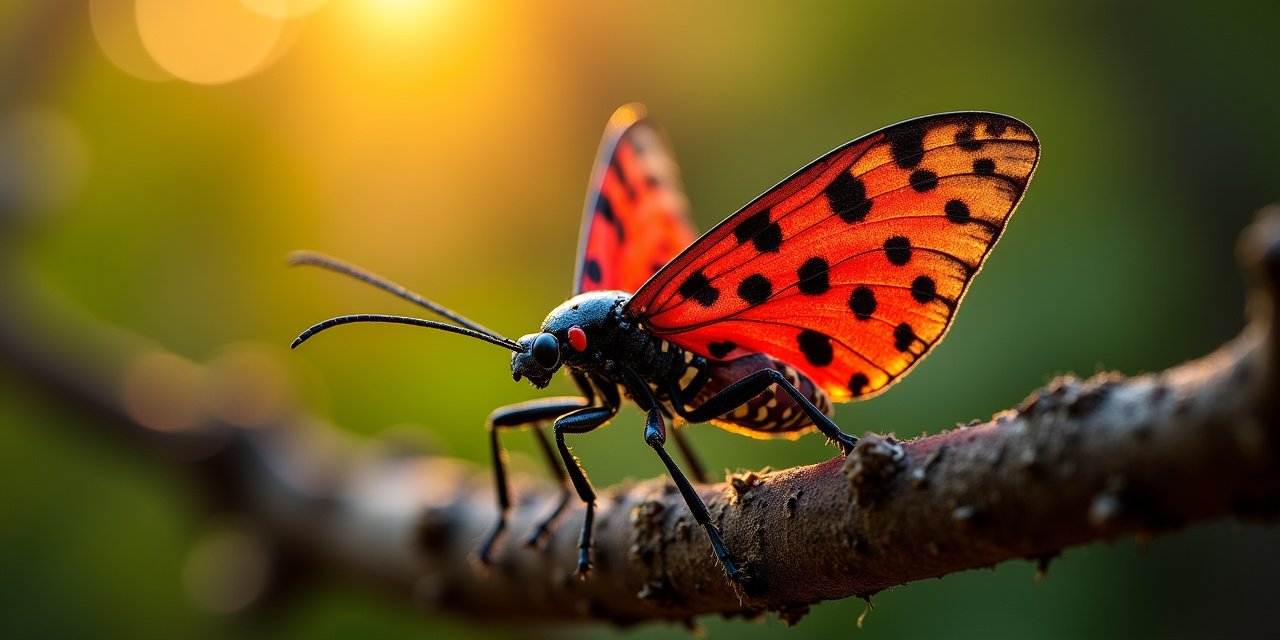
New York's Department of Agriculture and Markets says last winter wasn't cold enough downstate. Overwintering egg masses didn't die off as usual. That's setting up a heavier lanternfly season across Westchester and the metro area.
The Short Version
This Pristine Pest news report covers two new pieces of spotted lanternfly research. Most Westchester homeowners haven't seen either one yet.
First: the wasp long assumed to be New York's fix is out. It won't be released in the US. Its replacement is still in federal quarantine review, with no release date.
Second: a February 2026 NYU study looked at city lanternflies. It found they're adapting faster than expected. They're now surviving both urban stress and pesticide exposure better.
Neither development is good news. This summer was already shaping up to be heavy on lanternflies. Westchester County is officially confirmed infested by the state.
Westchester Is Officially Infested
New York's Department of Agriculture and Markets has confirmed Westchester County as infested. The confirmation comes from Cornell Cooperative Extension Westchester.
The insect strongly prefers tree of heaven. It also feeds on maple, willow, poplar, sycamore, and fruit trees like plum and cherry. All of these are common on Westchester properties.
The pest has now spread to more than 21 states. It's been a persistent summer nuisance across the New York City metro area since 2020.
None of this is new. What's new is the research behind it. This year's population feels bigger, and the fix everyone was counting on isn't coming soon.
Why This Summer Feels Worse
Jola Szubielski is director of public information for the state's Department of Agriculture. She told reporters that downstate winter temperatures weren't cold enough for long enough. That let more overwintering egg masses survive ahead of the 2026 season.
Fewer eggs died over the winter. That means more nymphs hatched this spring. Westchester is one of the counties feeling it.
Separately, NYU researchers found that city lanternflies are changing. They're now surviving and staying reproductively active much longer than before. That's up to five months longer than when the species first arrived in the US.
Milder urban winters are one driving factor. So is the insect's genetic adaptation, according to NYU assistant professor of biology Kristen Winchell.
Why Your Spray Program May Be Losing Ground
The same NYU study compared lanternfly DNA from urban populations in China and the US. Both showed genetic changes in stress-response genes, helping them tolerate hotter cities.
They also showed changes in genes tied to detoxification and metabolism. Those genes matter directly for pesticide exposure.
Urban adaptation in China appears to have primed the species for success. It succeeded once it reached American cities.
The researchers have practical advice for homeowners and pest professionals. Rotate pesticide classes rather than repeating the same product season after season. Treat lanternfly risk as a moving target, not a fixed one.
A program that worked well in 2022 isn't guaranteed to work in 2026.
New York Swapped Its Biocontrol Weapon
For several years, Anastatus orientalis was the leading biocontrol candidate for US release. It's an egg parasitoid wasp native to China, already used in South Korea.
Host-range testing eventually found it too polyphagous for release here. That meant it would likely attack too many non-target insect species. USDA researchers dropped it as the lead candidate.
The current candidate is Dryinus sinicus, a different parasitoid wasp. It attacks lanternfly nymphs rather than eggs.
A study published July 2, 2026 in Entomology Today summarized new peer-reviewed research. The research came from the Annals of the Entomological Society of America.
USDA scientists reported host-specificity testing found no risk to non-target species. That's a required step before any release petition can move forward.
The research is real progress. It is not, however, a near-term fix. A release petition has been filed with USDA APHIS.
But no field release of Dryinus sinicus has occurred anywhere in the US. Federal review of a new biocontrol agent typically takes one to three years. That's based on past USDA classical biocontrol timelines, once a formal petition is filed.
Realistically, Westchester homeowners shouldn't expect a wasp-driven population drop before 2027. That's the earliest, and only if the petition clears review without delay.
Spotted Lanternfly Biocontrol Timeline
Sources: Entomology Today, USDA APHIS classical biocontrol review process. Timeline is estimated, not an official USDA release date.
What Actually Works Right Now
No biocontrol agent is field-ready yet. Current control still comes down to the same manual and chemical tools. New York has recommended these since 2020:
- Scrape egg masses from October through spring using a hard, flat tool like a scraper card, and drop them into rubbing alcohol or hand sanitizer to kill them
- Skip home remedies: New York's own guidance specifically warns against kitchen vinegar sprays, which are ineffective and can damage plants
- Report sightings through New York's spotted lanternfly reporting tool or at agriculture.ny.gov/reportslf
- Rotate insecticide classes on any treated tree of heaven or ornamental host plants, per NYU's pesticide-adaptation findings above
- Check vehicles and outdoor items before leaving an infested area: egg masses hitchhike on anything flat and stationary
Spotted Lanternfly Life Stage & Action Finder
Pick the current month to see what life stage is active in Westchester. Then see what to do about it.
What This Means for Westchester Homeowners
If your property has tree of heaven, grapevines, or outdoor entertaining space, watch it now. Don't wait until next spring. Adults emerging now will spend late summer feeding.
In early fall, they'll lay egg masses that overwinter into 2027. Every egg mass scraped in the next few months matters. Each one is a cluster of 30 to 50 nymphs you won't see next spring.
For identification help, see our guides on spotted lanternfly identification and local Scarsdale sightings. For a look-alike comparison, see our stink bug vs. spotted lanternfly comparison.
Properties with heavy tree of heaven growth may benefit from a professional exterminator consultation. The same goes for properties with repeat lanternfly pressure. Trunk injection treatment is typically more effective on mature trees than surface spraying.
Frequently Asked Questions
Is Westchester County infested with spotted lanternfly?
Yes. The New York State Department of Agriculture and Markets has confirmed Westchester County as infested. The pest prefers tree of heaven, also eating maple, willow, poplar, sycamore, plum, and cherry.
Is there a biological control (predator wasp) for spotted lanternfly yet?
Not yet. Anastatus orientalis proved too polyphagous; Dryinus sinicus is now USDA's lead candidate. A petition is filed; no release has happened, with review taking one to three years.
Are spotted lanternflies dangerous to people or pets?
No, spotted lanternflies do not bite or sting. The danger is to plants and trees. Heavy feeding stresses plants, and honeydew promotes sooty mold on leaves, patios, and cars.
What should I do if I find a spotted lanternfly egg mass?
Scrape it off with a hard, flat tool, like a scraper card. Drop it into rubbing alcohol or hand sanitizer to kill it. Skip vinegar; report sightings to New York's Department of Agriculture and Markets at agriculture.ny.gov/reportslf.
Sources
- Entomology Today: Dryinus sinicus host-specificity research (July 2, 2026)
- NYU News: Urban lanternfly genetic adaptation study (February 2026)
- Fox Weather: 2026 spotted lanternfly population forecast
- NY Department of Agriculture and Markets: Spotted lanternfly update
- Cornell Cooperative Extension Westchester: Spotted lanternfly status
- USDA APHIS: Spotted lanternfly program
Last updated: July 13, 2026
This article is provided for general educational purposes only and does not constitute pest control advice. Pest identification and treatment decisions should involve a licensed pest management professional. Pristine Pest is a lead generation service that connects homeowners with licensed pest control providers. We are not a licensed pest control company and do not perform inspections or treatments. Read our full disclaimer.
Pristine Pest may receive compensation when you contact pest control providers through this site. This does not affect the accuracy of our content.