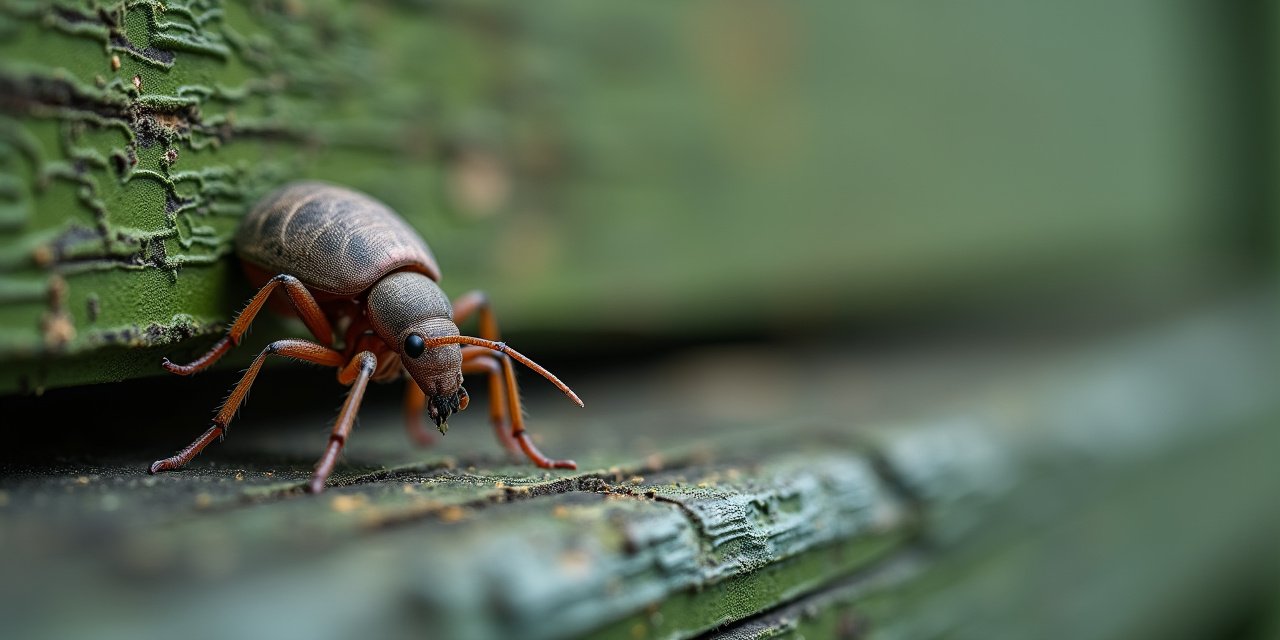
Every September in Westchester, the calls start coming in: "There's something all over my house, kind of brownish, kind of spotted, lots of them." Nine times out of ten, it turns out to be one of two insects, and the homeowner has no idea which one they have. This matters more than you might think.
The brown marmorated stink bug and the spotted lanternfly are both invasive species that arrived from Asia and have spread across the Northeast. Both aggregate on structures in late summer and fall. Both can show up in large numbers. But they're biologically different in almost every other way, and what you should do about them is completely different.
The Stink Bug: A Brief Profile
The brown marmorated stink bug (Halyomorpha halys) is a true bug (meaning it has piercing mouthparts and belongs to the order Hemiptera). It's shield-shaped, which is the giveaway: looking at it from above, the body comes to distinct points at the "shoulders" and tapers toward the rear. Adults are 14–17mm long, roughly the size of a dime. The coloring is a mottled brown-gray with lighter banding on the antennae and abdomen edge.
Stink bugs are a nuisance pest, not a structural one. They don't bite, they don't reproduce inside your home, and they don't damage wood or wiring. Their problem is twofold: they smell bad when crushed (hence the name), and they can show up in enormous numbers. In a house with good sun exposure and gaps around windows or doors, a fall aggregation can bring dozens (or hundreds) inside to overwinter in wall voids and attic spaces.
The response for stink bugs is primarily exclusion: sealing gaps around windows, doors, utility penetrations, and attic vents in late summer before they start moving. For those already inside, a vacuum with a sealed bag works better than squashing. See our stink bug removal page for treatment options.
The Spotted Lanternfly: A Different Animal
The spotted lanternfly (Lycorma delicatula) is a planthopper, not a true bug, not a fly, and definitely not a moth, despite what some people assume from the name. Adults are larger than stink bugs at about 25mm long. The forewings are gray with black spots. The hindwings, visible in flight, are striking: red, black, and white. The abdomen is yellow with black bands. It's honestly a good-looking insect, which makes it easier to ID once you've seen one.
Spotted lanternflies are a real agricultural concern. They feed on the phloem of over 70 plant species, excreting honeydew that leads to mold growth. They're particularly damaging to grapevines, hops, apples, and tree of heaven (which they prefer). For most Westchester homeowners, the immediate plant damage risk is low, but you're part of the control effort whether you want to be or not. The NYS Department of Agriculture and Markets asks residents to report sightings and to kill any they find.
Unlike stink bugs, spotted lanternflies don't overwinter inside your house. They lay eggs outdoors on smooth surfaces (tree bark, stone walls, fences, patio furniture) and die off in winter. The egg masses are the stage you're most likely to miss and the most important one to destroy.
The Fastest Way to Tell Them Apart
Body shape is the quickest distinguishing feature. Stink bugs have that distinctive shield profile: wide across the top, pointed shoulders, very flat. Spotted lanternflies are longer and more cylindrical, with wings held tent-style over the body rather than flat against it. When they're resting on a wall with wings folded, the stink bug looks almost geometric; the lanternfly looks more like a large moth.
Size also helps. If what you're looking at is noticeably larger than a dime, it's more likely a spotted lanternfly. If it's compact and coin-sized, it's probably a stink bug.
The real giveaway is flight. Stink bugs fly in a slow, buzzing, clumsy way. When a spotted lanternfly takes off, you'll see those brilliant red hindwings. Nothing else in the Northeast looks like that.
Seeing large numbers of either pest on your home?
Pristine Pest connects Westchester homeowners with licensed pest control professionals. Lead gen service · read disclaimer.
Call (877) 938-6799What the Right Response Looks Like
For stink bugs, the prevention window is late August through mid-September. That's when you should be checking window screens, caulking gaps around trim, and inspecting where utilities enter the building. Once they're inside, exclusion work during winter is futile. You're just trapping them in. The goal is to keep them out to begin with.
For spotted lanternflies, the response priorities are: kill adults on sight (stomp, spray with dish soap solution, or bag them), check smooth surfaces in your yard for egg masses in October and November, and scrape any masses you find into a bag with hand sanitizer. If you have tree of heaven on your property, that's drawing them in. A licensed arborist or pest control pro can advise on removal.
For more on spotted lanternfly activity in our area, see our articles on spotted lanternfly in Scarsdale and spotted lanternfly in NY. The signs of a pest problem article covers other things to watch for as fall approaches.
Frequently Asked Questions
Do I need to report spotted lanternflies in New York?
Yes. New York State Department of Agriculture and Markets asks residents to report spotted lanternfly sightings, especially in new counties. You can report via the iMapInvasives app or directly to the NYS DEC. Killing any you find on your property is encouraged.
Can stink bugs damage my plants?
Brown marmorated stink bugs do feed on plants, but the damage to ornamental home plantings is typically minor. They're a much bigger problem for commercial agriculture, particularly fruit orchards. At home, the main issue is odor and the nuisance of large numbers overwintering inside.
Why do both insects congregate on the south side of my house in fall?
Both stink bugs and spotted lanternflies are attracted to warmth. The south and west faces of a house absorb the most sun in autumn. Both species aggregate on these surfaces before seeking overwintering sites: stink bugs try to get inside, while spotted lanternflies are laying eggs or resting before temperatures drop further.
What do spotted lanternfly egg masses look like?
Egg masses are flat, gray, and look like a smear of dried mud or putty, roughly 1 inch long, containing 30–50 eggs covered in a waxy coating. They're laid on smooth surfaces: tree bark, fence posts, stone walls, patio furniture, and car bumpers. Scrape and destroy them.