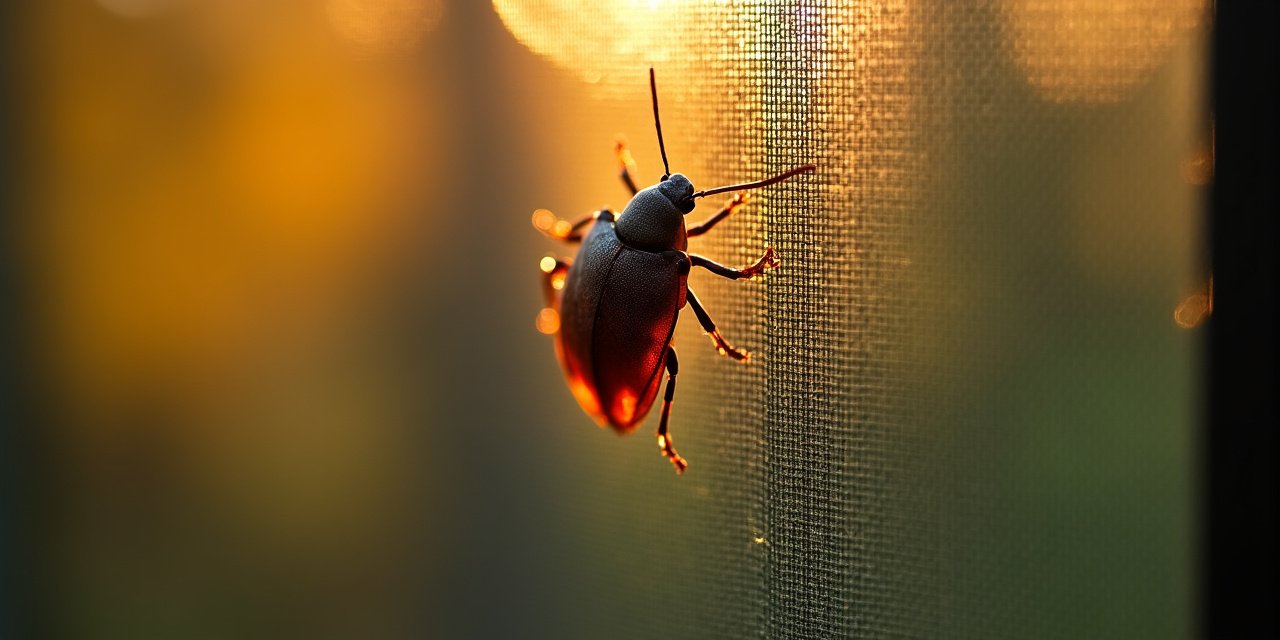
Every October, Westchester homeowners start finding them on south-facing walls, clustered on warm window frames, or crawling through gaps they didn't know existed. The brown marmorated stink bug (BMSB) has become one of the most persistent fall nuisance pests in the region — and one of the most mishandled. The instinct to swat or squish them is understandable. It's also exactly the wrong move.
What Is the Brown Marmorated Stink Bug?
Halyomorpha halys is an invasive species native to East Asia — primarily China, Japan, and Korea. It was first detected in the United States in Allentown, Pennsylvania in 1998, almost certainly arriving as a hitchhiker pest in shipping containers or packing material. By 2010 it had spread throughout the mid-Atlantic states, and it is now well established throughout Westchester County and the greater New York region.
Visually, the BMSB is distinctive: a shield-shaped body approximately 5/8 inch long, marbled brown and gray with alternating light and dark bands on the antennae and abdomen edges. They are strong fliers and are capable of traveling several miles in search of suitable overwintering sites.
Outside, they are legitimate agricultural pests — they pierce plant tissue and feed on the juices of fruits, vegetables, and ornamentals, causing significant crop damage. Inside your home, they are purely a nuisance. They do not reproduce indoors, they do not damage the structure, and they do not bite. Their sole indoor offense is their odor — and the sheer number that can accumulate in a home that is not properly sealed.
Why They Invade Homes in Fall
Stink bugs are not cold-tolerant. As temperatures begin to drop in September and October, they aggregate on warm, sun-facing surfaces — typically the south and west walls of structures — and actively seek gaps into the building's interior. They exhibit a chemical aggregation behavior: bugs that successfully enter a structure release aggregation pheromones that attract additional individuals from outside.
This is why stink bug invasions escalate so quickly. A few dozen bugs enter in early October. They release chemical signals. By mid-October you may have hundreds overwintering in your wall voids and attic. October is the critical intervention window.
Common entry points in Westchester homes include:
- Gaps in window and door frames, especially where caulking has dried and cracked
- Gaps around window air conditioning units left in place past summer
- Utility penetrations — cable, electrical, HVAC lines through siding
- Chimney gaps around the cap or damper
- Attic vents without intact screening
- Roofline and fascia gaps where siding meets roofing material
- Gaps in brick weep holes
The Smell: Why You Must Not Squish Them
The scent glands of Halyomorpha halys are located on the underside of the thorax between the first and second pair of legs. When the bug is disturbed, crushed, or threatened, it releases a blend of aldehydes — primarily trans-2-decenal and trans-2-octenal — that produce a pungent odor often described as a mix of cilantro, skunk, and something chemical.
Beyond the immediate unpleasantness, there are two additional reasons to avoid crushing:
- The odor can permeate soft furnishings, carpet, and fabric, lingering for hours or days.
- The chemical signal may attract additional stink bugs from outside or elsewhere in the structure.
The correct indoor removal method is vacuum removal using a HEPA vacuum or a vacuum with a sealed bag. Immediately after vacuuming, take the vacuum outside, remove the bag, seal it in a plastic bag, and dispose of it in an outdoor trash container. Alternatively, pick them up individually using a plastic bag as a glove, seal, and flush. Do not swat them against surfaces.
Interior Management Options
Once stink bugs are inside your home, your options for managing them without chemical intervention are limited but workable:
Vacuum removal is the primary tool. For a moderate invasion of 10–20 bugs per day appearing in living spaces, consistent vacuum removal is manageable. Use a dedicated vacuum bag you replace frequently to reduce odor buildup inside the machine.
Light traps (devices that attract bugs to a UV light source and trap them in a catch container) can be helpful in rooms where bugs aggregate at night — typically near windows. They are not a complete solution but reduce the daily removal burden.
Reducing entry from wall voids: Stink bugs in wall voids that begin to emerge into living spaces in late winter, awakened by interior heat, can be temporarily managed by sealing gaps around light switch plates, outlet covers, and where baseboards meet flooring. These are the paths they use to move from void to living space.
None of these interior measures addresses the underlying problem. The durable solution is exclusion — sealing the building envelope before they enter in the first place.
Exterior Exclusion: The Only Durable Fix
Physical exclusion — sealing every gap in your home's exterior through which a 3/8-inch insect can pass — is the only strategy that provides year-over-year protection. This work is most effective when done in August or early September, before stink bug aggregation begins.
Use the checklist below to work through your home's exterior systematically:
Chemical Treatment: Timing Is Everything
A professional exterior application of a pyrethroid-based residual insecticide to the exterior surfaces of a home — applied in September, before stink bugs begin aggregating — provides meaningful reduction in the number of bugs that successfully enter. The treatment targets bugs that land on treated siding, window frames, and foundation surfaces as they search for entry points.
Critical timing: the treatment must be applied before the fall aggregation begins, not after bugs are already inside. An October treatment applied to the exterior has limited benefit for bugs already overwintering in wall voids.
Interior pesticide application is not recommended for stink bugs. Killing bugs inside wall voids creates two secondary problems: the odor of decomposing bugs permeates the structure, and dead insects in wall voids attract dermestid beetles — a secondary infestation that is often more difficult to resolve than the original stink bug problem.
When to Call a Professional
DIY exclusion and vacuum management is appropriate for light to moderate invasions. Contact a licensed pest control professional when:
- You are finding more than 20 bugs per day in living spaces
- You have found a large aggregation colony in your attic or wall voids
- You had a significant infestation the prior year and want to prevent recurrence with a professional exterior treatment in September
- You have identified gaps in hard-to-reach areas — rooflines, chimneys, high fascia — that require ladder access and professional-grade sealing materials
For more on identifying pest problems before they escalate, see our post on signs of a pest infestation in your home and our spring pest prevention checklist. For a full range of pest control services in Westchester, visit our Pest Control Scarsdale page.
Stink Bugs Taking Over Your Home Each Fall?
Pristine Pest connects Westchester homeowners with licensed pest control providers for professional exclusion and exterior treatment — applied before the October invasion begins.
Call (877) 938-6799Lead generation service. Licensed providers in your area will contact you. Disclaimer.
Frequently Asked Questions
Why do stink bugs come inside in fall?
Brown marmorated stink bugs are not adapted to survive cold temperatures. Each fall they seek warm, sheltered overwintering sites — and the walls, attics, and crawl spaces of Westchester homes are ideal. They enter through any gap larger than 3/8 inch in siding, windows, and utility penetrations. This aggregation behavior means dozens to hundreds can enter a single home in October.
Are stink bugs dangerous to humans or pets?
Stink bugs are not dangerous to humans or pets. They do not bite, sting, or transmit disease. Their only meaningful impact is the unpleasant odor released when disturbed or crushed, and the nuisance of large numbers overwintering inside a home. They do cause significant agricultural damage to fruit and vegetable crops.
What happens if I squish a stink bug inside my house?
Crushing a stink bug releases a pungent aldehydic odor from scent glands on the thorax. The odor can linger in fabric and carpet. More problematically, the odor may attract additional stink bugs. The correct removal method is to vacuum them using a HEPA vacuum or a vacuum with a sealed bag, then immediately dispose of the bag outside.
Do stink bugs lay eggs inside my home?
No. Stink bugs do not reproduce inside homes. They enter in fall solely to overwinter and become dormant. In spring they exit to lay eggs outdoors on vegetation. The concern is the large number of insects overwintering in wall voids and attics, which can attract secondary pests — particularly dermestid (carpet) beetles that feed on dead insects.
Does professional treatment eliminate stink bugs?
Professional exterior pyrethroid treatment applied in September — before stink bugs begin seeking overwintering sites — significantly reduces the number entering a home. The most durable solution, however, is physical exclusion: sealing every gap in the building envelope. Professional treatment combined with exclusion provides the best results. Interior pesticide application is not recommended as dead bugs in wall voids attract secondary pest infestations.