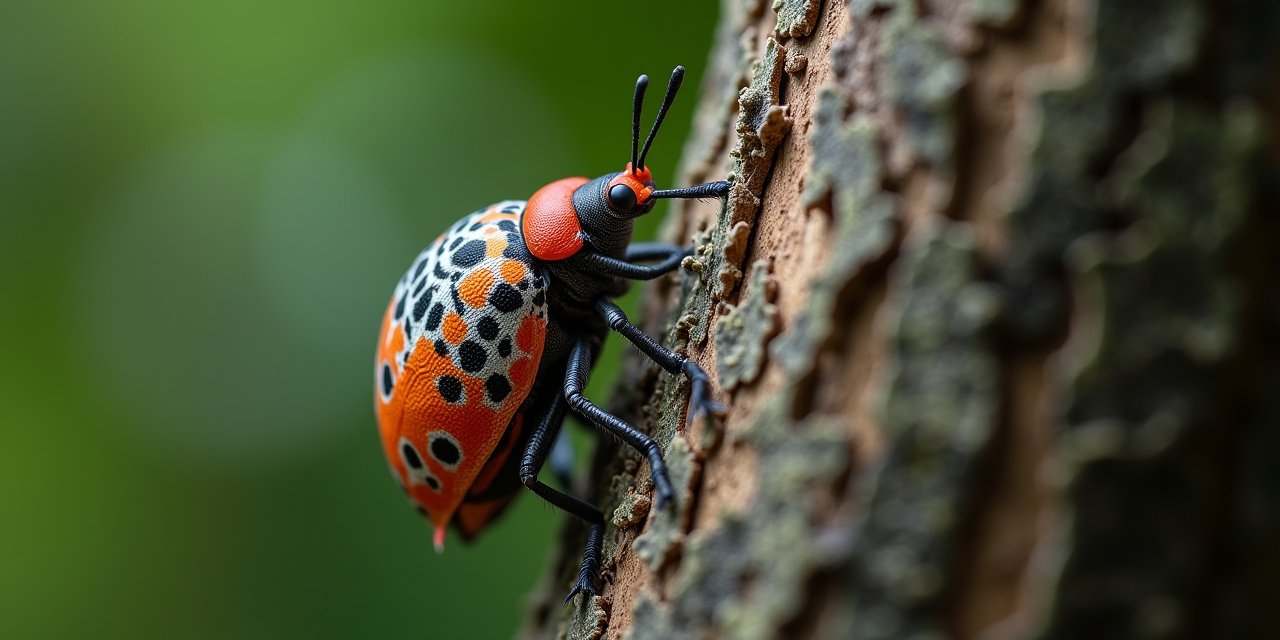
Researchers are closing in on natural predators that could eventually help control spotted lanternfly populations. That's genuinely good long-term news. It's also, right now, not a reason to skip treatment on your property this season.
Here's what the research actually shows, what's still unproven, and why Tree of Heaven on or near your property still matters more than any predator currently being studied.
What the Research Is Actually Studying
Entomologists have been evaluating several candidate natural enemies since spotted lanternfly established itself in the Northeast. None is a silver bullet yet, but each targets a different part of the lanternfly life cycle.
Both fungal candidates depend heavily on weather. A humid, wet late summer can trigger a visible die-off in one area while a dry season nearby shows almost none. That inconsistency is exactly why neither fungus functions as a dependable control method yet, even where it's naturally present.
Spotted Lanternfly · Scarsdale & Westchester
Natural predators are years away from reliable control. Egg mass removal and targeted treatment still do the work this season.
Pristine Pest connects Westchester homeowners with licensed spotted lanternfly treatment providers. Lead gen service · read disclaimer.
Call (877) 938-6799How Far Out Is Reliable Biological Control?
Approving a new biological control agent for release, especially a non-native one, typically takes years of safety testing to confirm it won't harm native species. Use the slider below to see roughly where each stage of that process tends to sit on the research timeline.
Biocontrol Research Timeline
Drag the slider to see what's typically happening at each stage.
Why Tree of Heaven Still Matters More
Spotted lanternfly strongly prefers Tree of Heaven as a host plant, and it lays egg masses there and on nearby hard surfaces: fences, patio furniture, firewood, vehicles. A property with even one untreated Tree of Heaven nearby will keep attracting lanternflies each season, regardless of any natural enemy research progress.
Cutting a Tree of Heaven without treating the stump makes the problem worse, not better. Untreated stumps resprout aggressively, and that resprouting growth is exactly the tender tissue lanternflies prefer to feed on.
For full identification and treatment guidance, see our articles on spotted lanternfly in New York and spotted lanternfly in Scarsdale. For how to tell it apart from a look-alike pest, see stink bug vs. spotted lanternfly.
Frequently Asked Questions
What natural enemies attack spotted lanternfly?
Researchers are studying parasitoid wasps that attack egg masses, plus two fungi, Batkoa major and Beauveria bassiana, that can cause die-offs of adult lanternflies under the right conditions.
Should I stop treating spotted lanternfly and wait for natural predators?
No. None of the candidates is established or reliable enough yet to function as standalone control. Egg mass scraping, tree banding, and targeted treatment are still what works this season.
Why does spotted lanternfly keep coming back to the same trees?
Spotted lanternfly strongly prefers Tree of Heaven and lays egg masses on it and nearby hard surfaces. One untreated tree nearby will keep drawing lanternflies back every season.
Is spotted lanternfly dangerous to people or pets?
No. It doesn't bite or sting and isn't a health risk. It's a plant pest, and its honeydew waste attracts sooty mold and stinging insects like wasps.