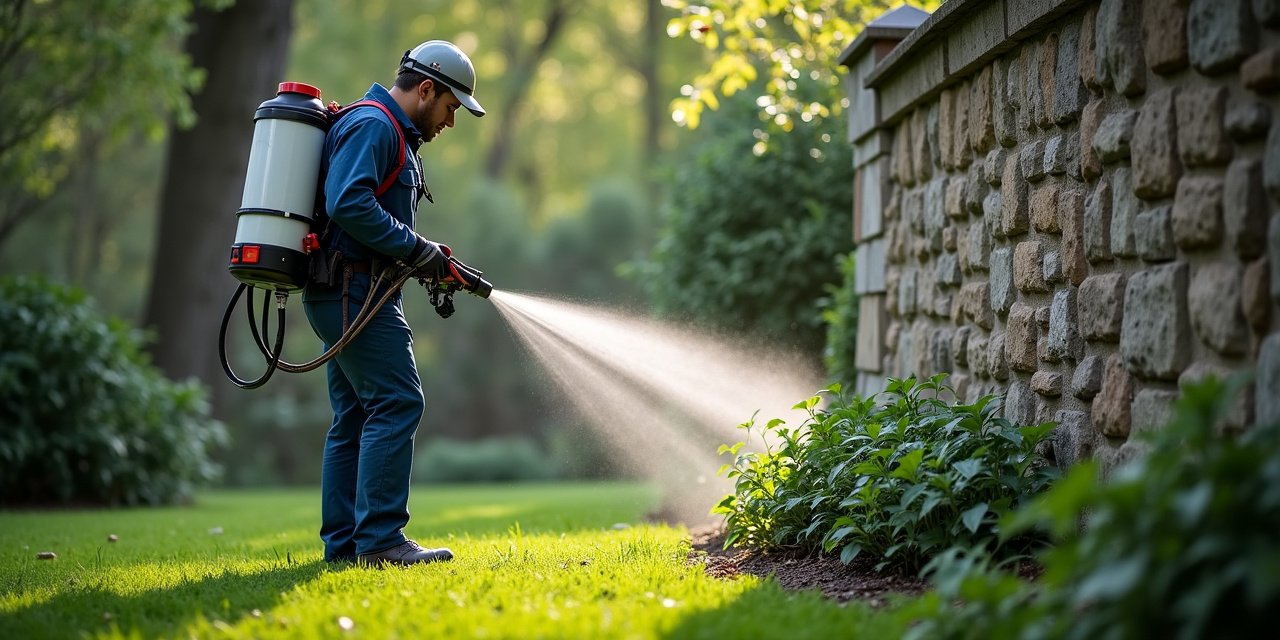
Most homeowners schedule a tick treatment and then stand at the window watching the technician walk around the yard for 20 minutes. They're not sure what he's spraying, where he's focusing, or whether what he just did will actually work. That's a reasonable thing to wonder. Tick treatments look underwhelming from a distance, especially if you're expecting something dramatic.
What's actually happening during that visit is targeted and specific. Understanding the biology behind it makes the process make more sense, and helps you know what to look for to evaluate whether you're getting a thorough job.
Where Ticks Actually Live in a Scarsdale Yard
Blacklegged ticks (deer ticks) don't live in open lawn. They need humidity to survive: direct sun desiccates them. In a typical Scarsdale yard, the high-density tick habitats are: the wooded edge and any transition zone between lawn and tree cover, stone walls and their surrounding leaf litter, groundcover beds (pachysandra, ivy, vinca), the shaded area under decks and porches, tall grass margins along fence lines, and any shaded zone that stays moist. These are the places a professional should be spending most of the treatment time.
Open, sunny lawn has very low tick density. The technician who walks quickly across the middle of your yard and calls it done hasn't done much. The one who spends time working slowly along your wooded border, the base of your stone wall, and the perimeter of your groundcover beds has addressed the actual habitat.
What the Technician Does, Step by Step
A professional tick treatment typically runs 20–45 minutes depending on yard size and complexity. It should include a quick visual walk of the property before any product is applied: the technician is looking at habitat quality, noting stone walls, wooded edges, groundcover density, and any areas with deer traffic or evidence of wildlife.
Product application follows a perimeter-inward pattern starting at the wooded edge and transition zones. For a bifenthrin or permethrin-based spray, the wand is directed low: at the base of vegetation, into groundcover, along stone wall faces, and under deck boards. The technician should be moving slowly, ensuring good coverage. The underside of leaves matters in shaded beds.
After the perimeter and high-risk zones are covered, the lawn edge gets treatment (not the whole lawn, but the 6–10 feet of turf immediately adjacent to the wooded edge or groundcover beds). That transition strip is where ticks are most likely to migrate onto usable yard space. The center of a sunny open lawn is skipped entirely.
If tick tubes are part of the program, the technician places them along the wooded edge and near stone walls, spaced roughly 10 yards apart. These are cardboard tubes stuffed with permethrin-treated cotton. Mice collect the cotton for nesting material; the permethrin kills the ticks feeding on the mice. It's a slow, indirect approach that complements the spray rather than replacing it.
Seasonal Treatment Calendar: 3-Visit Program
Target species, active life stage, and treatment priorities change across the season.
Visit 1: May
Nymph Peak: Highest Risk WindowBlacklegged tick (deer tick), American dog tick
Nymphs: poppy-seed sized, hardest to see, most likely to transmit Lyme disease
Wooded edge, leaf litter piles, groundcover beds, stone walls
Tick tube placement along wooded border
Visit 2: July
Mid-Season MaintenanceBlacklegged tick (larvae and surviving nymphs), American dog tick (adults)
New larval cohort hatching; residual nymph activity continues
Same wooded edge + transition strip; under deck; fence line groundcover
Tick tube refresh if included in program
Visit 3: September
Fall Adult PeakBlacklegged tick adults: at peak activity before winter dormancy
Adults actively questing on vegetation for deer hosts; highly mobile
Wooded edge, tall vegetation, stone walls; deer travel corridors through yard
Final tick tube placement for the season
After the Treatment: What to Expect
Most programs ask you to keep people and pets off treated surfaces until the product dries, typically 1–2 hours. Once dry, the treated areas are safe. You won't see immediate visible results because the product is working on contact with ticks that land on treated surfaces, not as a repellent. Ticks that were already questing on vegetation die when they contact treated stems and groundcover.
You should notice a meaningful reduction in tick encounters within 24–48 hours. If you're doing regular tick checks after spending time in the yard, you should be finding dramatically fewer ticks on clothing and skin. That reduction holds for roughly 4–6 weeks depending on weather and rainfall.
Tick spray on its own is a strong tool, but it works best as part of a habitat management approach. Keeping grass trimmed, removing leaf litter from the wooded edge, and cutting back overgrown groundcover all reduce the humid microhabitats ticks depend on. A technician doing their job well might mention these when they're walking your property. If they don't, it's worth asking.
Ready to set up a seasonal tick program for your Scarsdale yard?
Pristine Pest connects Westchester homeowners with licensed tick control providers. Lead gen service · read disclaimer.
Call (877) 938-6799Pairing Tick and Mosquito Treatment
Many providers in Westchester offer combined tick and mosquito programs, and it makes logistical sense. The target zones overlap significantly: wooded edges, dense groundcover, and shaded beds are high priority for both. Combining the visits reduces the number of service calls and typically costs less than booking each program separately.
The key difference is application timing relative to the season. Mosquito treatments start earlier (late April/May) and run later into September. Tick treatments are more concentrated around the May nymph peak and September adult peak. A good combined program accounts for both schedules rather than just running identical visits on a fixed calendar.
For more context on tick season timing and Lyme disease risk in Westchester, see our articles on tick season 2026, tick prevention for NY homeowners, and Lyme disease symptoms for Westchester residents. Our main tick and mosquito control page and the tick and mosquito service page have more on what a full program looks like. For Scarsdale-specific information, see the Scarsdale service area page.
Frequently Asked Questions
How soon after treatment can we use the yard?
Most professionals recommend staying off treated areas until the product has fully dried, typically 1–2 hours depending on temperature and humidity. Your technician will provide a specific re-entry time. Pets should also stay off treated grass and groundcover until dry.
How many tick treatments do I need per year?
A standard Westchester program involves three visits: May (targeting nymphs, the highest-risk life stage), July (mid-season maintenance), and September (targeting the fall adult peak). Some homeowners add an April treatment if deer tick pressure is high on their property.
What are tick tubes and how do they work?
Tick tubes are cardboard tubes stuffed with permethrin-treated cotton. Small mammals (particularly white-footed mice, the primary reservoir host for Lyme disease) collect the cotton for nesting material. The permethrin kills ticks on the mice without harming the mice themselves, interrupting the tick-mouse-tick transmission cycle.
Does tick spray work in the rain?
Most technicians won't apply tick spray if rain is forecast within 24 hours: rainfall dilutes and washes off the product before it binds to vegetation. If unexpected rain occurs within a few hours of treatment, many companies will offer a re-treatment. Ask about the rain policy when you book.