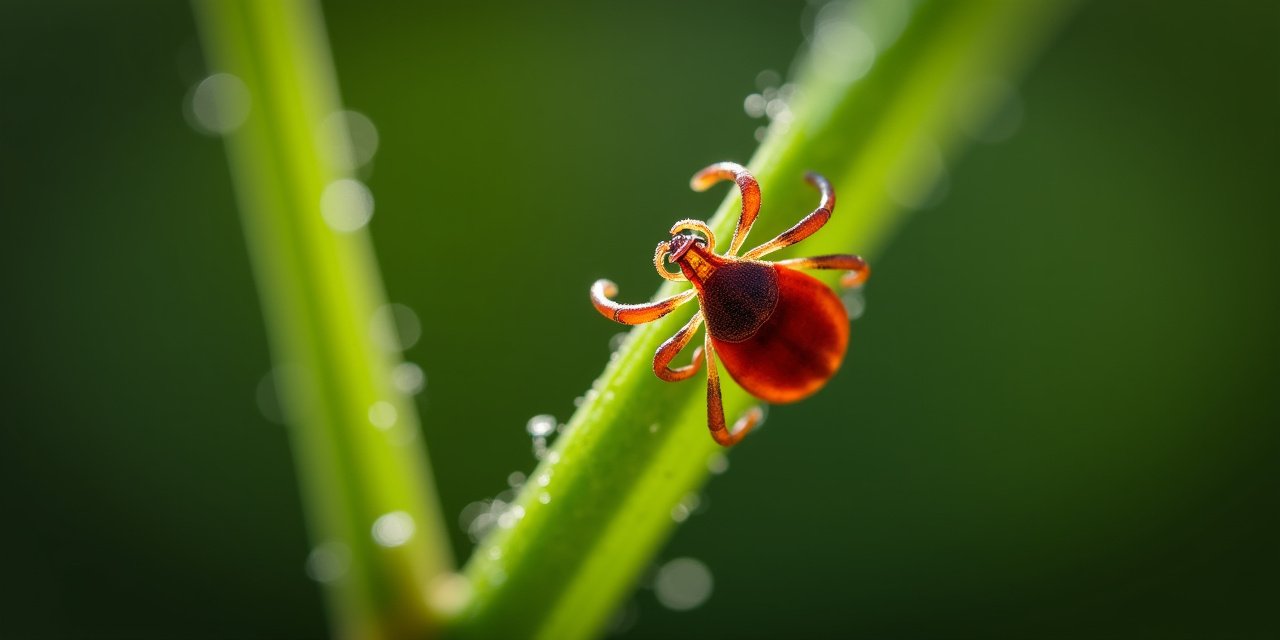
Regional health experts are sounding the alarm about tick season 2026. Nicole Baumgarth at Johns Hopkins Bloomberg School of Public Health reported that May 2025 alone saw a 30% increase in emergency room visits for tick-borne illness across the Hudson Valley, and forecasters say 2026 is shaping up to be more active still.[1]
If you live in Westchester County, this isn't background noise. Westchester consistently ranks among the highest-risk counties in New York State for confirmed Lyme disease cases. The combination of a large deer population, dense woodland-to-suburb transition zones, and a climate that's trending milder each year has created near-ideal conditions for tick expansion.
This guide covers why 2026 stands out, which tick species to watch in your backyard, where you're most at risk on your own property, and what you can realistically do (on your own and with professional help) to protect your family and pets this season.
Why 2026 Is Being Flagged Before the Season Even Peaks
The pattern that correlates most strongly with bad tick years is a mild, snow-covered winter followed by an early warm spring. That's exactly what the Northeast got in 2025–2026. Snow cover helps ticks and their host animals (white-tailed deer and white-footed mice) survive winter more easily. Mild March temperatures then accelerate the tick life cycle, pushing nymphs into their active phase weeks ahead of schedule.
News 12 Hudson Valley reported on April 2, 2026, that tick-borne illness hospitalizations had surged the previous spring, with public health researchers at Johns Hopkins flagging the data as a warning for the season ahead.[1] A separate AOL Health report from April 12, 2026, confirmed that pest activity broadly (including ticks) is arriving earlier than normal due to weather anomalies.[2]
Beyond the calendar shift, there's a subtler problem: the proportion of deer ticks that are infected with Lyme-causing bacteria continues to rise in Westchester. Infected tick rates in some Westchester woodland areas have been documented at 50% or higher in recent surveys. Roughly one in two deer tick bites carries real transmission risk if the tick feeds long enough.
The Three Tick Species in Westchester and What Each One Carries
Not every tick is a Lyme tick. Westchester is home to three species that bite humans regularly, and they carry different disease risks.
Deer Tick (Blacklegged Tick): Ixodes scapularis
The primary concern in Westchester. The deer tick transmits Lyme disease, anaplasmosis, and babesiosis. Adults are reddish-brown and roughly the size of an apple seed. Nymphs are the size of a poppy seed. That's exactly why they cause most infections. They're tiny enough to go unnoticed until they've been feeding for hours.
Lone Star Tick: Amblyomma americanum
Identifiable by a single white spot on the female's back. The lone star tick doesn't transmit Lyme but does carry ehrlichiosis, STARI (Southern tick-associated rash illness), and alpha-gal syndrome (a red-meat allergy triggered by repeated bites that can last for years). It's an aggressive biter and tends to attack in groups.
American Dog Tick: Dermacentor variabilis
The largest of the three, most active May through August. It can transmit Rocky Mountain spotted fever and tularemia, though at much lower rates than the deer tick. Prefers open, grassy areas: lawn edges, trail shoulders, and unmowed patches.
Where on Your Property Are You Most Exposed?
Here's something most people get wrong: the majority of tick bites happen in the home yard, not on hiking trails. Research consistently shows that 50–80% of Lyme disease cases originate in residential outdoor spaces, specifically the transition zones between maintained lawn and wooded or brushy borders.[3]
In a typical Westchester property, the highest-risk zones are:
- The edge where your lawn meets a wooded or shrubby border
- Wood piles and leaf debris near the house foundation
- Dense perennial garden beds and ornamental grasses
- Shaded, moist areas under decks or near downspouts
- Pathways where deer regularly pass through the yard
Deer ticks don't jump or fly. They "quest," climbing to the tips of grass blades and low shrubs with forelegs outstretched, waiting to latch onto a passing host. They rarely venture far into open, sunny, dry lawn areas. The shadier, moister, and taller the vegetation, the higher the tick density.
Children playing near lawn-to-woods edges and dogs that roam yard borders are at the highest risk. If your yard backs up to trees or has an overgrown corner, those spaces deserve the most attention.
Tick Treatment · Westchester County
Get your yard treated before nymph season peaks.
April–May is the optimal window for barrier spray treatment targeting nymph-stage deer ticks. Licensed providers, no obligation.
Call (877) 938-6799What to Do After Every Outdoor Activity
Timing is everything. Deer ticks generally need to be attached for 36–48 hours before transmitting Lyme disease bacteria. A tick check done promptly after outdoor time can interrupt that window before transmission occurs. Here's what the protocol looks like:
- Shower within 2 hours of coming indoors. Studies show this meaningfully reduces Lyme disease risk by washing off unattached ticks
- Full body check with a mirror: hairline, behind ears, armpits, navel, groin, and back of knees are common attachment sites
- Dry clothes first, then wash: put outdoor clothes in a hot dryer for 10 minutes before washing; heat kills ticks that cold-water washing won't
- Check pets with a fine-tooth comb before they come inside
If you find a tick attached:
- Use fine-tipped tweezers, grasp as close to the skin as possible
- Pull upward with steady, even pressure. Don't twist.
- Clean the bite site with rubbing alcohol
- Monitor for symptoms (rash, fever, fatigue) for 30 days
- Call your doctor immediately if you develop a bull's-eye rash or fever. Don't wait.

Professional Yard Treatment: What Works and What Doesn't
If you have young children or pets that use the yard, professional barrier spray treatment is worth serious consideration, particularly in Westchester, where tick pressure is consistently elevated.
What actually works:
Barrier sprays: Pyrethroid-based treatments applied to the yard's transition zones: lawn-to-woods edges, garden beds, shrub borders, and wood piles. Studies from the University of Rhode Island TickEncounter Resource Center show barrier sprays reduce tick populations in treated zones by 68–100%.[4] Most effective when applied in late April/early May for nymphs and again in September–October for adult deer ticks.
Tick tubes: Biodegradable cardboard tubes stuffed with permethrin-treated cotton. Mice collect the cotton for nesting material, and the permethrin kills ticks on the mice before they can pass them to deer or onto humans. This targets the primary reservoir host in the Lyme disease life cycle.
Combined tick-and-mosquito programs: Many Westchester providers offer seasonal programs that cover both with a single quarterly visit, which is cost-effective for homeowners dealing with both pressures. See our tick and mosquito control service page for more detail.
What doesn't work as advertised:
Deer-repellent plants alone: Lavender and rosemary have some deterrent effect, but they won't meaningfully reduce tick populations when deer regularly pass through your yard.
Single-visit treatments: Tick treatment requires at least two applications per season to cover both the nymph and adult tick peaks. A one-time spray in May won't protect you through the September–October adult deer tick surge.
The most effective approach combines professional yard treatment with personal protection habits (light-colored clothing, DEET on exposed skin, daily tick checks) and veterinarian-recommended tick prevention for pets.
For Renters and Apartment Dwellers: What You Can Do
If you rent and don't control the yard, you can still take meaningful steps. Talk to your landlord about scheduling a tick treatment for shared outdoor spaces. In New York, landlords have obligations under the warranty of habitability to maintain habitable conditions, which includes significant pest pressure. For shared yards or garden areas, document your request in writing.
For personal protection: treat clothing with permethrin spray before outdoor activity, use DEET on exposed skin, and do a full body check after spending time outside, even just in a shared backyard or on a walk through Scarsdale's Weinberg Nature Center or any wooded park. For more seasonal protection steps, see our spring pest prevention checklist. For comprehensive Lyme disease prevention strategies specific to Westchester County in 2026, see our Lyme Disease Prevention Guide for Westchester 2026.
Frequently Asked Questions
When is tick season in Westchester County?
Deer ticks are active from early April through late November in Westchester, with two peak risk windows: May–June for nymphs (which transmit most Lyme cases) and September–October for adult deer ticks. In 2026, experts note earlier-than-normal activity beginning in March due to mild winter temperatures.
How long does a tick need to be attached to transmit Lyme disease?
Deer ticks typically need to be attached for 36–48 hours before transmitting the Lyme bacterium Borrelia burgdorferi. This is why prompt tick checks after outdoor activity matter. Removing a tick within 24 hours dramatically reduces your infection risk.
What are the early symptoms of Lyme disease?
Early symptoms include a bull's-eye rash at the bite site, fatigue, fever, headache, and muscle or joint aches. The bull's-eye rash appears in 70–80% of cases but not always. Symptoms typically begin 3–30 days after the bite. See a doctor immediately if you develop any of these. Early antibiotic treatment is highly effective.
Does professional tick yard treatment actually work?
Yes. Studies from the University of Rhode Island TickEncounter Resource Center show professional barrier spray treatments reduce tick populations in treated yard zones by 68–100%. For maximum effectiveness, apply twice per season: once in April–May for nymphs, and again in September–October for adult deer ticks.
Can I get Lyme disease from my dog?
Dogs can't transmit Lyme directly to humans, but infected ticks on your dog can detach and bite household members. A dog testing positive for tick-borne illness is a reliable signal that your outdoor spaces have significant tick activity. Talk to your vet about tick prevention products appropriate for your pet's size and health.