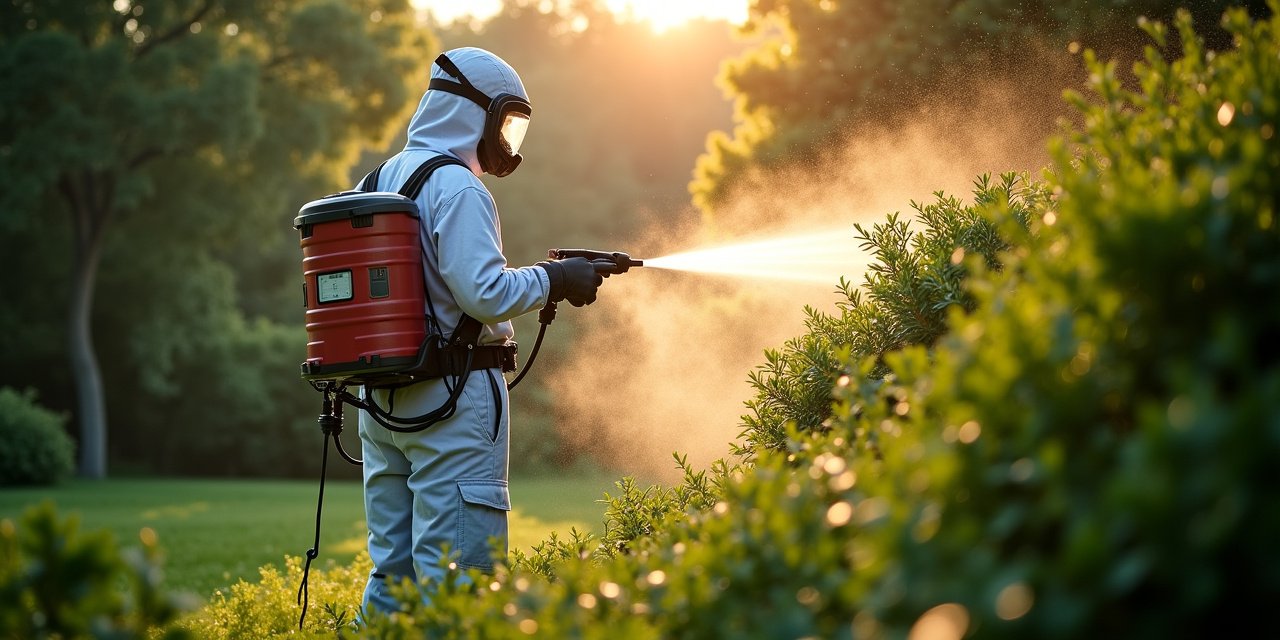
Most homeowners picture a mosquito treatment as something like a fumigation, a chemical cloud that kills anything airborne. That's not how it works. Understanding the actual biology of mosquito resting behavior changes how you think about where treatment goes, why open lawn is low priority, and what results are realistic to expect.
Where Mosquitoes Actually Are During the Day
Mosquitoes are poor flyers, and they dehydrate quickly. A mosquito that's been active (feeding or searching for a host) will spend most of the daylight hours at rest in shaded, humid microhabitats. In a typical Westchester backyard, that means: the undersides of leaves in dense shrub beds, the inner stems of ornamental grasses and groundcover, the shaded underside of decks, the wooded edge where your yard meets tree cover, and low vegetation along fence lines.
Open lawn is not a resting habitat. A mosquito sitting on a sunlit patch of grass would lose body moisture rapidly. So the large, well-manicured lawn that looks like the most obvious target actually has the lowest mosquito density. The shrub beds and wooded edges that most homeowners pay less attention to are where the population is concentrated.
This is a crucial point: a barrier spray applied only to open turf is almost useless. Coverage of leaf undersides in shrub beds, groundcover, and wooded borders is what matters.
How Barrier Spray Works
A barrier treatment deposits a residual insecticide (typically a pyrethrin or permethrin-based formula) onto the surfaces where mosquitoes rest. When a mosquito lands on a treated leaf or stem, it picks up a lethal dose through contact. The product doesn't need to hit the mosquito directly during application; the residual does the work over the following 17–21 days as mosquitoes cycle through their resting sites.
The application technique matters as much as the product. A good technician moves slowly through shrub beds and along wooded edges, directing the nozzle at leaf undersides and the inner structure of dense plantings, not just the visible outer surface. Fence lines, the underside of deck boards, and the base of hedges all get attention. Open lawn gets little or none, because it doesn't need it.
Barrier spray knocks down the existing resting population quickly. Most of the reduction happens within the first 24–48 hours. The residual then continues working as new mosquitoes from surrounding areas enter the treatment zone and land on treated surfaces.
Treatment Priority Zone Map: Typical Westchester Backyard
Top-down view. Color indicates where barrier spray effort should be concentrated.
Standing water features require separate larvicide treatment. Barrier spray alone won't address breeding sites.
Larvicide: The Other Half of the Treatment
Barrier spray handles the adult mosquito population in resting zones. It does nothing about the larval population developing in standing water. These are two separate problems that need two separate treatments.
Mosquito larvicide, most commonly Bacillus thuringiensis israelensis (Bti), a naturally occurring bacterium, is applied to standing water sources where larvae are present. Bti is toxic to mosquito larvae and fungus gnats but has no effect on humans, pets, birds, or beneficial insects. It comes in dunks or granular form and is dropped into birdbaths, rain barrels, ornamental ponds, clogged gutters, or any standing water that can't be drained.
A professional treatment that covers resting zones with barrier spray and breeding sites with larvicide will outperform barrier spray alone by a significant margin. If you skip the larvicide, you're killing adults while the next generation hatches in your birdbath.
Ready for a professional mosquito treatment?
Pristine Pest connects Westchester homeowners with licensed mosquito control providers. Lead gen service · read disclaimer.
Call (877) 938-6799What Results to Expect
A well-executed barrier treatment in a typical Westchester backyard will reduce mosquito activity by 70–90% within 48 hours. That's a meaningful reduction. You'll notice the difference during evening hours outdoors. It's not elimination, and it's not a force field. Mosquitoes can and will still fly onto your property from neighboring areas, especially if you're near a wooded edge or a neighbor has standing water.
The effect fades over 17–21 days as the residual breaks down and weather conditions (especially rain) dilute the treatment. This is why a single application in June isn't a mosquito solution. It's a seasonal program. Most professional providers offer 6–8 treatments from May through September, timed to maintain consistent residual coverage through the peak season. Some also offer organic or essential-oil-based alternatives for households with sensitivities to conventional pyrethroids.
For timing context, see our mosquito season timeline for 2026. If you're comparing treatment approaches, the organic vs. chemical mosquito control comparison is worth reading. For tick control at the same time, tick yard treatment in Scarsdale covers how the two programs are often run together. Our main tick and mosquito control page and the Scarsdale mosquito control page have more on what a full seasonal program looks like.
Frequently Asked Questions
How long does a mosquito barrier spray last?
Most professional barrier treatments last 17–21 days under normal conditions. Heavy rain can shorten the effective period to 10–14 days. A seasonal program typically includes 6–8 treatments from May through September rather than a one-time application.
Is it safe for kids and pets after a barrier spray?
Most licensed applicators use pyrethrin or permethrin-based products. Once the treatment has dried (typically 30–45 minutes after application), the treated area is considered safe for children and pets. Your technician should provide a specific re-entry time. Organic alternatives are available for households with sensitivities.
Why are mosquitoes still biting after a barrier treatment?
Barrier spray reduces mosquito populations in treated resting zones by 70–90%, but doesn't eliminate every mosquito. New ones can fly in from neighboring properties, wooded areas, or untreated sections of your yard. Untreated breeding sites (standing water anywhere on or near your property) will keep replenishing the population.
What standing water sources do people most often miss?
The most commonly overlooked sources are plant saucer dishes, tarps with pooled water, birdbaths not changed weekly, clogged gutters, low lawn spots that hold water after rain, and outdoor toys. A mosquito only needs about a tablespoon of stagnant water to complete larval development.