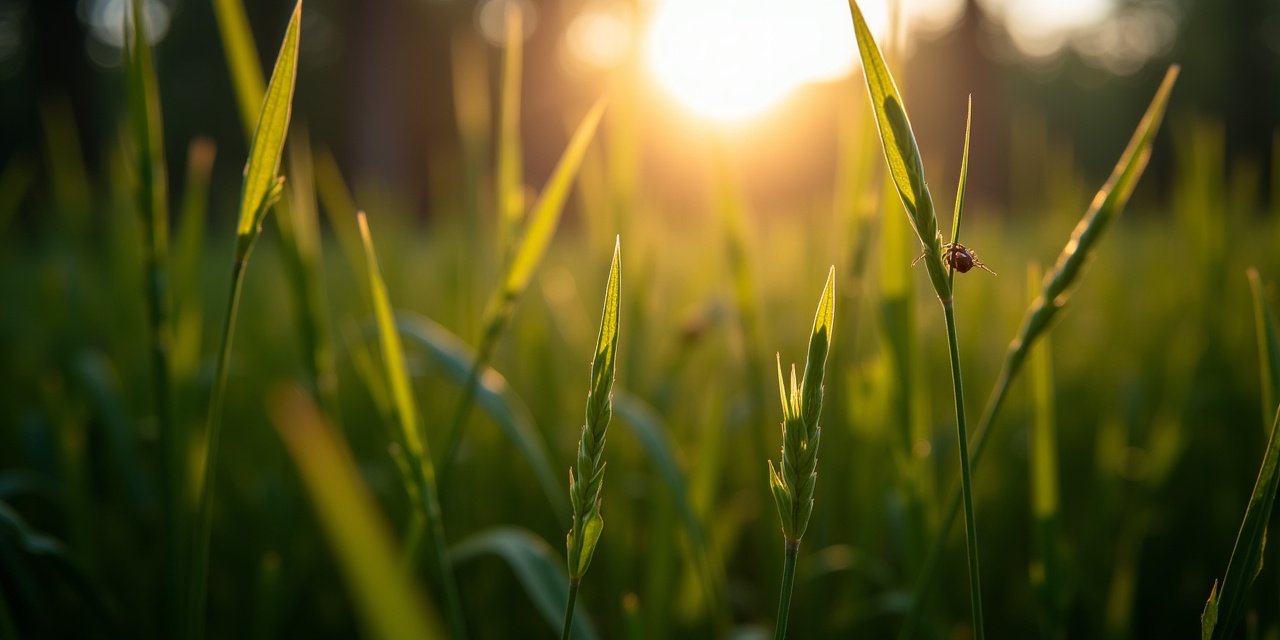
Tick nymphs cause more Lyme disease cases than adult ticks in Westchester County. They're smaller, harder to spot, and more likely to feed long enough to infect you.
Medical disclaimer: This is general education, not medical advice.
Ticks, mosquitoes, and rodents can carry disease.
If you suspect exposure or symptoms, consult a qualified healthcare provider.
Most Westchester homeowners picture a tick as something you'd actually notice. That picture is wrong for the stage that matters most.
Adult deer ticks are dark and roughly sesame-seed sized. Most people catch them during a normal check. Nymphs are a different animal entirely.
This year adds a wrinkle. A rough winter cycle nudged nymph activity earlier. It's carrying into midsummer instead of tapering off in June.
Knowing what you're looking for changes everything. This guide covers the differences that actually matter, not just trivia.
Why Nymphs Are Harder to Spot
Size is the first problem. A nymph measures about 2 millimeters, roughly the size of a poppy seed.
Color is the second problem. Unfed nymphs are pale and semi-translucent, closer to a freckle than a bug. They blend into skin, moles, and even stray pepper flakes on a picnic blanket.
Once a nymph starts feeding, it swells and darkens, but by then it's already attached. Detection has to happen before that point, not after.
Nymph
- Poppy-seed sized before feeding
- Active May through July in Westchester
- Responsible for most local Lyme cases
Adult
- Sesame-seed sized, easier to spot
- Active mainly fall through spring
- Usually removed before transmission occurs
Nymphs are also easy to confuse with larvae, the life stage before them. Larvae are smaller still, about the size of a grain of sand. They have six legs instead of eight.
Larvae rarely carry infection since they haven't fed on a host yet. That's why nymphs, not larvae, are the stage worth worrying about.
A magnifying glass helps confirm a suspected nymph, but don't wait for one. Treat anything that small and dark on your skin as a possible tick.
Nymphs also lack the flat, oval shape adults have before they feed. An unfed nymph looks flat and round, more like a scale than a bug.
The 2026 "Cold-Warm-Cold" Winter Cycle
Nymph numbers this season trace back to last winter, not this spring. Westchester saw a mild December. Then came a hard freeze in January, followed by a warm February thaw.
Entomologists call this kind of swing a "cold-warm-cold" cycle. Each freeze and thaw disrupts the diapause that ticks rely on to survive winter.
A stable cold winter actually works in ticks' favor less than you'd think. Consistent cold lets nymphs stay dormant until conditions are reliably warm.
A cycle of freeze, thaw, and freeze again does the opposite. It signals false starts, and some nymphs begin questing before a true spring arrives.
A disrupted diapause can push nymphs to emerge earlier and in bigger numbers. Cornell Cooperative Extension flags this pattern as a factor behind the active nymph season.
That's part of why nymph activity in Westchester has stretched later into summer this year. Don't assume the risk window has closed just because it's July.
Homeowners who schedule treatment based on the calendar alone can miss this shifted window. A treatment timed to "typical May" misses ticks active from a February thaw onward.
The same conditions are part of what's driving the ER-tracked surge data this year. That article covers the case numbers. This one covers how to tell a nymph from an adult before it bites.
New York State's 10/10 Risk Rating
New York State's tick risk index rates Westchester County a perfect 10 out of 10. That's the top tier for Lyme disease exposure this year.
The rating measures nymph density, questing activity, and confirmed case data across the county. It's not a prediction. It's a snapshot of current conditions on the ground.
The rating climbed from a 7 in 2023 to a 10 this year. Officials point to the same freeze-thaw pattern driving the ER-tracked surge.
- 10/10 — Westchester's current NY State Lyme disease risk rating
- May–July — peak nymph activity window in this region
- 2–3 days — typical attachment time before an unnoticed nymph bite is found
- Majority — share of local Lyme cases tied to nymph bites, not adult bites
Westchester isn't an outlier. It's part of a Hudson Valley cluster that ranks among the state's highest-risk regions.
Neighboring counties like Putnam and Rockland sit close behind, in the 8 to 9 range. A 10 doesn't mean every yard has ticks. It means the baseline conditions favor them almost everywhere.
For homeowners, the rating is a planning tool more than a warning label. A property backing onto woods or a stone wall carries more actual risk.
Years without a confirmed bite doesn't mean your property is exempt. Risk builds quietly in leaf litter and stone walls people rarely check.
Nymph vs. Adult Bite-Risk Comparison
Size isn't the only difference that matters. Nymphs and adults carry different bite risks for a few concrete reasons.
| Factor | Nymph | Adult |
|---|---|---|
| Size | ~2mm, poppy seed | 3–5mm, sesame seed |
| Visibility | Very low | Moderate |
| Typical attachment before detection | 2–3 days | Under 24 hours |
| Share of local Lyme cases | Majority | Minority |
| Peak season in Westchester | May–July | Oct–May |
The gap in attachment time explains most of the difference. A tick that's removed within a few hours rarely has time to transmit infection.
A nymph attached for two days has already crossed the risk window. That's the entire reason size and visibility matter here.
Visibility explains the biggest gap. A nymph's translucent body barely shows against skin. An adult's dark shell stands out fast.
Season explains the rest. Nymphs peak when yards see the most foot traffic all season. Think cookouts, gardening, and kids playing outside.
Waiting for an obvious tick before taking action misses the point. By the time you see a sesame-seed sized tick, the riskiest window has often passed.
None of this means adult ticks are safe to ignore. It means nymphs deserve the same attention, even though they're far easier to miss.
Where Nymphs Hide on the Body
Nymphs don't jump or fly. They crawl upward from grass and look for the nearest patch of skin.
Most people pick up a nymph doing ordinary yard work. Mowing near a wooded edge or weeding a garden bed are common culprits.
School sports fields bordered by woods are a common exposure point too. So are hiking trails with tall grass brushing against the path.
That usually means the lower body first, then anywhere warm and hidden. Check these spots first, in this order:
- Behind the knees and along the ankles
- The waistband and groin area
- The armpits and under the bra line
- Behind and inside the ears
- Along the hairline and scalp
- Behind the belly button
Children and pets pick up nymphs lower on the body. They're closer to the grass. Adults get more bites at the waistline and hairline.
Light-colored clothing makes a nymph easier to spot before it reaches skin. Tucking pant legs into socks closes off the easiest path upward.
Run fingers slowly over skin instead of relying on sight alone. A nymph often feels like a small bump before it's visible. A hand mirror helps check your back and scalp.
Prevention Checklist and When to Call for Yard Treatment
Daily habits cut exposure. They don't eliminate a nymph population already established on your property.
Followed consistently, this list catches most nymphs before they attach for long. It won't touch the population already living in your leaf litter and stone walls.
A professional barrier treatment targets where nymphs actually live. That means wooded edges, stone walls, and groundcover beds. It's applied where daily habits can't reach.
A single treatment doesn't hold all season. Most professional programs schedule follow-up visits timed to nymph and adult activity windows.
A Cornell-educated pest management professional can confirm what you're finding and where it's coming from. That confirmation is worth more than another bottle of spray.
Our professional vs. DIY tick treatment guide breaks down when a spray bottle is enough.
Our tick and mosquito control program covers seasonal treatments for both life stages.
Call for a professional yard treatment if any of these apply:
- You've found a nymph attached to a family member this season
- Your yard borders woods, a stone wall, or tall grass
- Store-bought sprays haven't cut down visible tick activity
- A pet has tested positive for a tick-borne disease
Nymph Season · Scarsdale & Westchester
Nymph activity is still elevated into July this year. Waiting until August gives them more time on your property.
Pristine Pest connects Westchester homeowners with licensed tick control providers for LymeShield-style barrier treatments. Lead gen service, read disclaimer.
Call (877) 938-6799Frequently Asked Questions
What's the easiest way to tell a nymph from an adult tick?
Size is the fastest tell. A nymph is about 2 millimeters, roughly a poppy seed. An adult is 3 to 5 millimeters, closer to a sesame seed.
Why are nymph bites more dangerous than adult bites?
Nymphs are harder to see and stay attached longer before anyone notices. That longer attachment time raises the odds of Lyme transmission. Adults get spotted and removed faster in most cases.
When is nymph season in Westchester County?
Nymph activity runs May through July, peaking in late May and June. Activity can stay elevated into early summer during a mild season.
Can a nymph bite happen without me ever seeing the tick?
Yes, and it happens often. A nymph's size and color let it blend into skin for days. Most people only find one by accident, during a shower or a routine check.
Does a nymph bite always mean I'll get Lyme disease?
No. Most nymph bites don't transmit infection if the tick is removed quickly. Risk climbs the longer it stays attached, which is why early detection matters most.