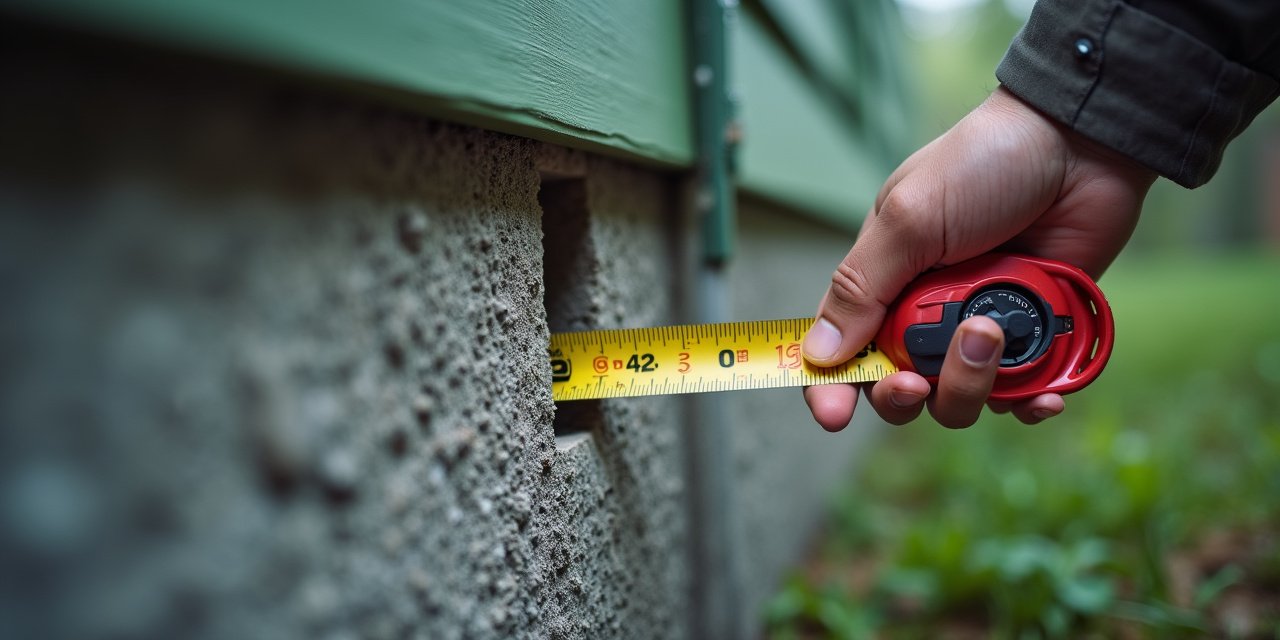
A mouse can squeeze through a gap the width of a pencil. A rat only needs one the width of a quarter. Westchester homes have plenty of both, especially around older foundations and utility lines.
Homeowners want one number before they call anyone. This guide breaks down the price per linear foot in Westchester. It also covers what pushes that price up or down.
Rodent damage adds up fast once entry points stay open. Chewed wiring, soiled insulation, and drywall repairs can cost more than the exclusion job itself. Getting ahead of it usually pays for itself.
Westchester's older housing stock makes this a bigger issue than in newer suburbs. Stone foundations and mature trees near the house give rodents plenty of cover. Stacked stone walls along property lines add even more.
What "Exclusion" Includes: Sealing, Screening, and Door Sweeps
Exclusion means physically closing every entry point a rodent could use. It isn't a spray or a bait station. It's carpentry and materials work.
A typical job seals foundation cracks with copper mesh and hydraulic cement. It screens vents and fills gaps around pipes.
Worn door thresholds get steel sweeps too. A gap under a door is an open invitation.
Exclusion works best paired with removing outdoor harborage near the foundation. Wood piles, dense groundcover, and debris under decks give rodents a staging area. Clearing it makes the sealed foundation far more effective.
A lot of homeowners try foam or caulk first. It looks sealed for a few weeks, then a rodent chews straight through. Real exclusion materials are built to outlast that first attempt.
Material choice matters more than most homeowners expect. Rodents chew through plastic and foam insulation without much effort. That's why real exclusion relies on metal.
Screens matter as much as sealants. Attic and foundation vents need 1/4 inch hardware cloth. Most Westchester homes come standard with flimsy plastic louvers instead.
Typical Cost Per Linear Foot for Westchester Homes
Most Westchester exclusion jobs run $9 to $16 per linear foot. That range covers materials, labor, and the inspection needed to find every gap.
Estimate Your Exclusion Cost
Enter your home's foundation perimeter in linear feet for a ballpark price range.
Estimate only, based on a $9-$16 per linear foot range. Actual pricing depends on foundation type, access, and entry points found at inspection.
- $9-$16 per linear foot is the typical Westchester range for full exclusion
- 150-200 ft is the average foundation perimeter on a Westchester single-family home
- $1,350-$3,200 is what most full exclusion jobs total, based on that perimeter
- 3-8 is the typical number of active entry points found during inspection
The per linear foot number usually covers materials and standard sealing labor. It typically doesn't include structural repairs or insulation replacement. A full attic cleanout costs extra if contamination is already present.
Pricing runs per linear foot, not a flat fee. The work scales with perimeter, not square footage. A long ranch can sometimes cost less than a smaller home with a complicated foundation.
Get quotes from more than one provider before committing. Prices vary based on crew experience and the materials a company chooses to use.
The calculator above uses the same $9 to $16 range cited throughout this guide. Multiply your perimeter by the low and high end to see your range.
Homes with a crawl space typically cost more than slab homes of the same perimeter. Crawl space vents and access doors add extra entry points that need their own materials.
Factors That Raise or Lower the Price
Foundation type changes the math first. Poured concrete is straightforward to seal. Fieldstone and rubble foundations, common in older Westchester homes, have far more natural gaps.
Home age matters too. Houses built before 1970 often have retrofitted utility lines. Old pipe penetrations were rarely sealed properly the first time.
Access points add up fast. Attached garages and crawl spaces both add complexity. Multiple HVAC penetrations mean more materials and more labor hours.
Roof lines and chimneys create their own gaps. Loose flashing and chimney caps let rodents climb in from above.
Additions built at a different time than the original structure often have their own seam. That seam is where the two foundations meet, and it's a commonly overlooked entry point.
Pet doors and dryer vents are common overlooked gaps. Both need a rodent-proof cover that still lets the door or vent function normally.
Finished basements raise the price too. Crews have to work around drywall, flooring, and furniture. An open, unfinished space is faster and cheaper to seal.
A one-story ranch with a poured foundation is usually the cheapest job to quote. A colonial with a stone foundation and finished basement costs more, sometimes close to double.
Exclusion vs. Ongoing Trapping Cost Comparison
Trapping treats the rodents already inside. Exclusion stops new ones from getting in. They solve different problems, and the cost math reflects that difference.
A single trapping visit in Westchester typically runs $150 to $300. Most active infestations need three to six visits before the population is under control.
| Approach | Typical Cost | What It Solves |
|---|---|---|
| Exclusion | $9-$16 per linear foot, one-time | Closes entry points permanently |
| Trapping only | $150-$300 per visit, ongoing | Removes current rodents, not the access |
| Exclusion + trapping | Exclusion cost, plus 1-2 initial visits | Clears current activity and prevents return |
DIY traps look cheaper at first glance. A dozen snap traps might cost $30 total. But checking traps weekly and replacing bait takes real time.
Misplaced traps often miss the actual entry points too.
Every week rodents stay inside is a week they can chew wiring or insulation. That damage often costs more to repair than the exclusion job would have cost upfront.
Most Westchester providers recommend both together for active infestations. Trapping clears out what's already inside while the exclusion crew seals the gaps. Skipping exclusion means the same problem returns within a season.
Run that math over a year. Repeated trapping visits can cost more than one exclusion job. Meanwhile, no entry points ever get closed.
New mice move in as fast as old ones are removed.
Financing and Payment Options
Exclusion is a bigger upfront number than a single trapping visit, so payment flexibility matters. Many Westchester providers offer financing that splits the total into monthly payments.
A financed exclusion job often breaks down to $50 to $150 a month. The exact number depends on the total and the term length. That's often less than a year of trapping visits.
Bundling exclusion with an existing pest control contract sometimes qualifies for a discount. It's worth asking if your current provider offers combined pricing.
Most reputable exclusion work comes with a one to two year workmanship warranty. Ask what voids it, since some warranties require pairing exclusion with ongoing pest control.
Selling a home soon? Buyers and inspectors increasingly ask about rodent entry points during walkthroughs. Finished exclusion work is worth mentioning in disclosures and listings alike.
Some providers break the job into phases. They seal the highest-risk entry points first and finish the rest later. That spreads the cost without leaving the home exposed.
Timing affects price and wait time both. Scheduling tightens as the weather cools and demand rises. That's why August is the deadline to act.
Waiting until October often means a longer queue and colder crawl space work. Booking exclusion in summer avoids both problems entirely.
Rodent Exclusion · Scarsdale & Westchester
Seal It Once. Done for Good.
Chemical treatments wear off. Exclusion doesn't. Our Home Shield Exclusion team permanently closes the gaps rodents use to get in.
Call (877) 938-6799How to Get an Accurate Estimate
A phone quote is a guess. An accurate price needs an inspection. No two homes have the same number of gaps.
Start by catching the early signs first. Droppings, gnaw marks, and grease trails near the foundation tell an inspector where to look.
Spring and late summer are the busiest inspection seasons in Westchester. Booking early in the week or early in the season usually means a faster appointment.
A good inspection covers the full foundation perimeter and roofline. It checks utility penetrations and any crawl space or attic access. It should end with a written scope, not just a number over the phone.
Ask these questions before signing anything.
- What materials will be used at each entry point
- Whether the quote includes a written scope with photos
- How many entry points the inspection found
- Whether a workmanship warranty is included
A written scope with photos protects both sides. It shows exactly which gaps were sealed and with what material. That record matters if something reopens later.
Get everything in writing before work starts. A lowball quote that skips the roofline or crawl space almost always costs more later. The missed gap eventually gets found, usually by another rodent.
Ask what materials get used. Copper mesh and steel wool resist chewing. Plastic or foam alone won't hold, and rodents will simply chew back through within weeks.
A follow-up check a few weeks later confirms nothing was missed. Fresh droppings or new gnaw marks after the job mean a spot was overlooked. That doesn't mean exclusion failed outright.
Our rodent control team starts every job with an inspection, not a guess. For pricing on other pests, see our full Westchester pest control cost guide.
Frequently Asked Questions
How much does rodent exclusion cost per linear foot in Westchester?
Most Westchester exclusion jobs run $9 to $16 per linear foot. A typical single-family foundation measures 150 to 200 linear feet. That puts most full jobs between $1,350 and $3,200.
Is exclusion worth it compared to just trapping?
For most homes, yes. Trapping alone runs $150 to $300 per visit, often several times a year. Exclusion is a one-time cost that closes the entry points for good.
Does homeowners insurance cover rodent exclusion?
Almost never. Rodent damage and prevention are typically excluded as a maintenance issue, not a covered peril. Some providers offer financing or phased pricing instead, which spreads the cost without a claim.
How long does a rodent exclusion job take?
Most single-family homes take two to four hours once entry points are mapped. Homes with crawl spaces, additions, or stone foundations can take longer.
What's the difference between exclusion and regular pest control treatment?
Treatment targets rodents that are already active, usually with bait or traps. Exclusion is physical work that seals the openings they used to get in. Treatment and exclusion solve different halves of the same problem.
Can I do rodent exclusion myself?
Some homeowners handle small gaps themselves with the right materials. Larger gaps, roofline access, or crawl space work usually need a professional. They bring ladders, mesh, and experience finding hidden entry points.
Need the cost of the mouse treatment itself? See our mouse exterminator cost guide.