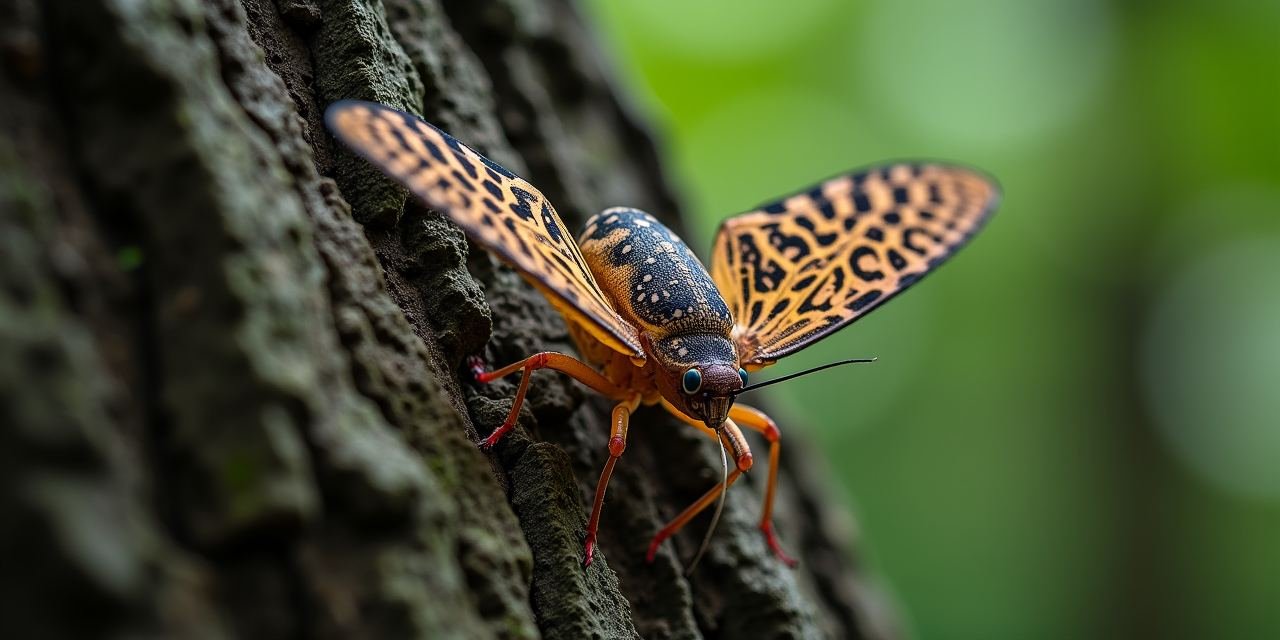
Spotted lanternfly has now been confirmed across nine regions of New York State. A bipartisan federal bill was introduced in early August to fund research into controlling it.
The Short Version
This Pristine Pest news report covers two developments that landed almost simultaneously in early August. A fresh round of state warnings tracks the spread to new regions. A bipartisan federal bill aims to fund the fight.
Last month, this desk covered the disqualification of New York's assumed biological control wasp. Its replacement still faces years of federal review.
This report picks up where that one left off. The population isn't waiting on a lab fix, and neither is Washington.
Where It's Spreading Now
Lycorma delicatula, better known as spotted lanternfly, has spread across nine regions statewide. State warnings confirmed the spread in early August.
That's striking for an insect that appeared on Staten Island just six years ago. Westchester County is confirmed as infested by the state.
The New York State Department of Agriculture and Markets confirmed it. Westchester has been tracked since the earliest outbreaks moved north from the city.
What the Damage Actually Looks Like
Spotted lanternfly doesn't chew leaves the way most plant pests do. It feeds by piercing plant tissue and drawing out sap directly. That mechanism weakens the host from the inside, rather than visibly stripping it.
Tom Anderson, Davey Tree: "What they do is they suck sap out of the plant, which weakens the plant and reduces their overall health."
Large congregations excrete honeydew, a sticky, sugar-rich waste product. It coats surfaces below and promotes sooty mold growth. That secondary problem can blacken decks, furniture, and understory plants, even without direct feeding.
Grapevines, hops, and maples are among the most exposed hosts. That's exactly why the economic warnings now attach real numbers to the threat.
Washington Notices: A New Federal Bill
Spotted lanternfly has mostly been a state and county problem in New York. That changed in early August.
Sen. Kirsten Gillibrand introduced the bipartisan Spotted Lanternfly Research and Development Act. It formally designates the insect a threat, and directs federal research dollars toward controlling it.
Sen. Kirsten Gillibrand: "The spotted lanternfly has proven to be a destructive pest that threatens New York state's specialty crops, especially vineyards throughout Western New York, the Finger Lakes, Long Island and the Hudson Valley."
A federal research bill won't change what's already established on a Westchester property this season. What it signals is bigger: the insect has outgrown state and county responses alone. That includes New York's own biocontrol wasp effort, still stuck in review.
Should You Report a Spotted Lanternfly Sighting?
Not every sighting needs a report, but a few signs make it worth doing. Check what applies to what you're seeing.
What This Means for Westchester Homeowners
Westchester's spotted lanternfly problem isn't new, but the framing shifted twice this week. A statewide warning confirmed the spread hasn't slowed. A federal bill now treats it as more than a regional nuisance.
Neither changes what works at the property level. Squash adults on sight. Stomping doesn't work against their speed, but direct contact does.
Photograph and report sightings. Also address any Tree of Heaven on the property, the insect's preferred host. Cutting one down without treating the stump causes aggressive resprouting that keeps the habitat going.
Large, established populations are different. That's especially true for high-value trees, or a patio coated in honeydew and sooty mold. There, a professional pest control assessment earns its cost over a season of manual squashing.
Frequently Asked Questions
Is spotted lanternfly still spreading in New York in 2026?
Yes, as of early August 2026, spotted lanternfly has spread across nine regions statewide. It first appeared on Staten Island back in 2020. Westchester County is among the areas the state confirms as infested.
How much economic damage could spotted lanternfly cause in New York?
Cornell University research projects a $14 million cost to New York's grape industry. That's over the first three years of an uncontrolled invasion. Vineyards in Western New York, the Finger Lakes, and the Hudson Valley are most exposed.
What is the new federal spotted lanternfly bill?
Senator Kirsten Gillibrand introduced the bipartisan Spotted Lanternfly Research and Development Act in August 2026. It formally designates the insect as a threat to the nation's agricultural economy. The bill directs federal research funding toward controlling its spread.
What should Westchester homeowners do about spotted lanternfly?
Squash adult spotted lanternflies on sight. Photograph and report sightings to the Department of Environmental Conservation or local agricultural officials. Treat any Tree of Heaven on the property, since cutting it without herbicide causes resprouting.
Sources
Last updated: August 8, 2026
This article is provided for general educational purposes only and does not constitute agricultural or pest control advice. Pest identification and treatment decisions should involve a licensed pest management professional. Pristine Pest is a lead generation service that connects homeowners with licensed pest control providers. We are not a licensed pest control company and do not perform inspections or treatments. Read our full disclaimer.
Pristine Pest may receive compensation when you contact pest control providers through this site. This does not affect the accuracy of our content.