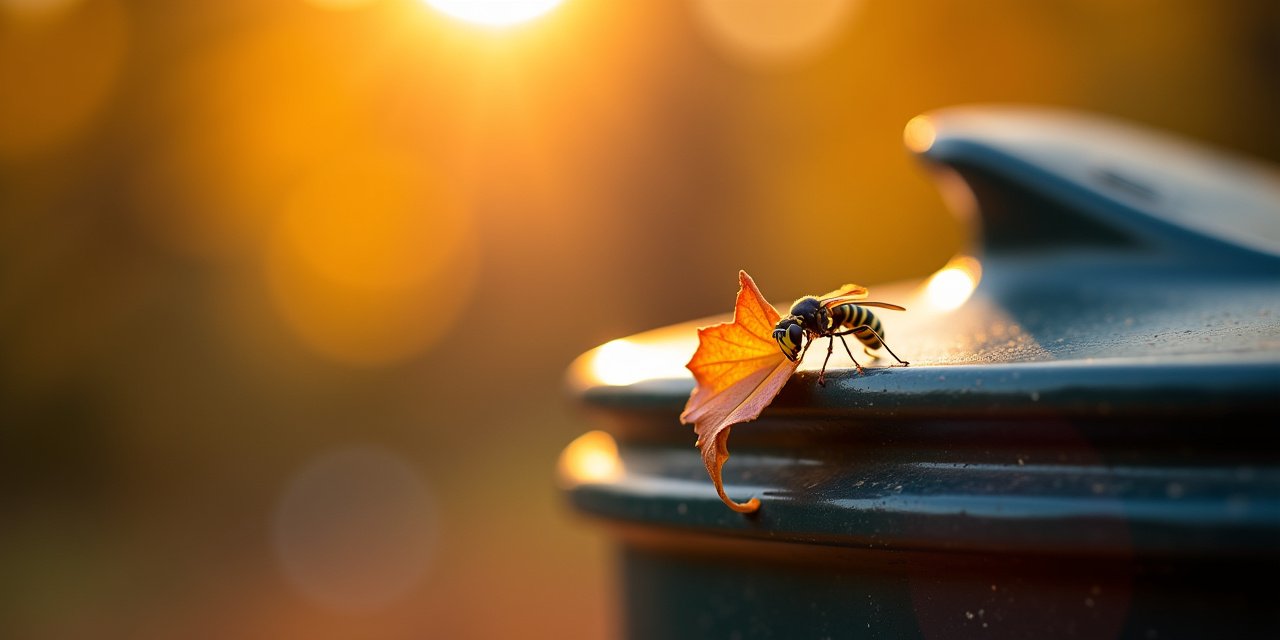
Westchester yellow jacket colonies reach their largest population in late summer and early fall. At the same time, natural food sources start to run out.
The Short Version
This Pristine Pest news report explains fall yellow jacket attacks. They often seem to strike out of nowhere every September.
It isn't random. A colony spends spring and summer building toward its maximum size. By early fall it can hold thousands of workers, all still active.
At the same moment, the queen slows or stops laying eggs. Larvae, which normally produce a sugary secretion workers feed on, stop being available.
Hungry workers switch targets. Soda cans, fallen fruit and open trash bins become the colony's main food source. This puts wasps in direct contact with people far more often than in July.
Why Fall Colonies Are Larger and Angrier
A single fertilized queen starts a yellow jacket nest alone each spring. She raises the first handful of workers by herself. Then she hands off egg-laying duties full time.
From there, colony growth compounds through summer. By cooler nights, a mature nest becomes far larger than homeowners expect. It grows gradually, staying hidden until fall.
Nest location matters in Westchester specifically. Older colonial and Tudor-style homes offer sheltered spots under eaves and rooflines. Ground-nesting colonies prefer abandoned rodent burrows and other underground cavities.
"In the spring, food is abundant, and the colony's population is at its lowest. However, by the time the weather turns cold in the fall, the colony is at its maximum size, and simultaneously, food sources are starting to dwindle." Arrow Exterminating, on yellow jacket population dynamics.
The Starvation Effect
Fall aggression traces back to a specific biological switch. Once the queen stops laying eggs, no larvae remain. These larvae normally secrete a sugary substance adult workers rely on for food.
Workers respond by foraging further and more aggressively for any sugar they can find. That includes picnic food and soda. They also seek fruit that has fallen from trees and unsecured trash bins.
This is also why late-season colonies sting with less provocation than spring ones. Honey bees generally attack only when directly threatened. Yellow jackets are more predatory by nature, and that tendency intensifies under fall food stress.
Where Westchester Homeowners Get Stung
Most fall stings happen in ordinary outdoor moments rather than dramatic encounters. Common trigger points include:
- Reaching into an outdoor trash or recycling bin without a secure lid
- Drinking from an open soda or juice can left outside
- Walking near fallen, fermenting fruit under apple or pear trees
- Mowing or trimming near an unnoticed ground nest entrance
- Disturbing eaves, soffits or deck framing where a nest has grown all season
A nest disturbed by a lawnmower or pet can trigger a mass response. A fall colony's size creates different risk. Spring nests are smaller and calmer.
Is a Yellow Jacket Nest Active on Your Property?
Fall nests are frequently discovered only after they've grown large. Check what's currently true of your yard and exterior.
What Actually Works This Time of Year
Removal timing matters more in fall than in spring. A colony at its peak size defends far more aggressively when disturbed. DIY attempts on a large nest carry real risk of a mass-sting incident.
Sealing exterior gaps and securing trash lids reduce fall foraging. Cleaning up fallen fruit helps too. None of that removes an existing nest.
Confirmed nests near doors or play areas need professional removal. This accounts for colony size and defensiveness. Homeowners with fall wildlife exclusion needs often see both issues spike as resources get scarcer.
Frequently Asked Questions
Why are yellow jackets worse in September in Westchester?
Colonies reach their largest population of the year in early fall right as the queen stops laying eggs. With no larvae left to feed, adult workers switch to foraging aggressively for sugar, which puts them in direct contact with picnics, trash cans and outdoor drinks.
How big does a yellow jacket nest get by September?
A colony that starts spring with a single queen can hold several thousand workers by late summer, packed into an underground or wall-void nest that was invisible earlier in the season.
Should I remove a yellow jacket nest myself?
A fall nest is larger and more defensive than a spring one, and disturbing it can trigger a mass response. Professional removal is recommended once a nest is confirmed active, especially near doors, decks or play areas.
When do yellow jackets die off for the winter in New York?
Worker wasps die off once sustained freezing temperatures arrive, typically by late November in Westchester. Only mated queens survive, overwintering alone to start new colonies the following spring.
Sources
Last updated: September 2, 2026
This article is for general educational purposes only and does not constitute pest control advice. Pest identification and treatment should involve a licensed professional. Pristine Pest is a lead generation service connecting homeowners with licensed providers.
We are not a licensed pest control company and do not perform inspections or treatments. Read our full disclaimer.
Pristine Pest may receive compensation when you contact providers through this site. This does not affect content accuracy.