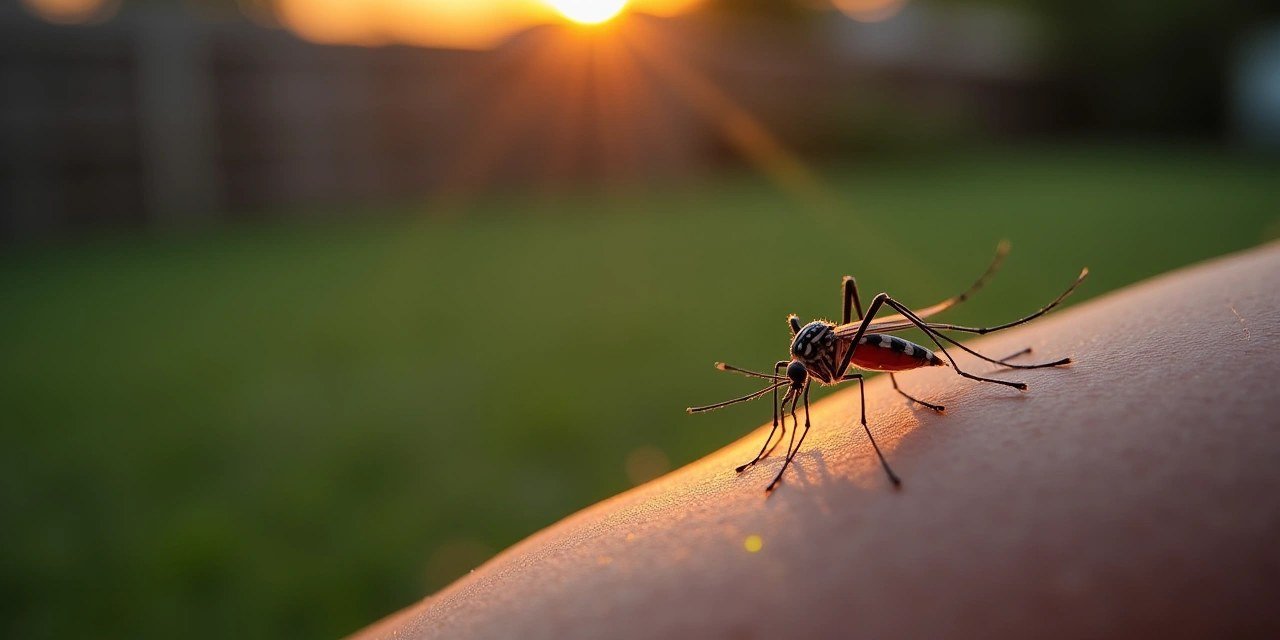
New York's Department of Health found West Nile virus in mosquito pools. The pools were in Nassau, Rockland and Suffolk counties, per its July 15, 2026 advisory. No human cases had been reported anywhere in the state as of that date.
The Short Version
This Pristine Pest news report covers a health advisory most Westchester homeowners haven't seen yet. New York's Department of Health confirmed West Nile virus in mosquito pools in three counties. Rockland borders Westchester directly.
Those counties were Nassau, Rockland and Suffolk, confirmed in mid-July 2026. No human cases had been reported statewide as of the advisory.
Westchester doesn't need a neighboring county's headline to take this seriously. The county's mosquito surveillance has confirmed a human West Nile case every year since 2024. It also found the virus in mosquito batches across five towns in one season.
This isn't a hypothetical risk arriving from next door. It's a recurring one with a local track record.
Why the State Issued the Advisory
The state's mid-July advisory reminded New Yorkers to take mosquito precautions. Routine testing pools had come back positive in the three counties.
As of the advisory, New York had reported no human West Nile cases for 2026. The same held for Eastern Equine Encephalitis.
But officials treated the confirmed pools as reason enough to act. They didn't wait for a human case to appear.
The state's prevention guidance is the standard short list:
- Use insect repellent
- Eliminate standing water around the home
- Wear protective clothing during peak mosquito hours, dawn and dusk
New Yorkers over 50 are the most likely to develop severe illness if infected. That's according to the state health department.
Westchester's Own Track Record
Westchester County runs its own mosquito trapping and testing program every year. That's independent of the state's county-level advisories. In August 2024, the county confirmed its first human West Nile cases of that year.
The cases were one New Rochelle resident and one Mount Vernon resident. In 2025, the county confirmed its first positive human case in a Yonkers resident.
That's two consecutive years with at least one confirmed human case. This season's numbers aren't in yet.
Westchester County Health Commissioner Dr. Sherlita Amler urged residents, on the 2024 cases, to focus on the fundamentals:
"Eliminating standing water and using insect repellents, particularly during dusk and dawn hours when mosquitoes are most active."
The county's trap data tells a wider story than the human case count alone. In 2024, positive mosquito batches turned up in five towns:
- Croton
- Mount Vernon
- Rye
- White Plains
- Yonkers
That's five towns spread across the county, not one isolated pocket.
How the County's Response Actually Works
When a mosquito batch tests positive, Westchester's Health Department inspects the surrounding area. It treats nearby catch basins holding standing water, to cut off further breeding.
Residents can report significant standing water on public property to the department. The number is (914) 813-5000.
That response only covers public infrastructure: catch basins, storm drains, public wetlands. It does not reach backyard sources on private property. That's where most of a household's actual mosquito exposure originates.
What Actually Breeds Mosquitoes on a Westchester Property
The county's own guidance names the usual residential culprits:
- Old tires, buckets, wheelbarrows and children's toys, or any container left outside that can hold water after rain
- Trash containers, which should stay covered
- Outdoor recycling bins, which need drainage holes drilled so they don't pool
- Birdbaths and potted-plant trays, which need draining twice a week
- Pools, which should stay chlorinated, with covers kept drained rather than left to collect standing water
Backyard Mosquito Breeding-Source Checklist
Check anything currently true of your property. Mosquitoes need as little as a bottle cap of standing water to breed.
This isn't diagnostic. It just flags how many active sources you're likely carrying right now.
What This Means for Westchester Homeowners
Clearing containers and birdbaths handles the obvious sources. But it doesn't touch the harder ones:
- Wooded lot edges
- Drainage swales
- Low-lying grass
- A neighbor's untreated yard bordering your own
Those are the sources a self-check misses. A perimeter spray alone doesn't reliably fix them either.
The standing water driving the population is often off to the side. That's away from where a technician actually sprays.
This matters most for homes near wetlands, wooded lots or drainage areas. That's common across Scarsdale and the rest of Westchester.
A mosquito program built around LymeShield or yard-level mosquito control treats standing-water sources directly. It doesn't just spray perimeter foliage. That's the more durable fix for the rest of the season.
Frequently Asked Questions
Has West Nile virus been found in Westchester County in 2026?
New York's July 15, 2026 advisory listed positive pools in Nassau, Rockland and Suffolk counties. Westchester wasn't among them this year, though no human cases had been reported. Westchester confirmed a human case yearly since 2024, plus batches in five towns that year.
Who is most at risk from West Nile virus?
New Yorkers over 50 are most likely to develop severe illness from West Nile virus. That's according to the state health department. Eastern Equine Encephalitis, a rarer, dangerous virus, threatens people over 50 and children under 15.
What are the most common backyard mosquito breeding sources in Westchester?
Westchester names tires, buckets, wheelbarrows, toys, trash containers, birdbaths and pool covers as top sources. Birdbaths and potted-plant trays should be drained twice a week. Pools should stay chlorinated, with covers kept drained rather than pooled.
Who do I call to report standing water in Westchester County?
Residents can report standing water on public property to Westchester's Health Department. Call (914) 813-5000. The department then inspects and treats nearby catch basins after a positive test.
Sources
- NY State Department of Health: Mosquito-Borne Diseases Advisory (July 15, 2026)
- NY State Department of Health: West Nile Virus (WNV)
- Westchester County: First Positive West Nile Virus Cases in Westchester in 2024
- Westchester County: First Positive West Nile Virus Case in Westchester County in 2025
- Westchester County Health Department: West Nile Virus prevention guidance
Last updated: July 26, 2026
This article is provided for general educational purposes only and does not constitute pest control advice. Pest identification and treatment decisions should involve a licensed pest management professional. Pristine Pest is a lead generation service that connects homeowners with licensed pest control providers. We are not a licensed pest control company and do not perform inspections or treatments. Read our full disclaimer.
Pristine Pest may receive compensation when you contact pest control providers through this site. This does not affect the accuracy of our content.