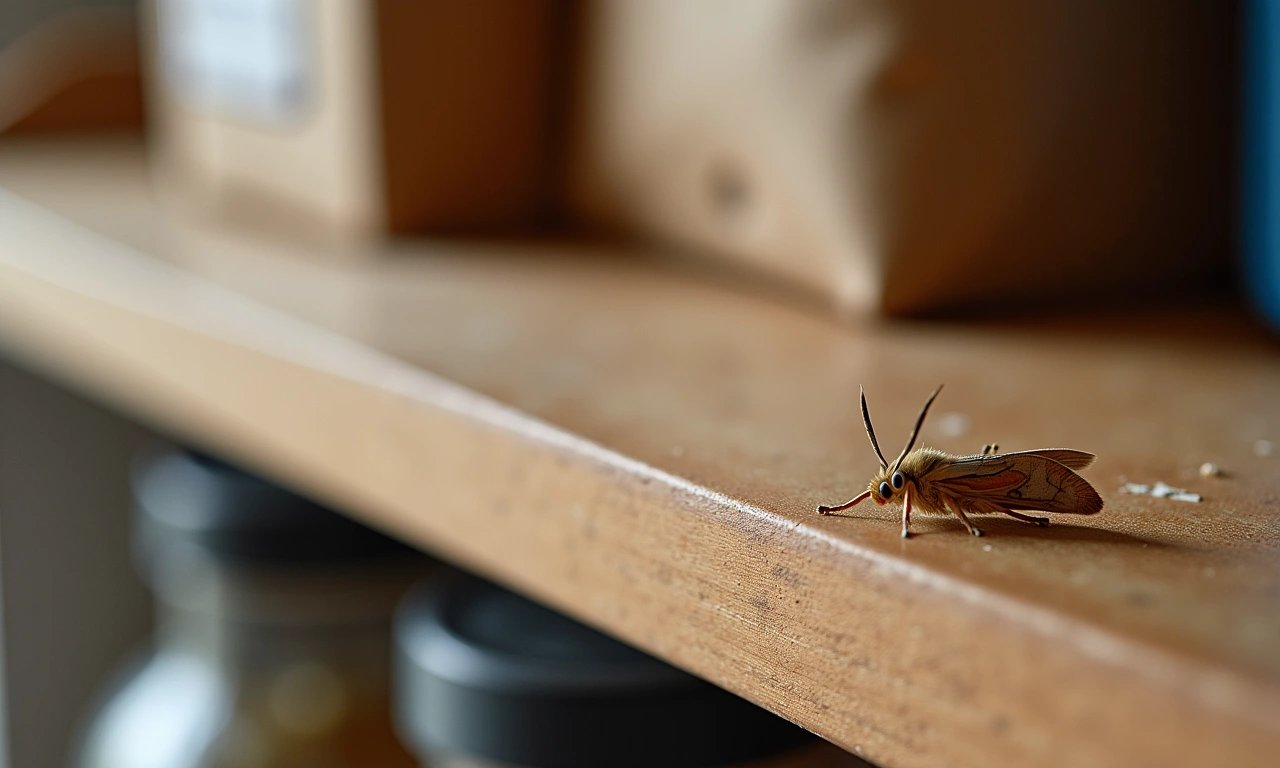
Flour, nuts, chocolate, and dried fruit are all foods larvae eat. Many pantries stock up on them before the holidays.
The Short Version
Indian meal moth larvae are seldom seen while feeding. AgriLife says larvae are hard to spot. They "often are not seen until they are searching for a location to pupate."
So the caterpillar on your ceiling is a late-stage signal. The infestation began earlier, inside a package.
Confirm It Is an Indian Meal Moth
Adults are gray, about 1 cm long. The far half of each wing shows "bronze coloration," per Colorado State.
The caterpillars are cream colored, sometimes tinged yellowish-green or pink. Their heads are dark brown.
What They Eat
AgriLife lists flour, dried fruit, nuts, chocolate, crackers, and dog food. That covers most of a holiday-baking pantry.
One infested bag can seed the shelf next to it. Larvae and adults move on to other packages.
"You need to find the source and get rid of it." Texas A&M AgriLife Extension.
Triage That Package
Use this with the suspect bag in your hand.
Two-Click Package Triage
How to use this: Answer two questions about the package you suspect. You get a keep, freeze, or discard call. Nothing is stored or sent.
Search Order That Saves Time
- Back of the shelf first. AgriLife advises checking from the back, where older items tend to be.
- Open, half-used, and loosely folded packages. These are easiest for larvae to enter.
- Pet food. Dog food is on AgriLife's list of larval foods.
- Wall-ceiling corners near the pantry. That is where cocoons turn up.
Traps and Sprays: What They Can and Cannot Do
Pheromone traps attract male moths. They "do not capture female moths," per Colorado State. That means they locate an infestation but will not end it.
Colorado State also does not recommend insecticides for general use. Treating cracks near food storage is a supplement to cleaning, never a replacement.
Larvae feed inside the package, not on the wall. No wall spray reaches that food. Only removing the item and cleaning the shelf does.
That is source-first IPM, and a harborage check covers cracks where larvae settle.
Why It Keeps Coming Back
Colorado State says caterpillars can mature in as little as one month. Several generations occur each year in homes, and adults live about a week.
One missed package restarts the cycle fast. Colorado State advises storing susceptible foods in tightly sealed containers or the refrigerator.
For foods you want to save, it lists freezing for two or three days. It also lists heating to 120 to 140 degrees F for 20 minutes.
When a Professional Makes Sense
If moths keep returning after you discard and clean, a missed package is likely. Our exterminator service can check food storage areas, cracks, and adjacent rooms.
Kitchens with wandering larvae may also show other signs of trouble. Our pest problem signs guide helps separate pantry pests from bigger issues.
Frequently Asked Questions
Why are there caterpillars on my kitchen wall?
They are likely mature Indian meal moth larvae. Texas A&M AgriLife Extension says larvae are often not seen until they search for a place to pupate, so they leave the infested food and climb.
What foods do Indian meal moth larvae eat?
AgriLife lists flour, dried fruit, nuts, chocolate, crackers, and dog food, among many other items.
Do pheromone traps get rid of pantry moths?
No. Colorado State says the traps attract males and do not capture females, so they help locate an infestation but are not expected to reduce it.
Can I save food that has been infested?
AgriLife says a product you want to keep can go in the freezer for a couple of days to kill the insects. Discard anything with heavy webbing or larvae, and inspect saved food again before use.
Sources
Last updated: October 8, 2026
How this was made: Drafted with AI assistance and checked against the cited extension pages. It is a source-based summary, not a field test. Images are AI-generated.
This article is for general educational purposes only. It does not constitute pest control advice.
Pest identification and treatment should involve a licensed professional. Pristine Pest is a lead generation service connecting homeowners with licensed providers.
We are not a licensed pest control company and do not perform inspections or treatments. Read our full disclaimer.
Pristine Pest may receive compensation when you contact providers through this site. This does not affect content accuracy.