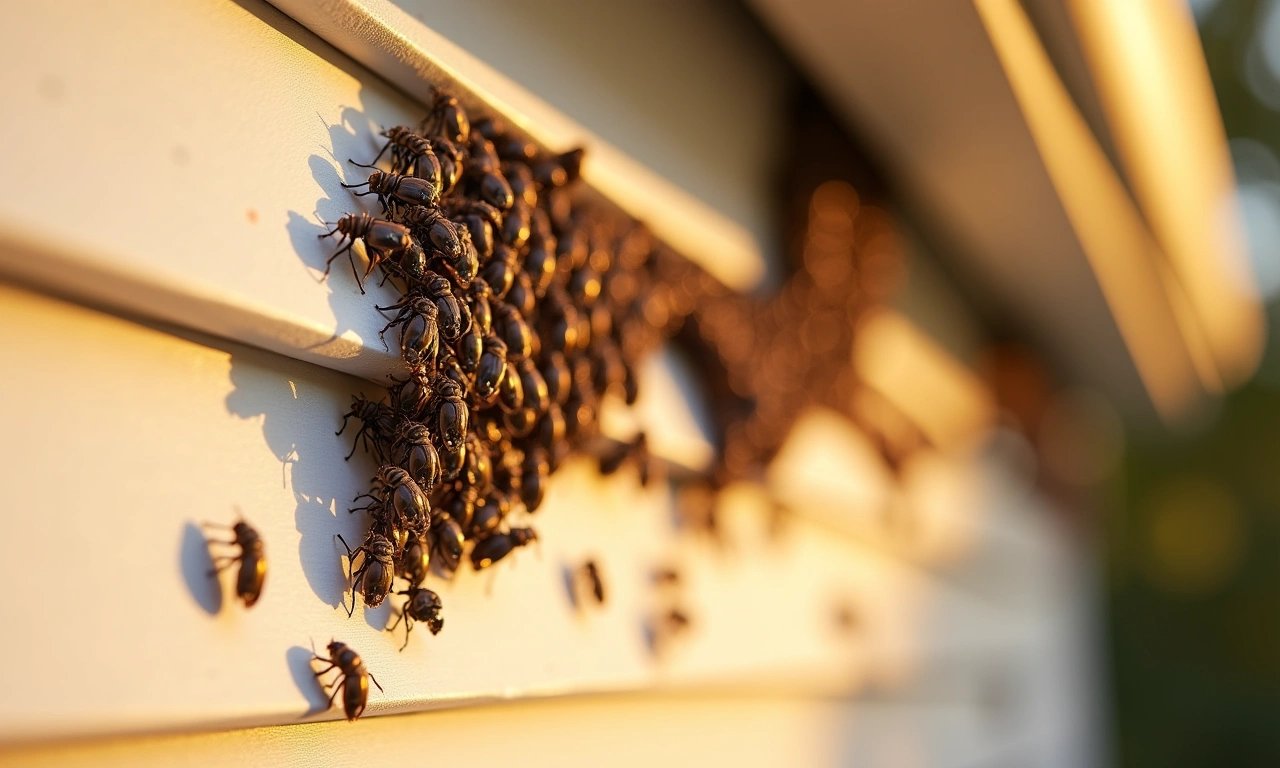
Flies are gathering on warm outside walls now. Most will move into attics and wall voids over the coming weeks.
The Short Version
This Pristine Pest news report covers one fly with a predictable calendar. Iowa State describes flies gathering "in large numbers on outside walls in September and October."
After that they move inside to hibernate. Attics and wall voids are their usual destination.
Your Lawn Is the Nursery, Not Your House
Cluster flies develop as parasites inside the bodies of earthworms, according to Iowa State. That happens outdoors, in soil.
The last generation of the year then looks for shelter. In late summer it favors the warm sides of buildings.
"Cluster flies do not reproduce indoors." Iowa State University Extension.
That one sentence changes how to think about the problem. Every fly in your attic came from outside.
How to Tell a Cluster Fly From a House Fly
University of Wisconsin entomologists put it plainly. "Cluster flies resemble house flies, but have fine golden hairs on their thorax."
Look at the middle of the body in good light. Golden hairs plus slow, sluggish movement point to cluster flies. Fast, darting flies in your kitchen are usually something else.
That matters for the fix. Kitchen flies point to food or drains. Slow flies at upstairs windows point to the attic.
The Cluster Fly Year in One Picture
The key point sits in the middle of that timeline. Once flies are inside wall voids, nothing you do in a room reaches them.
Why They Reappear on a Warm Winter Day
Dormant flies wake when the furnace or the sun warms them. Iowa State: flies "come out of their cold temperature dormancy and begin sluggishly moving around."
That is why flies appear on a sunny January window. The flies never left. They just warmed up.
A second source agrees. The University of Wisconsin says warm-spot flies "wander aimlessly around windows" in winter.
What Works, in Order
- Vacuum the ones you see. Extension guidance includes a hand vacuum or shop-vac for flies indoors. It is fast and leaves no residue.
- Seal the outside. Iowa State's advice is to "seal cracks and openings around the outside of the house." Prioritize eaves, siding joints, window frames, and attic vents.
- Treat outdoors only for repeat problems. Iowa State says insecticides can be used on the outside of the house in mid-September for a persistent problem. That window has mostly passed this year, so ask a licensed provider whether a late application still makes sense.
Flies inside a wall void are out of reach of room sprays. Prevention beats cleanup, which is why exclusion work matters more than any aerosol.
Common Entry Points to Check
- The gap where the roofline meets the siding, especially on the sunniest wall.
- Window and door trim with failed caulk.
- Attic and gable vents without tight screens.
- Utility lines where cables or pipes enter the house.
Our Home Shield Exclusion program starts with exactly this walk-around. It also protects against the rodents and wasps that use the same gaps.
Cluster flies are one of several fall invaders this season. See our reports on boxelder bugs, Asian lady beetles, and stink bugs. All four follow the same seal-the-outside logic.
Frequently Asked Questions
Do cluster flies breed in my attic?
No. Iowa State University Extension states that cluster flies do not reproduce indoors. They develop outdoors as parasites of earthworms, then enter buildings only to overwinter.
Why do they show up on warm winter days?
Heat from the furnace or the sun warms dormant flies. They then begin moving around sluggishly, which makes them visible on windows and in upper rooms.
How can I tell a cluster fly from a house fly?
The University of Wisconsin says cluster flies resemble house flies but have fine golden hairs on their thorax. They also move slowly and tend to gather at windows in quiet rooms.
Is it too late to treat this year?
Iowa State's guidance places outdoor insecticide use in mid-September for persistent problems. Because that date has passed, ask a licensed provider whether a late application is worthwhile. Sealing gaps and vacuuming remain useful at any time.
Sources
Last updated: October 8, 2026
How this was made: Drafted with AI assistance and checked against the cited extension pages. It is a source-based summary, not a field test. Images are AI-generated.
This article is for general educational purposes only. It does not constitute pest control advice.
Pest identification and treatment should involve a licensed professional. Pristine Pest is a lead generation service connecting homeowners with licensed providers.
We are not a licensed pest control company and do not perform inspections or treatments. Read our full disclaimer.
Pristine Pest may receive compensation when you contact providers through this site. This does not affect content accuracy.