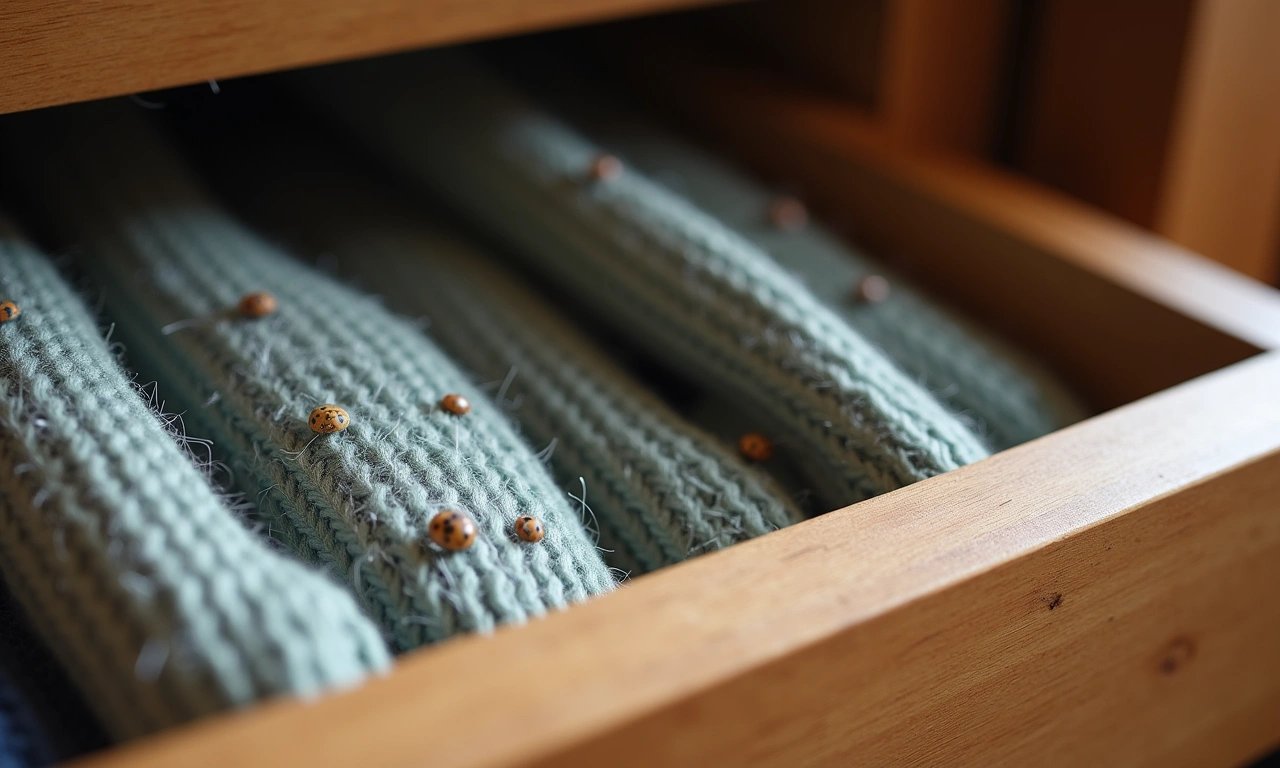
Fall is when stored wool, feathers, and winter bedding come back into use. That is also when hidden larval damage tends to be found.
The Short Version
Adult carpet beetles are the visible half of the problem. Maryland says some are drawn to "lights and windows, making them more conspicuous in homes."
The larvae are the damaging stage. Larvae "cause damage to fabrics, fur, feathers" per Maryland. They often go unnoticed behind furniture or along baseboards.
Three Signs You Have Carpet Beetles, Not Something Else
- Round, speckled adults at windows. Ohio State describes adult varied carpet beetles as about 1/10 to 1/8 inch long and nearly round.
- Bristly larvae. Virginia Tech says larvae are 6 mm (0.25 inch) or less, with "dense tufts of long setae (bristles)."
- Holes in animal-fiber items. Wool, silk, and feather items are the usual targets, per Mississippi State.
Adults feed outdoors on pollen and nectar, per Virginia Tech. Ohio State says they may enter through an open window or door.
What the Larvae Eat and What They Skip
Mississippi State lists "hair, wool, hide, silk, feathers" as larval food. Synthetics are mostly safe. Blends are the catch.
| Material or spot | Larvae will feed? | Source note |
|---|---|---|
| Wool sweaters, rugs, felt | Yes | Mississippi State lists hair, wool, hide, silk, and feathers. |
| Silk and feathers | Yes | Same Mississippi State list. |
| Lint and pet hair behind furniture or along baseboards | Yes | University of Maryland says larvae often go unnoticed there. |
| Wool-synthetic blends | Possible | Mississippi State says blends mixing animal and synthetic fibers may be fed on. |
| Synthetic carpets | No | Mississippi State says they do not damage synthetic carpets. |
Where They Hide
Maryland says larvae feed on lint, pet hair, and food crumbs in low, undisturbed spots. Check under beds, along baseboards, and inside closet corners.
Mississippi State adds that grown larvae wander off to pupate. That is often when they are first noticed.
Why a Small Problem Lasts So Long
Virginia Tech says females lay 30 to 100 eggs, depending on the species. Larval development can run "3-36 months."
That range explains why damage can surface long after the beetles themselves were noticed.
A Health Note Most Guides Skip
Mississippi State warns that larval hair "can be irritating to skin and lungs" if inhaled. For cleanup it advises a respirator and a vacuum with an approved HEPA filter. It also says to limit dust exposure.
If you are also seeing unexplained skin reactions, rule out other causes too. Our guide on how to tell if you have bed bugs covers that separately.
Cleanup That Holds
- Vacuum thoroughly. Maryland recommends carpeting, baseboards, under furniture, and closets.
- Empty the vacuum outdoors. Maryland says to dispose of the vacuum cleaner bag outdoors.
- Clean wool before storing it. Maryland advises properly cleaning wool clothing before storage.
- Seal what you store. Virginia Tech advises keeping all stored products in airtight bags or sealable containers.
Removing lint and pet hair is the IPM core of the job. Cleanup comes before any treatment.
Persistent activity can point to a hidden source. Dead insects in an attic or wall void can feed larvae. Our exterminator service can inspect those hidden areas.
Frequently Asked Questions
Do adult carpet beetles damage clothing?
No. Extension sources attribute the fabric damage to the larval stage. Adults are more noticeable because some are drawn to lights and windows.
What materials do carpet beetle larvae eat?
Mississippi State lists hair, wool, hide, silk, and feathers. It says they do not damage synthetic carpets, but may feed on blends that mix animal and synthetic fibers.
How long do carpet beetle larvae live?
Virginia Tech says larval development can occur over a 3 to 36 month period. Females lay 30 to 100 eggs depending on the species, so one missed spot can feed larvae for a long time.
Are carpet beetle larvae a health concern?
Mississippi State says larval hair can be irritating to skin and lungs. During cleanup it advises a respirator, a HEPA-filter vacuum, and limiting dust exposure.
Sources
Last updated: October 8, 2026
How this was made: Drafted with AI assistance and checked against the cited extension pages. It is a source-based summary, not a field test. Images are AI-generated.
This article is for general educational purposes only. It does not constitute pest control advice.
Pest identification and treatment should involve a licensed professional. Pristine Pest is a lead generation service connecting homeowners with licensed providers.
We are not a licensed pest control company and do not perform inspections or treatments. Read our full disclaimer.
Pristine Pest may receive compensation when you contact providers through this site. This does not affect content accuracy.