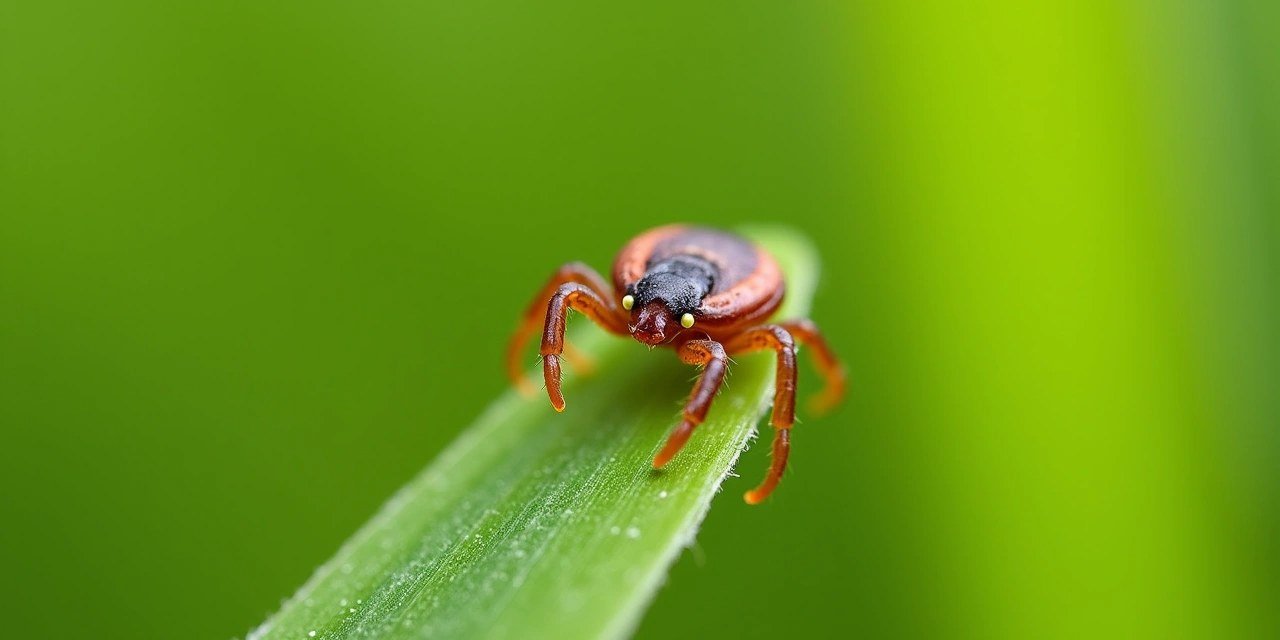
Stony Brook Medicine researchers identified New York's first known Bourbon virus case on Long Island. The state's Wadsworth Center finalized the diagnosis in May 2026 after specialized antibody testing.
The Short Version
This Pristine Pest news report covers a discovery most Westchester households haven't heard about yet. Researchers at Stony Brook Medicine confirmed New York's first known case of Bourbon virus. It's a rare and potentially serious infection carried by the lone star tick.
It's the same tick species already in the news for alpha-gal syndrome, the red-meat allergy. We covered that in our earlier report on New York's new alpha-gal reporting law.
The case wasn't caught in real time. It surfaced when researchers went back through years of banked patient samples. They were looking for a pathogen nobody had been testing for.
How Stony Brook Found It
The research team screened blood samples from 107 patients. All had fever and tick-borne illness symptoms between 2019 and 2024. Two of those samples came back with neutralizing antibodies for Bourbon virus.
New York's Wadsworth Center is the state health department's specialized testing lab. It confirmed the diagnosis after further testing. The first case was pinpointed in April 2026, with the diagnosis finalized in May 2026.
One of the two patients was initially misdiagnosed. That patient went on to develop severe symptoms and was hospitalized. Bourbon virus was later identified as the actual cause.
Dr. Luis Marcos is a professor at the Renaissance School of Medicine at Stony Brook. He directs its Tick-Borne Disease Clinic and put it plainly:
"For these reasons, the Bourbon virus is likely more prevalent than we think in our region and other cases are likely not being diagnosed."
What Bourbon Virus Actually Does
Bourbon virus was first identified in 2014. It was named for Bourbon County, Kansas, where the first known case was found. It has stayed largely confined to the central United States in the years since.
It causes fever, fatigue, rash, headache, body aches and nausea. That symptom set overlaps heavily with Lyme disease. That's why the Stony Brook team believes cases are being missed well beyond New York.
There is no vaccine to prevent Bourbon virus. There's no specific antiviral medicine to treat it either. Care is supportive, aimed at managing symptoms rather than clearing the infection directly.
The Tick Behind Both Bourbon Virus and Alpha-Gal
The lone star tick is a different species from the blacklegged deer tick. Most Westchester households already watch for that one instead. It also transmits ehrlichiosis, tularemia and alpha-gal syndrome.
Alpha-gal is the delayed red-meat allergy New York made a reportable disease this year. Its range has been pushing north into New York in recent years. That means deer-tick-only prevention is increasingly missing part of the actual risk.
Lone Star Tick vs. Deer Tick
Most Westchester tick checks are trained to spot one species. Here's how to tell them apart.
| Lone Star Tick | Deer Tick (Blacklegged) | |
|---|---|---|
| Field mark | Single white dot on the adult female's back. Males have white streaks along the edge. | No white dot. Smaller, with dark reddish-brown to black legs. |
| Diseases carried | Bourbon virus, ehrlichiosis, tularemia, alpha-gal syndrome | Lyme disease, babesiosis, anaplasmosis, Powassan virus |
| Bite behavior | Aggressive. Can attack in groups, meaning one encounter often means multiple bites. | Waits in leaf litter and tall grass. Bites are typically solitary. |
| Where it's found | Both wooded areas and open, sunny parts of a yard | Mostly wooded edges, leaf litter and tall grass |
| Active season | Spring through late summer | Nearly year-round in mild weather. Peaks in spring and fall. |
General tick identification guidance from CDC and NY State Department of Health tick-borne disease resources.
Why the Diagnostic Gap Matters for Westchester
The delay in finding this case is itself the warning. It took researchers combing back through five years of stored samples. Nobody had a reason to test for this pathogen in real time.
Picture a patient with fever and body aches after a summer outdoors. Doctors are far more likely to test for Lyme disease than Bourbon virus. That's because a routine test exists for one and not the other.
That gap doesn't close on its own. Marcos says the virus is likely circulating more widely than official counts show. That shifts the burden to prevention, since a missed diagnosis is now the likely outcome.
What This Means for Westchester Homeowners
Most residential tick programs in the region were built around deer-tick habitat. That means leaf litter, tall grass and the wooded edges of a property. Lone star ticks favor similar cover, but also turn up in open, sunny yard areas.
A treatment plan focused only on the tree line can leave real exposure untouched. Check pets too. They can carry ticks indoors well before a human household member ever gets bitten.
A second tick-borne pathogen is now confirmed circulating in the state. Overlapping symptoms make self-diagnosis unreliable. A professional tick control assessment treats a property's full habitat, not just the wooded perimeter.
That beats repellent alone for households with kids or pets in the yard. Westchester's own LymeShield program is built around that broader habitat approach. It doesn't rely on a single-species assumption.
Frequently Asked Questions
Has Bourbon virus been found in New York?
Yes, Stony Brook Medicine confirmed New York's first Bourbon virus case, found on Long Island. The diagnosis was finalized in May 2026 by the state's Wadsworth Center. Researchers tested 107 banked blood samples from patients with fever and tick-borne symptoms, collected 2019-2024.
What are the symptoms of Bourbon virus?
Fever, fatigue, rash, headache, body aches and nausea. Symptoms closely resemble Lyme disease. That overlap is part of why cases are likely being missed or misdiagnosed.
Is there a treatment or vaccine for Bourbon virus?
No, there is currently no approved vaccine to prevent Bourbon virus. There's also no specific antiviral medicine to treat it. Care is supportive, focused on managing symptoms.
How is a lone star tick different from a deer tick?
The lone star tick has a white dot and bites aggressively in groups. It roams both wooded and open sunny yards, unlike the deer tick. Lyme comes from deer ticks; Bourbon, ehrlichiosis, tularemia and alpha-gal come from lone star ticks.
Sources
Last updated: July 26, 2026
This article is provided for general educational purposes only and does not constitute pest control advice. Pest identification and treatment decisions should involve a licensed pest management professional. Pristine Pest is a lead generation service that connects homeowners with licensed pest control providers. We are not a licensed pest control company and do not perform inspections or treatments. Read our full disclaimer.
Pristine Pest may receive compensation when you contact pest control providers through this site. This does not affect the accuracy of our content.