
Reports of the Asian needle ant now span New York State, including the Hudson Valley, after decades of spread from its original Southeastern U.S. range.
The Short Version
This Pristine Pest news report covers an invasive species most homeowners have never heard of. The Asian needle ant has been detected across New York, including the Hudson Valley.
It's dark, small, and easy to mistake for an ordinary household ant. That's part of the problem. Its sting is not ordinary.
A sting can trigger a severe allergic reaction, including anaphylaxis, particularly in anyone already allergic to bee or wasp venom. Unlike fire ants, it survives cold winters here and returns every spring.
It thrives in the exact landscaping most Westchester properties already have: mulch beds, leaf litter, and rotting logs near the house.
Where the Ant Came From, and How It Got Here
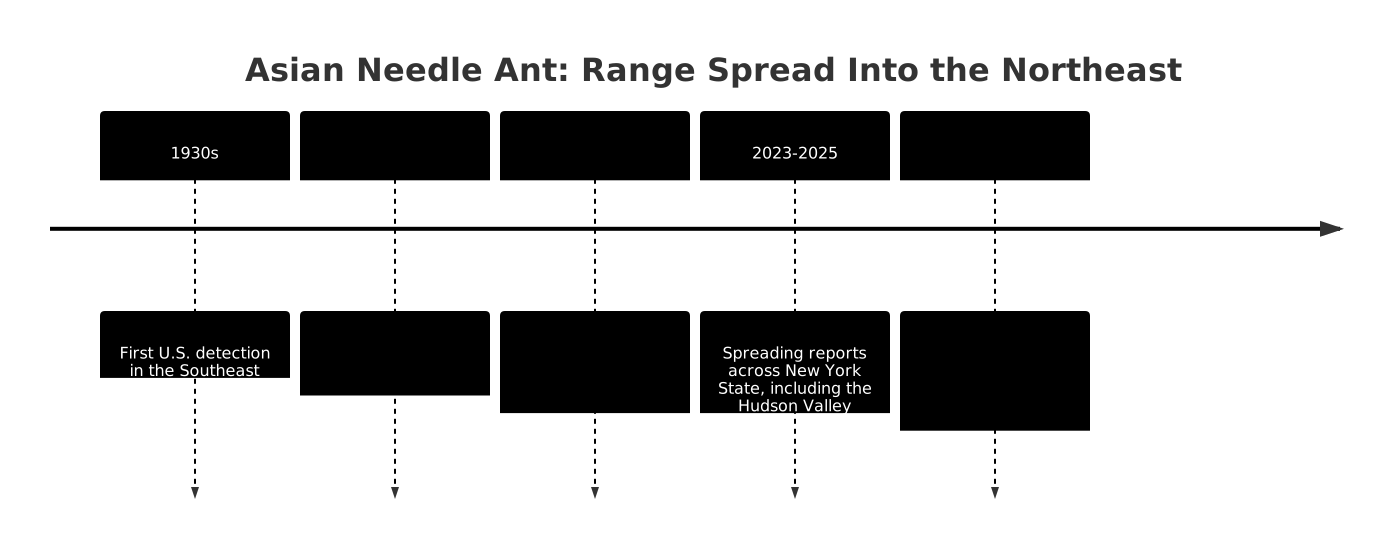
The Asian needle ant originated in Southeast Asia and was first reported in the United States in the 1930s. For decades it stayed largely confined to the Southeast.
It established across Georgia, Alabama and the Carolinas before pushing north. By the late 2010s it was confirmed in Connecticut and Pennsylvania woodlands. Reports now span New York State, including the Hudson Valley.
Why This Sting Is Different
The ant earned its name honestly. Its sting feels like being jabbed with a needle, sharper and more sudden than a typical ant bite.
For most people that's a painful few minutes, not an emergency. For some, it's more serious. The sting can cause severe allergic reactions, including anaphylaxis, especially in people who are already allergic to bee or wasp stings.
Anaphylaxis is a medical emergency. Anyone with a history of insect-sting allergy should treat an unfamiliar ant sting with the same caution as a bee sting, not less.
Identifying It: What Sets It Apart From a Common Ant
Most Westchester homeowners' mental model of "ant problem" is a fast-moving trail across a kitchen counter, or a satellite colony of carpenter ants in damp framing. The needle ant doesn't fit either picture.
| Trait | Asian needle ant | Common pavement/odorous ant | Carpenter ant |
|---|---|---|---|
| Color | Dark brown to black | Brown to black | Black or black/red |
| Size | ~5mm (quarter-inch) | 2-4mm | 6-13mm, larger |
| Movement | Slow-moving, deliberate | Fast, erratic trails | Fast, foraging trails |
| Typical habitat | Mulch, leaf litter, logs | Pavement cracks, kitchens | Damp or decaying wood |
| Sting/bite risk | Sting, can cause anaphylaxis | Bite only, minor | Bite only, minor |
The slow, deliberate movement in shaded mulch is the biggest tell. A fast ant trail crossing a sunny patio is much more likely to be an ordinary nuisance species.
Why It Survives Here When Other Invasives Don't
Fire ants get more attention nationally, but they can't survive a real Northeast winter. Colonies die back when the ground freezes hard enough for long enough.
The Asian needle ant doesn't have that limitation. It survives New York winters and returns each spring, which is exactly why entomologists expect its range to keep expanding rather than retreat on its own.
That single trait, cold tolerance, is the difference between a one-season curiosity and a species that establishes permanently in a region.
What to Do If You Find One on Your Property
Officials advise keeping distance from suspected needle ants and calling pest control if they're spotted, rather than trying to identify or handle them personally.
A few practical steps for a Westchester property:
- Avoid handling ants found in mulch beds, under logs, or in leaf litter near the foundation
- Keep an EpiPen accessible if anyone in the household has a known insect-sting allergy
- Photograph, don't collect, any ant you suspect may be a needle ant
- Clear excess leaf litter and log piles directly against the house, a preferred needle-ant habitat
A licensed ant control provider can confirm identification and treat a confirmed colony safely, which matters more here than with an ordinary nuisance ant given the sting risk involved.
Frequently Asked Questions
Is the Asian needle ant in New York now?
Yes. It has spread from its original U.S. range in Georgia, Alabama and the Carolinas northward into New York, Connecticut and Pennsylvania, with reports across New York State including the Hudson Valley.
Is an Asian needle ant sting dangerous?
Its sting feels sharp, like a needle jab, and can trigger a severe allergic reaction including anaphylaxis, especially in people already allergic to bee or wasp stings.
How do I tell an Asian needle ant from a common ant?
It's dark brown to black, about a quarter-inch long, slow-moving compared to most household ants, and found in moist, shaded spots like mulch, leaf litter and under logs rather than on open pavement.
Can Asian needle ants survive New York winters?
Yes. Unlike fire ants, Asian needle ants can survive cold winters and return each spring, which is part of why entomologists expect their range to keep expanding north rather than retreat.
Sources
Last updated: September 2, 2026
This article is provided for general educational purposes only and does not constitute pest control or medical advice. Pest identification and treatment decisions should involve a licensed pest management professional; allergic reactions require medical attention. Pristine Pest is a lead generation service that connects homeowners with licensed pest control providers. We are not a licensed pest control company and do not perform inspections or treatments. Read our full disclaimer.
Pristine Pest may receive compensation when you contact pest control providers through this site. This does not affect the accuracy of our content.