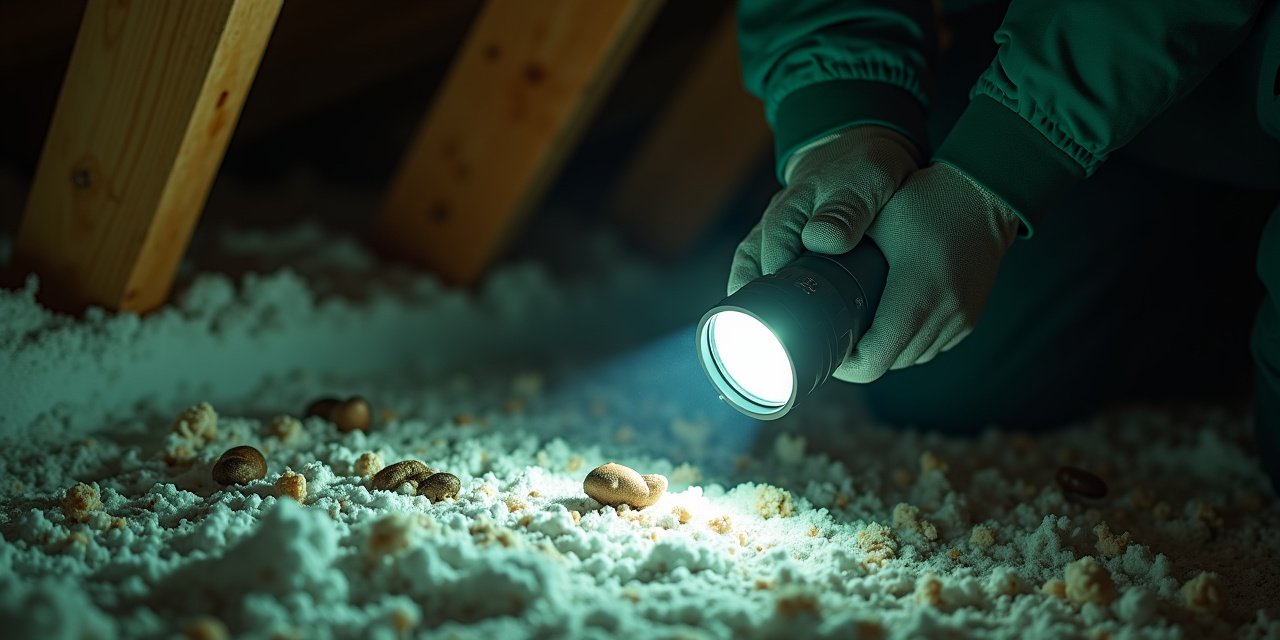
You're up in the attic pulling out insulation or poking around the basement near the water heater, and you find small dark debris scattered along a beam or tucked into a corner. Your first instinct is probably "mice." But that's not always right, and getting the ID wrong matters — a lot.
Treating for rodents when you actually have a carpenter ant problem means you'll miss the actual colony doing structural damage. Treating for termites when the evidence is just fly specks means you've spent money on something you don't need. The debris left behind by different pests has distinct characteristics, and with a few reference points you can make a reasonable field assessment before calling in a professional.
Why the ID Actually Matters
Different pests require completely different treatment approaches. Mouse control centers on exclusion and snap traps or bait stations. Carpenter ant treatment targets the colony itself, often requiring a direct void injection or perimeter granule application. Termite frass means you need a licensed inspection to determine the extent of structural damage — that's a much bigger deal than a mouse or two.
Beyond treatment decisions, the ID also tells you how urgent the situation is. Finding old, dry mouse droppings in a basement you rarely use is lower priority than fresh droppings near food storage. A pile of termite frass pellets below a window frame is a signal to stop waiting and get an inspection scheduled this week.
The Key Differences: Size, Shape, Texture, Location
Four factors do most of the work when you're trying to ID pest waste: size, shape, texture, and where it's concentrated. Here's how the most common types stack up.
Mouse droppings are the ones homeowners encounter most often in Westchester. They're smooth, dark brown to black, and tapered at one or both ends — think of a tiny grain of rice, but more pointed. Size runs 3–6mm. Fresh droppings are moist and very dark; older ones dry out and lighten to a grayish-brown. You'll find them scattered along baseboards, in the backs of kitchen cabinets, behind appliances, and along joists in basements. Mice don't go out of their way to deposit waste — they drop it wherever they travel.
Carpenter ant frass is not a dropping at all — it's excavation debris. Carpenter ants hollow out wood to build galleries, and they push the material out of the nest through small exit holes. The result is a coarse, sawdust-like pile that often includes insect parts: legs, wing fragments, ant carcasses. It's got a gritty, irregular texture rather than the smooth, pellet shape of rodent waste. If you see it near a window frame, along a wooden beam, or at the base of a doorframe, that's a sign the ants are actively excavating nearby. See our carpenter ant removal page for more on what treatment looks like.
Termite frass pellets come specifically from drywood termites. They push dry pellets — about 1mm long, six-sided, with rounded ends — out of small exit holes in infested wood. You'll often find them in small cone-shaped piles directly below the exit hole. The pellets are dry and hard, and their color typically matches the wood being consumed: light tan for pine, darker for hardwood. Subterranean termites (more common in NY) don't produce this kind of visible frass, so if you're in Westchester and find pellet piles, it's worth getting a professional to confirm species.
Cockroach droppings vary by species. German cockroach droppings — the most common indoor species in Westchester homes — are very small (under 1mm), dark, and look like black pepper or coffee grounds. They concentrate in the areas cockroaches frequent most: inside cabinet hinges, under appliances, along the tops of cabinet walls, behind the refrigerator. The sheer volume of droppings in a small area is often a giveaway — a heavy infestation leaves a lot of material.
Fly specks are the ones homeowners most often mistake for something more serious. They're flat, circular, very small, and they smear easily when you press a damp cloth against them. They don't have any structure or shape the way pellet droppings do. They show up on windowsills, around light fixtures, on ceiling tiles, and near garbage areas. If you can wipe it off cleanly with a damp paper towel, it's probably fly specks.
Pest Waste Identification Chart
| Type | Size | Shape | Color / Texture | Location Found | What It Means |
|---|---|---|---|---|---|
| Mouse Droppings | 3–6 mm | Smooth, tapered rice shape | Dark brown/black; gray when old; moist when fresh | Along baseboards, behind appliances, on joists, in cabinets | Active or past mouse infestation; check for entry points |
| Carpenter Ant Frass | Variable pile | Coarse, irregular; sawdust with insect parts | Light tan to brown; gritty texture | Near wood beams, window frames, door frames, floor joists | Active colony excavating nearby wood; structural concern |
| Termite Frass Pellets | ~1 mm | Oval, 6-sided; hard pellets | Matches wood color (tan to dark brown); dry and hard | Cone-shaped pile below exit hole in wood trim or framing | Drywood termite activity; get a professional inspection |
| Cockroach Droppings | <1 mm | Tiny, pellet or smear; like black pepper | Dark brown to black; may leave stain | Cabinet hinges, under appliances, behind fridge, along upper walls | Cockroach infestation; volume indicates severity |
| Fly Specks | Pin-point | Flat, circular dots; no 3D structure | Dark brown; smears when wet | Windowsills, near lights, ceiling tiles, around garbage | Fly activity (not usually a structural concern); source control needed |
What to Do When You Find It
Before you clean anything up, take photos. Multiple angles, with something for scale — a coin, a ruler, your finger. Photos are useful both for your own reference and for showing a pest control professional when you call. If you're finding material in multiple locations, document each spot separately.
Don't handle any suspect rodent droppings with bare hands. Mouse droppings can carry hantavirus, which becomes airborne when dried material is disturbed. Dampen with a disinfectant spray first, then pick up with paper towels. Wear disposable gloves. Avoid sweeping or vacuuming dry droppings.
Fresh droppings mean current activity. If you're seeing new material (dark, moist) on top of older dried material, something is actively using that space. That's the version that needs prompt attention. Old droppings in a space that's been sealed off for years are less urgent but still worth cleaning up and monitoring.
Not sure what you're looking at?
Pristine Pest connects Westchester homeowners with licensed pest control professionals who can identify pest evidence and recommend the right treatment. Lead gen service — read disclaimer.
Call (877) 938-6799When to Call a Professional
You should call a pro when you find fresh droppings in multiple areas of your home — that suggests an established population, not a single animal. You should also call when the material you're finding looks like carpenter ant frass or termite pellets, because both of those point to active structural damage that needs a trained eye. Our rodent control page and Scarsdale rodent control resources have more on what licensed treatment looks like. For carpenter ants, see our carpenter ant removal page.
If you're in the early stages — you found something but you're not sure if it's active — our guide to signs of a pest problem in Westchester homes covers other indicators to look for before you make a call. And if you've already had a mouse problem and want to prevent a recurrence, the spring rodent prevention guide walks through the exclusion steps that actually make a difference.
Frequently Asked Questions
How do I tell mouse droppings from carpenter ant frass?
Mouse droppings are smooth, tapered at both ends, and typically 3–6mm long. Carpenter ant frass looks like sawdust mixed with insect parts — it's coarser, irregular, and often has a gritty feel. Frass piles up near excavation sites in wood, while droppings scatter along travel routes.
Are old mouse droppings dangerous?
Yes. Dried mouse droppings can carry hantavirus and salmonella. Never sweep or vacuum them dry — dampen with a disinfectant spray first, then wipe up with paper towels and dispose in a sealed bag. Wear gloves and ideally a mask.
What do termite droppings look like?
Drywood termite frass (called frass pellets or kickout pellets) looks like tiny oval pellets — about 1mm long, six-sided, and often the color of the wood being consumed. They're dry and granular, unlike mouse droppings which are smooth. You typically find them in small cone-shaped piles below exit holes in wood.
I found small dark specks on my windowsill — what are they?
Small dark specks on windowsills are often fly specks (excrement), not pest droppings. They're flat, pin-point sized, and smear if you rub them with a damp cloth. If they're raised, pellet-shaped, and concentrated near a corner or along a wall, they may be rodent or cockroach droppings instead.