Lyme Disease Risk in Scarsdale
Westchester County has one of the highest Lyme Disease rates in the United States. According to the New York State Department of Health, the black-legged tick (also known as the deer tick) is prevalent throughout Scarsdale, particularly in areas with dense vegetation, leaf litter, and white-footed mouse populations.
Lyme Disease is just one of several zoonotic diseases transmitted by ticks. Others include Anaplasmosis and Babesiosis—all requiring prompt medical attention.
Understanding the Black-Legged Tick
The black-legged tick has a two-year lifecycle:
- Spring: Larvae hatch and feed on mice, birds
- Fall: Nymphs seek hosts (including humans)
- Year 2: Adults feed in fall and early spring
The nymph stage (spring/summer) poses the highest risk because they're tiny and often go unnoticed.
Mosquito Threats in Westchester
Mosquitoes aren't just annoying—they can transmit serious diseases:
- West Nile Virus: Present in Westchester County
- Eastern Equine Encephalitis (EEE): Rare but serious
- Dog Heartworm: Transmitted to pets via mosquito bites
Our Treatment Approach
Tick Barrier Treatments
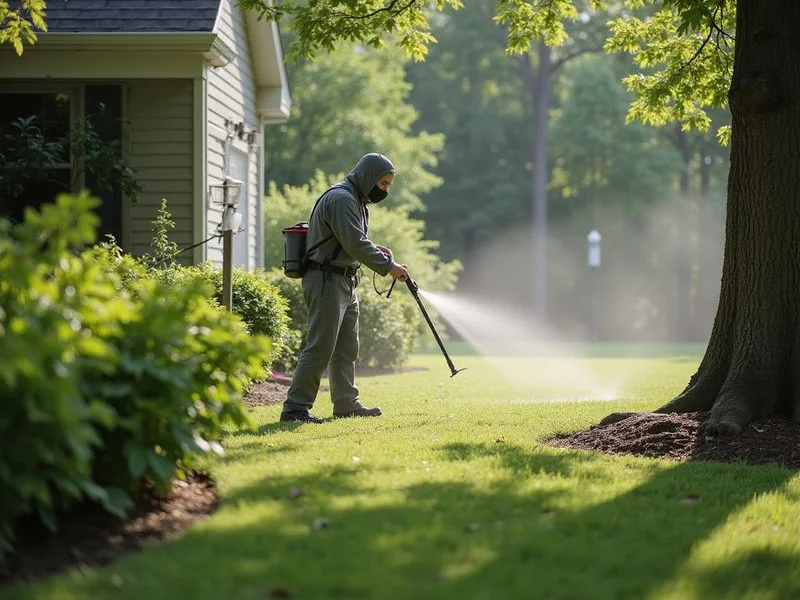
Our partner professionals apply residual sprays to vegetation and yard perimeter where ticks rest. These treatments:
- Create a protective barrier around your property
- Last 3-4 weeks per application
- Target tick harborage areas (leaf litter, shrubs, fence lines)
- Are EPA-registered and safe for families
Mosquito Reduction Programs
Comprehensive mosquito control includes:
- Larvicide applications: Treat standing water to kill mosquito larvae
- Barrier sprays: Residual treatments on vegetation
- Source reduction: Identify and eliminate breeding sites
- Adulticide fogging: For severe infestations
IPM Principles
Our partners follow Integrated Pest Management (IPM) principles:
- Habitat modification recommendations
- Mechanical controls (tick tubes, mosquito dunks)
- Targeted chemical applications only when necessary
- Ongoing monitoring and adjustment
Protecting Your Property
Landscaping Changes
Reduce tick habitat with these modifications:
- Create a wood chip or gravel barrier between lawn and wooded areas
- Keep grass mowed short
- Remove leaf litter and brush piles
- Stack firewood away from the house
- Install deer-resistant plantings
Mosquito Source Reduction
Eliminate standing water where mosquitoes breed:
- Clogged gutters and drainage ditches
- Tarps, buckets, and flower pots
- Pool covers and decorative water features
- Bird baths (change water weekly)
Frequently Asked Questions
How soon after treatment can I go outside?
Treatments typically dry within 1-2 hours. You can safely use your yard the same day after the spray has dried.
How often do I need treatment?
For optimal protection, we recommend starting in early spring (March/April) and continuing through late fall. Most clients schedule monthly or bi-monthly treatments.
Are the treatments safe for pets?
Yes, when dry, treatments are safe. Keep pets indoors during application and until sprays dry (typically 1-2 hours).
What about my garden vegetables?
Our technicians avoid spraying edible gardens. Let your technician know about any vegetable plots or fruit trees near treatment areas.
Don't Wait Until They're Active
Prevention is far more effective than treatment after exposure. Contact our network of licensed professionals to schedule your seasonal protection program.
Related Resources
Learn about tick ecology in our glossary. For health information, visit the Westchester County Health Department.