How LymeShield Breaks the Lyme Disease Transmission Cycle
LymeShield targets white-footed mice with vaccine-treated bait to stop Lyme disease at its source. Learn how this biological approach protects your yard.
Sarah Nguyen

Understanding the Lyme Disease Transmission Cycle
You might have the best deer fence in Connecticut or the most consistent spray schedule in Westchester. Yet, you likely still find ticks on your property.
This frustration stems from a single, often overlooked fact.
The primary source of Lyme disease isn’t the deer passing through your yard. It is the white-footed mouse living in your stone walls.
To fix the problem, we have to look at the biology driving it. The cycle involves three specific organisms: the Borrelia burgdorferi bacterium, the blacklegged tick, and the white-footed mouse.
Here is exactly how that cycle plays out in our region:
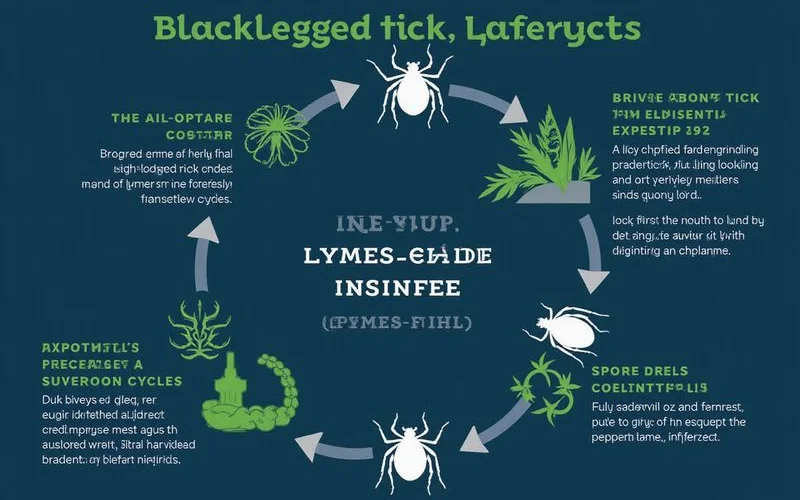
- Larvae feed on infected mice. Tick larvae hatch without the Lyme bacterium. They take their first blood meal from small mammals. In our area, the white-footed mouse is the primary host. If that mouse carries B. burgdorferi, the larvae become infected.
- Infected larvae molt. After feeding, these larvae drop off and molt into nymphs. They emerge the following spring carrying the pathogen.
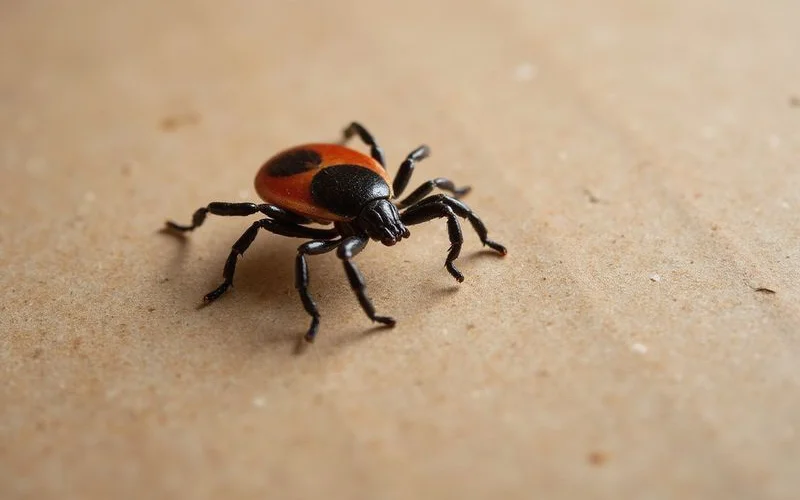
- Nymphs hunt for a meal. This is the dangerous stage. Nymphs are roughly the size of a poppy seed. They are responsible for the majority of human Lyme cases because they are so hard to spot.
- The reservoir refills. Infected nymphs feed on uninfected mice. This passes the bacterium to a new generation of mice. Those mice then infect the next batch of hatching larvae.
The Critical Data Point: Research from the Cary Institute of Ecosystem Studies in Millbrook, New York, indicates that white-footed mice infect between 75% and 95% of the larval ticks that feed on them.
Most homeowners focus on the tick. We focus on the mouse as part of comprehensive pest control. By addressing the reservoir, you stop the disease before it ever reaches the tick.
What LymeShield Is
LymeShield is a specialized, vaccine-based bait system.
It targets the white-footed mouse to break the transmission loop. We do not try to kill every tick with broad-spectrum pesticides alone. Instead, this system vaccinates the mice that serve as the disease factory.
How the Bait Works
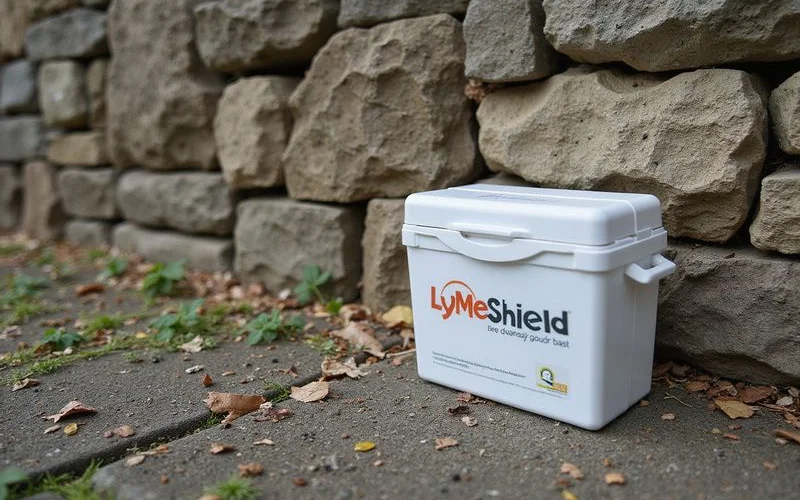
The system uses small, weatherproof stations. We place these in areas where mice naturally forage, such as stone walls, brush piles, and woodland edges.
Inside each box is a pellet-based bait. This bait contains an antigen that stimulates the mouse’s immune system to create antibodies against Borrelia burgdorferi.
The process is straightforward:
- A mouse enters the box and eats the bait.
- The mouse develops antibodies.
- When a tick bites this vaccinated mouse, the antibodies neutralize the Lyme bacterium inside the tick.
- The tick does not acquire the disease.
This means the next generation of nymphal ticks emerges uninfected. They cannot transmit Lyme disease to you, your children, or your pets.
The Science Behind It
This isn’t a theory. It is a USDA-licensed approach grounded in field trials.
Studies have shown that this method can significantly reduce the prevalence of tick infection. In field tests, vaccinated mouse populations led to a roughly 76% reduction in infected ticks over a two-year period.
Pro Tip: Consistency is key. A single season of treatment helps, but the true value of LymeShield compounds over time as the local mouse population becomes resistant to the bacterium.
Why This Approach Is Different
Most tick control methods are reactive. LymeShield is proactive.
To help you decide if this is right for your property, we have compared the three most common control methods below.
| Feature | Perimeter Spraying | Tick Tubes | LymeShield System |
|---|---|---|---|
| Primary Target | Adult and Nymph Ticks | Larval Ticks (via nesting material) | The Mouse Reservoir (Immunity) |
| Mechanism | Contact kill (Pyrethroids/Oils) | Permethrin-treated cotton | Oral Vaccine (OspA antigen) |
| Key Limitation | Doesn’t stop new ticks from entering | Relies on mice taking cotton | Requires multi-year consistency |
| Best For | Immediate knock-down | Nests deep in burrows | Long-term disease reduction |
Beyond Tick Spraying
Conventional spraying creates a barrier. Whether using synthetic pyrethroids or cedar oils, these treatments kill ticks currently active in your yard. They provide protection for about 3-4 weeks.
We consider spraying an essential defensive shield.
But spraying addresses the symptom, not the source. New ticks constantly migrate into your yard on animals. If those ticks fed on infected mice nearby, the risk remains.
Addressing the Root Cause
LymeShield works upstream. It cleans the reservoir.
We use this system to lower the infection rate in the mouse population itself. When you combine this with perimeter sprays, you get a “Swiss Cheese” defense. One layer might have holes, but the overlapping layers create a solid barrier.
Not a Tick Killer
You need to have realistic expectations. LymeShield does not kill ticks.
Ticks will still exist in your environment. You must still perform tick checks and wear appropriate clothing.
The difference is inside the tick. Over time, the ticks on your property are far less likely to carry the disease. This transforms a tick bite from a potential medical emergency into a simple nuisance.
Why Westchester County Needs This Approach
A High-Risk Region
Our service area consistently ranks among the highest-risk zones in the country. The New York State Department of Health tracks thousands of cases here annually.
The geography of towns like Bedford, Pound Ridge, and Greenwich creates a perfect storm. We have fragmented forests, abundant acorn crops, and historic stone walls.
Why Stone Walls Matter: Stone walls are essentially super-highways for white-footed mice. They offer protection from predators and a direct route across your property. If you have stone walls, you almost certainly have a mouse population sustaining the Lyme cycle.
The Limitations of Deer Management
You often hear people blame the deer.
Adult ticks do feed on deer. Deer spread ticks to new areas. But deer are not “competent reservoirs.” They do not infect the ticks with Lyme disease.
Reducing the deer population helps lower the total number of ticks. It does not change the infection rate of the ticks that remain. LymeShield works regardless of how many deer walk through your yard because it targets the actual carrier of the pathogen.
Implementation: What to Expect
Property Assessment
We start with a site visit. A licensed specialist walks your property to identify “hot spots.”
These aren’t just random locations. We look for:
- Stone walls and rock outcroppings.
- Dense ground cover like pachysandra.
- Wood piles and brush.
- The transition zone between your lawn and the woods (the ecotone).
Deployment Schedule
Timing is biological, not arbitrary. We deploy the stations twice a year to match the mouse breeding and tick feeding cycles.
- Spring (April-May): This targets older mice emerging from winter. Vaccinating them now prevents them from infecting the larval ticks that will hatch in late summer.
- Late Summer (August-September): This targets the new cohort of young mice. Protecting them ensures they do not become reservoirs for the following year.
Results Timeline
This is a long-term biological investment.
You will not see a drop in tick numbers immediately. The goal is a reduction in infected ticks. Most data suggests that significant safety improvements appear after the second year of deployment.
Properties using a hybrid approach see results faster. The spray handles the “now,” while LymeShield secures the “later.”
Combining LymeShield with Other Tick Management Strategies
The most successful protection plans use an integrated approach.
We recommend a four-part strategy for maximum safety:
- LymeShield Stations: Sanitize the mouse population to stop disease transmission.
- Perimeter Treatments: Knock down active ticks during peak season.
- Habitat Modification: Clear leaf litter and create distinct borders between lawn and woods.
- Personal Protection: Use EPA-registered repellents and perform daily checks.
Each step covers a blind spot of the others.
Protect Your Family at the Source
Pristine Pest is one of the few providers in the Hudson Valley qualified to deploy this advanced technology.
We combine this vaccine-based system with our proven tick and mosquito management perimeter defenses to offer the most complete protection package available.
Your backyard should be a safe zone, not a source of anxiety. With infection rates in our area remaining stubbornly high, treating the source is the smartest move a homeowner can make.
Call to schedule a property assessment. We will help you build a defense that actually works.
Written by
Sarah Nguyen
Licensed Wildlife Biologist
Wildlife biologist specializing in humane removal and LymeShield deployment.
Keep Reading
Related Articles

How Often Should You Schedule Pest Control for Your Home?
Discover the ideal pest control service frequency for Westchester homes. Learn why quarterly IPM visits prevent infestations before they start.

How SMART Digital Pest Monitoring Works and Why It Matters
Anticimex SMART sensors detect rodent activity 24/7 without toxic baits. Learn how wireless pest monitoring technology protects Westchester homes.
How Much Does Termite Treatment Cost in Westchester County?
Get realistic termite treatment pricing for Westchester homes. Compare costs for Sentricon bait stations, liquid treatments, and annual monitoring plans.