Termite Swarm Season 2026: What Scarsdale Homeowners Must Do Before May Ends
The NPMA forecasts heightened pest activity across the Northeast this spring. Eastern subterranean termite swarmers are emerging now in Westchester County. If you have seen winged insects near your foundation or windowsills in the past two weeks, here is what it means and what to do in the next 24 hours.
Michael Corsetti
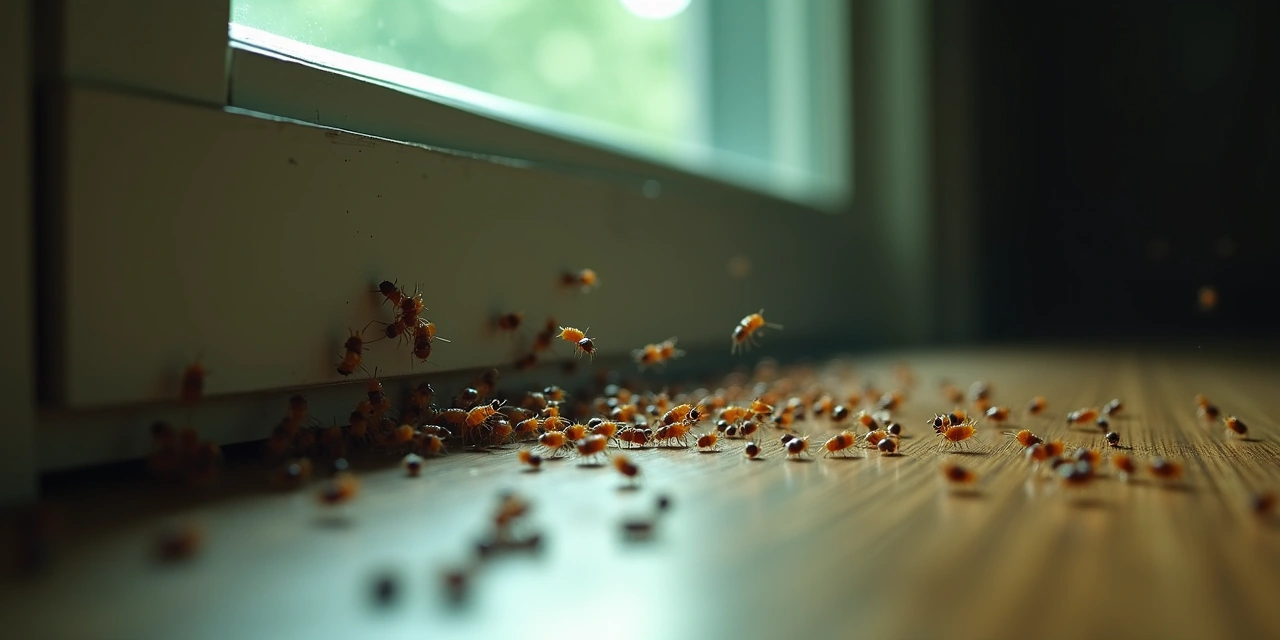
Time-Sensitive: Eastern subterranean termite swarming peaks April–May in Westchester County. If you have seen swarmers in the past two weeks, schedule an inspection this week. Swarm events confirm an existing colony is established at or near your structure. Updated: May 2026.
Why 2026 Is a Higher-Risk Termite Year
Each spring, the National Pest Management Association (NPMA) publishes its seasonal pest forecast based on winter weather data, precipitation patterns, and regional pest population monitoring. The 2026 forecast is unambiguous: pest activity (termites included) is expected to emerge sooner and in greater numbers across the Northeast due to erratic winter temperatures and above-average spring rainfall.
For Westchester County specifically, three converging factors raise the 2026 termite risk above recent baselines. First, the mild 2025–2026 winter allowed greater numbers of subterranean termites to remain active in the soil through January and February, months when sustained cold typically suppresses colony movement. Second, spring rainfall in the region has been above average, which keeps soil moisture at the levels termites require to sustain tunneling activity near the surface. Third, the existing termite pressure in Westchester is already high: Eastern subterranean termites are established throughout Westchester County's soil layer, and every property with wood-to-soil contact or a compromised foundation seal carries some baseline exposure.
The combination of mild winter, wet spring, and existing colony density creates a year when homeowners who have been meaning to schedule an inspection should not delay further.
What a Termite Swarm Actually Means
A termite swarmer (also called an alate) is the winged reproductive caste of the termite colony. Swarmers do not eat wood, do not damage your home, and cannot sting or bite. Their purpose is to disperse from the parent colony, mate in flight, shed their wings, and attempt to establish a new colony. The swarm itself lasts 20 to 30 minutes and ends quickly.
What a swarm tells you about the colony that produced it is the critical piece of information. Termite colonies do not produce swarmers until they have matured (typically three to five years of growth, reaching a population of 60,000 or more workers). If swarmers are emerging from or near your home, a colony of that scale is already established either within your home's structure or in the soil directly adjacent to it. The swarm is not the beginning of an infestation; it is evidence that an infestation has been developing for years.
This is the most important thing to understand about swarm season: the swarmers you see are the symptom. The infestation is the cause. It predates the swarm by years.
An outdoor swarm in your yard or garden, emerging from a rotting stump or soil in an open area away from the structure, is less immediately alarming. New swarmers rarely establish successfully (most are eaten by birds and other predators before they can mate). But a swarm emerging from inside the home (from a crack in the baseboard, from a windowsill, from a gap around a pipe) confirms a colony with active access to your home's wood.
How to Identify Termite Swarmers vs. Flying Ants
The most common misidentification in Westchester spring calls is confusing termite swarmers with flying carpenter ants. Both are winged, dark-colored, and emerge in spring. The distinction matters because the treatment path is completely different.
Check three features:
Wings: Termite swarmers have two pairs of wings that are nearly equal in length. Flying ants have two pairs of wings where the front pair is clearly longer than the rear pair. Termite wings also detach easily. You will find piles of them after a swarm. Ant wings stay attached unless manually removed.
Waist: Termites have a thick, straight body with no visible waist. Ants have a clearly pinched waist between the thorax and abdomen. This is visible even without magnification on larger specimens.
Antennae: Termite antennae are straight and slightly beaded. Ant antennae are elbowed, bent at a sharp angle.
If you are uncertain after examining a captured specimen, place it in a sealed container and show it to a professional at the time of inspection. Do not discard the evidence. For a detailed side-by-side guide on both species, see our carpenter ant vs. termite identification guide.
The First 24 Hours After Seeing Swarmers
If you see termite swarmers inside your home today, here is what to do, in order:
Do not spray them. Consumer insecticide sprays will kill the visible swarmers but will not reach the colony. More importantly, spraying the area destroys evidence that an inspector needs to locate the colony access point. The dead insects, their wings, and where exactly they emerged from are diagnostic information.
Capture some specimens. Collect 10–15 swarmers in a sealed plastic bag or container. This allows the inspector to confirm species and saves time during the inspection visit.
Photograph the emergence point. Take a photo or video of where exactly the swarmers are coming from: crack in the baseboard, gap at the windowsill, emergence from the soil at the foundation. Mark the location if you can.
Note the time and conditions. Swarms are triggered by specific temperature and humidity conditions. The time of day, outdoor temperature, and whether it rained recently are all useful context for the inspector.
Call for an inspection within 24–48 hours. The swarm window is short (May and early June) and inspection schedules fill quickly during peak swarm season. Getting an inspector in while the evidence is fresh produces the most accurate assessment. Our termite inspection and protection program includes a full structural assessment, identification of active access points, and a clear treatment recommendation.
What Termite Inspection Covers
A professional termite inspection for a Westchester County home typically takes 45 to 90 minutes for a standard single-family property. The inspector examines all accessible areas where termite activity concentrates: the basement and crawlspace, the foundation perimeter inside and outside, all wood framing accessible from the basement, garage framing, and any wood-to-soil contact points around the exterior.
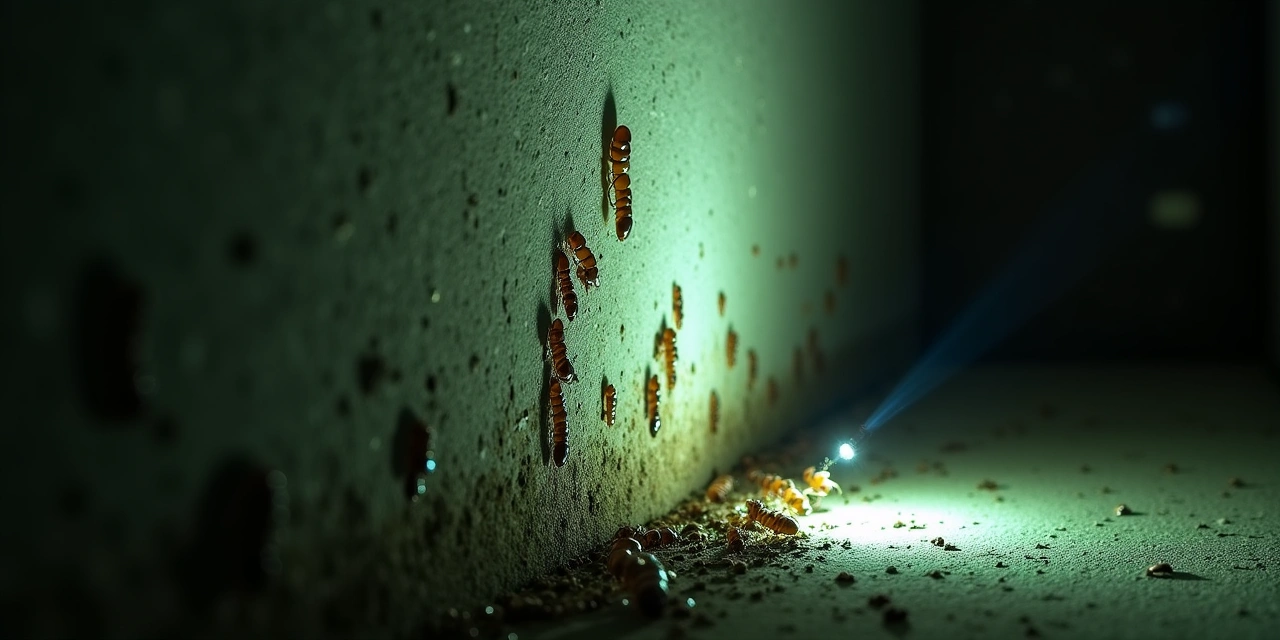
The inspector looks for mud tubes on foundation walls (the primary indicator of Eastern subterranean termite activity), damaged wood, active termites in wood or soil samples, swarmer wings near potential entry points, and moisture conditions that elevate risk.
In Scarsdale's older homes (particularly the pre-1960 Tudor-style properties common in the Heathcote and Quaker Ridge sections) the inspector pays particular attention to: wood beam ends resting in concrete pockets (a design feature of that era that creates direct wood-to-masonry contact), fieldstone foundation walls with organic fill behind them, and areas where original slate or shake roofing has created moisture infiltration over decades.
The inspection report will note whether activity is active or historical, the extent and location of any damage found, and the recommended treatment approach. For homes with no current activity but elevated risk, the report will typically recommend a monitoring program. For homes with confirmed activity, it will outline treatment options, most commonly a Sentricon bait station system for ongoing colony elimination or a liquid soil treatment for immediate perimeter protection. For a full breakdown of what each approach involves, our termite control page covers both methods in detail. For a step-by-step walkthrough of what a Westchester inspection covers and how to prepare, see our Termite Inspection Westchester guide.
Protecting Scarsdale's Older Homes Long-Term
The highest-risk properties in Scarsdale for termite activity are not necessarily the oldest homes. They are the homes with the conditions termites require: moisture access, wood near soil, and gaps in the foundation seal. A 1920s Tudor with an intact waterproof basement and no wood-to-soil contact carries lower risk than a 1980s colonial with planter boxes built against a wood sill plate.
Annual termite inspections are the most cost-effective form of protection for any Westchester homeowner. Termite damage is almost never covered by standard homeowners insurance policies; it is classified as a preventable condition. The average cost of termite damage remediation in Westchester County (including structural repair and treatment) is significantly higher than five or ten years of annual inspection and monitoring costs combined.
If your home has not had a termite inspection in the past 12 months, swarm season is the most natural and time-appropriate moment to schedule one. The question an inspector answers is not just whether you have termites now. It is whether your property's conditions will produce an infestation in the next two to five years, and what to do about it before that happens.
FAQ: Termite Swarm Season in Westchester County
What does a termite swarm look like?
A termite swarm looks like a sudden emergence of hundreds to thousands of winged insects from a crack in the foundation, a gap around a window, or from the soil near the structure. Swarmers have two pairs of wings of nearly equal length that they shed quickly after flight. You will often find piles of discarded wings near windowsills or along baseboards within hours of the swarm. Swarmers are poor fliers and cluster near light sources.
When is termite swarm season in Westchester County?
Eastern subterranean termite swarms in Westchester County typically occur from late March through June, with peak activity in April and May. Swarms are triggered by warm temperatures (above 70°F), high humidity, and often follow a rain event. A single colony swarms once per year, typically in the morning on a warm, sunny day after rainfall. Indoor swarms from established colonies can occur anytime the interior temperature reaches swarm-triggering levels.
Is one termite swarmer inside the house a big deal?
Yes. Finding even a single termite swarmer inside your home is significant. Swarmers originate from established colonies. They are the reproductive caste produced only after a colony has matured for three to five years and contains tens of thousands of workers. A swarmer found inside means either an established colony has access to your home's interior, or a subterranean colony beneath the structure has reached reproductive maturity. Either scenario warrants immediate professional inspection.
How long does termite treatment last?
Sentricon bait station systems provide continuous ongoing protection as long as bait stations are maintained through annual monitoring visits. Liquid barrier treatments with professional-grade termiticide typically last 5 to 10 years depending on the product and soil conditions. Wood treatment products like borate applications are permanent if the wood remains dry. No single-application treatment provides lifetime protection without some form of monitoring.
Can I treat termites myself?
Consumer termite products are not effective against established Eastern subterranean termite colonies. Subterranean termites live in the soil and travel through hidden pathways; surface applications do not reach the colony. Professional treatment requires either a full soil treatment with professional-grade termiticide or installation of a monitored bait station system. Attempting DIY treatment on an active infestation typically delays effective intervention while the colony continues expanding.
Written by
Michael Corsetti
Structural Pest Control Specialist
Specializing in wood-destroying insect identification, structural damage assessment, and integrated treatment programs for Westchester County's historic residential stock.
Keep Reading
Related Articles

How to Tell Carpenter Ants from Termites: A Scarsdale Homeowner's Guide
Physical differences, damage patterns, and the one field test that tells them apart immediately. Before you call for treatment.
Termite Control & Sentricon Protection for Scarsdale Homes
Professional termite inspection, Sentricon bait station installation, and annual monitoring programs for Westchester County homeowners.
Warning Signs of Termite Damage in Westchester Homes
The visual cues that indicate termite activity: mud tubes, hollow-sounding floors, and more. What to look for before damage becomes structural.