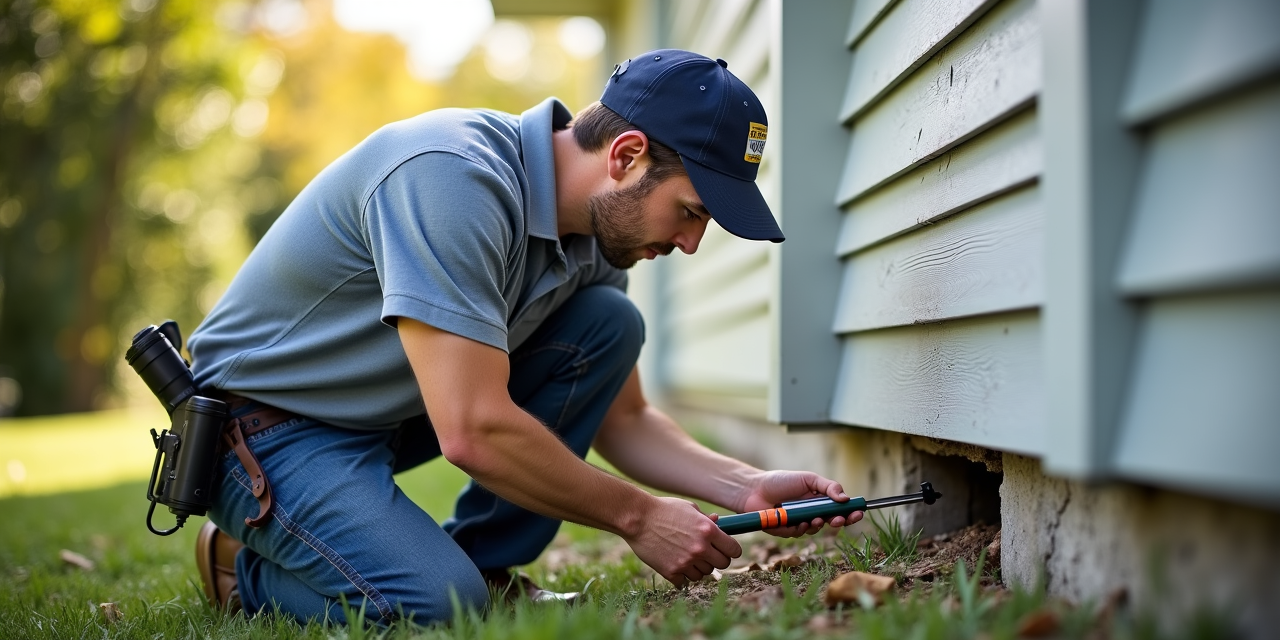
Homeowners shopping for termite inspections often expect a significant fee up front. The reality: most pest control companies in Westchester County perform termite inspections at no charge when the homeowner is considering treatment. Standalone inspections with no service discussion run $75 to $150. Real estate WDI inspections for mortgage processing typically run $75 to $125 and include a formal report.
But the inspection fee is almost never the most important number here. What matters is what the inspection finds and what happens next. A free inspection that reveals a termite problem results in a treatment proposal with a significantly larger number. Understanding both the inspection process and the decision that follows it is what this article is for.
Termite Inspection Cost at a Glance
| Inspection Type | Typical Cost | What You Get |
|---|---|---|
| Pest control company consultation | Free | Visual inspection, verbal findings, treatment proposal if needed. No formal report. |
| Standalone inspection (no service commitment) | $75–$150 | Visual inspection, written summary of findings. No treatment proposal unless requested. |
| Real estate WDI report (NPCA-1) | $75–$125 | Formal written report on standardized form. Required by most mortgage lenders. Documents presence or absence of wood-destroying insects. |
| Termite inspection with moisture testing | $100–$200 | Standard visual inspection plus moisture meter readings at sill plates and floor joists. Useful for older homes or suspected water intrusion. |
A note on the free inspection model: it is standard practice in the pest control industry, not a gimmick. Companies invest time in the inspection in exchange for the opportunity to present a treatment proposal. You are under no obligation to use the same company for treatment. Getting two or three inspection-and-quote combinations from different companies is entirely reasonable and gives you comparison data on both the findings and the pricing.
What a Thorough Termite Inspection Actually Covers
This is where the quality difference between companies shows up. A proper termite inspection is not a five-minute walk-through of the basement. It is a systematic check of every accessible area where termites or termite damage could exist. Here is what it should include:
-
1Exterior perimeter Inspector walks the full exterior, checking for mud tubes on foundation walls, wood-to-soil contact (mulch piled against siding, deck posts in contact with soil), and landscape conditions that create moisture next to the structure.
-
2Basement or crawl space This is where most Eastern subterranean termite activity is found first. Inspector checks sill plates, band joists, and floor joists for mud tubes, frass, damaged wood, and moisture staining. Crawl spaces require physical entry and a flashlight.
-
3Foundation walls (interior) Mud tubes often run vertically up concrete or block foundation walls from the soil below. Inspector checks all accessible foundation walls, including behind stored items when possible.
-
4Interior at grade level First-floor areas, particularly around plumbing penetrations, window frames at grade, and areas where wood meets concrete (door thresholds, framing around garage doors). These are common entry points.
-
5Garage Garage slab perimeter, framing above the slab, and any wood touching concrete. Attached garages are a common termite entry point because the slab-to-wall junction is often not chemically treated.
-
6Attic (if accessible) Less common entry point for Eastern subterranean termites but valuable for detecting evidence of past drywood termite activity, wood-boring beetles, or moisture damage that creates favorable conditions.
A complete inspection on a 2,000 sq ft Westchester home takes 30 to 60 minutes. If an inspector wraps up in under 20 minutes, they did not check everything. The basement and crawl space alone should take 15 to 20 minutes on a properly thorough inspection.
What Inspectors Look For: Signs vs. Conducive Conditions
- Live termites (workers or swarmers)
- Mud tubes on foundation or joists
- Damaged or hollow-sounding wood
- Frass (termite droppings) near wood
- Discarded swarmer wings at windowsills
- Wood-to-soil contact at foundation
- Mulch piled against siding
- Moisture-damaged sill plates
- Leaking pipes or poor drainage at base
- Firewood stored against the house
- Prior mud tubes (past activity)
Conducive conditions don't mean termites are present. They mean the risk is elevated and conditions should be corrected regardless of active infestation.
When You Need a Termite Inspection
Three situations make a termite inspection the right call immediately:
You saw swarmers. Finding winged termites, discarded wings, or a swarm event anywhere in or around your home warrants inspection within days. Not weeks. Swarmers indicate a mature colony that has been present for three to five years. The colony that produced them has been feeding on your structure during that entire period.
You are buying or selling a home. Most mortgage lenders in New York require a current WDI report dated within 90 days of closing. Buyers benefit from scheduling this early in the due diligence period so findings can be negotiated into the purchase contract if needed. Sellers benefit from knowing what the inspector will find before the buyer's inspector does.
You have not had one in over a year. Annual inspections are the standard recommendation for Westchester County homes. Eastern subterranean termites are active year-round in the soil here. A colony can establish and begin causing damage without any above-grade visible signs for 12 to 24 months. Annual inspection is the only way to catch this before significant damage occurs.
A general home inspector checks structural and mechanical systems. Most are not licensed pest control applicators. When a home inspector notes "evidence of termites" in a report, that triggers the need for a separate WDI inspection by a NY DEC-licensed pest control company. These are two different professionals with different credentials and different scopes.
The WDI Report: What Real Estate Buyers and Sellers Need to Know
A WDI report (Wood Destroying Insect report), also called an NPCA-1 form, is a standardized document that NY DEC-licensed pest control companies complete after a termite inspection. It covers four categories of wood-destroying insects: termites, wood-boring beetles, carpenter ants, and carpenter bees.
The report notes whether the inspector found visible evidence of active infestation, evidence of previous infestation, or conducive conditions. It does not state whether damage exists or estimate repair costs. That is outside the scope of a WDI report.
- Live termites observed
- Active mud tubes present
- Live or active wood-boring beetle galleries
- Active carpenter ant colony evidence
- Prior (inactive) mud tubes
- Old wood-boring beetle exit holes
- Conducive conditions (wood-soil contact, etc.)
- Previously treated areas
For real estate transactions, a finding of active infestation almost always requires treatment before closing. A finding of previous infestation with no current activity is noted but rarely blocks a transaction, though buyers often request a price concession to cover future monitoring or treatment costs.
What Happens After the Inspection
Two paths:
No evidence found. The inspector documents the clean inspection and notes any conducive conditions. For a general consultation, you receive recommendations on correcting those conditions (remove wood-to-soil contact, redirect downspouts, ventilate crawl space). For a real estate WDI report, you receive the signed form for the transaction file. Annual re-inspection is recommended.
Evidence found. The inspector documents findings with photos, notes the location and extent of activity, and prepares a treatment proposal. In Westchester, the two primary treatment options are liquid termiticide barrier application ($800 to $2,500) and Sentricon bait station installation ($1,200 to $3,000). The right choice depends on the structure, the extent of infestation, and access considerations. Ask the inspector to walk you through both options and explain why they are recommending one over the other for your specific situation.
Choosing the Right Inspector
NY DEC requires that anyone performing termite inspections for compensation hold a pesticide applicator license, specifically in category 7B (Wood Destroying Organisms). Ask to see the license. It is not an unusual or rude request. A licensed company should produce it without hesitation.
Beyond licensing, look for:
- Willingness to enter the crawl space, not just glance at it from the access hatch
- Use of a flashlight and probing tool, not just a visual walk-through
- Written documentation of all findings, not just a verbal summary
- Clear explanation of the difference between active infestation and conducive conditions
- Treatment proposals that explain method selection, not just price
- References available for termite treatment work
Termite Inspection vs. Termite Monitoring
These are not the same thing, and the distinction matters for budgeting.
A termite inspection is a point-in-time evaluation. The inspector visits, documents what is present, and leaves. It tells you about conditions on the day of the inspection.
Termite monitoring is an ongoing program, typically involving Sentricon bait stations installed around the perimeter of the home. A technician checks the stations on a scheduled basis (usually every 3 to 6 months) and documents activity or consumption. Monitoring catches new termite pressure as it develops, before it becomes an established infestation. Annual inspection cost: $0 to $150. Annual monitoring program cost (after initial Sentricon installation): $300 to $500. For homes with prior termite history or high-risk profiles (older construction, heavy tree cover, moisture issues), monitoring is worth the additional investment.
Schedule a Termite Inspection in Westchester County
Licensed NY DEC 7B inspectors. Thorough inspections with written documentation. Free for homeowners considering treatment.