This content is for informational purposes only and does not constitute professional pest control advice. Pest situations vary by property, severity and species. Contact a licensed pest control professional for an assessment specific to your home. Pristine Pest Control holds NY DEC License 7A (General) and 7B (WDO), serving Scarsdale and Westchester County.
Professional Pest Exterminator vs DIY: When to Call the Pros
Most people try the $30 spray before they call anyone. That is fine for the right problem. The issue is knowing which problem you actually have, because the difference between a minor nuisance and an established infestation changes everything about whether DIY saves you money or costs you more.
Michael Corsetti
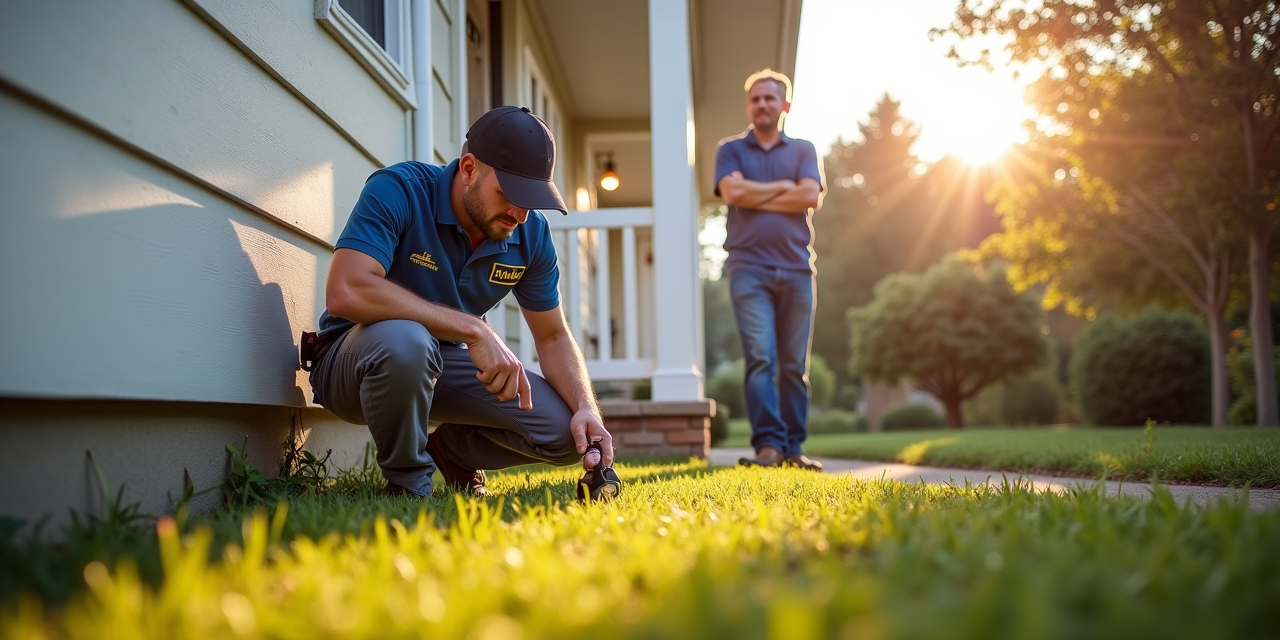
The pest control industry calls it "the DIY spiral." A homeowner spots a cockroach. They buy a can of spray. They spray the cockroach they saw. Two weeks later there are more cockroaches, not fewer. They buy a stronger product. Then another. By the time they call a professional, they have spent $80 to $120 on things that did not work, and the infestation is larger than when they started.
This is not a failure of effort. It is a mismatch between the tool and the problem. Consumer pest products are designed for light, surface-level pest activity. They kill what they touch. They do not reach nests, colonies, or egg masses. For an established infestation, that is like bailing a boat that still has a hole in it.
Knowing when DIY is appropriate and when it is not is worth understanding before you buy anything.
Why DIY Pest Control Fails (and When It Does Not)
DIY pest control is not inherently ineffective. It is situationally effective. For light ant activity along a single entry point, a bait product or targeted spray can work fine. For pantry moths caught in the first week before larvae spread to multiple shelves, proper disposal and prevention can resolve the issue completely. For the occasional spider in the basement, a perimeter spray or glue trap is entirely sufficient.
The problem is that most people do not treat pests at the first sign of a single insect. They treat when they have noticed them regularly. By that point, you are dealing with an established population, not an isolated incident.
Consumer sprays have three core limitations.
First, they only work on contact or on surfaces the target pest walks across. Roach colonies live behind walls, inside cabinet voids, and under appliances. A spray kills the foragers you see while the colony continues producing at full speed behind the baseboard.
Second, concentration matters. Professional-grade pesticides are formulated at concentrations not available to consumers over the counter. The products you buy at a hardware store are diluted versions of the same chemical families, but that dilution matters in how long residual effects last and how deeply they penetrate harboring sites.
Third, many common pest species have developed meaningful resistance to consumer-grade products. German cockroaches, in particular, have shown resistance to pyrethroids (the most common active ingredient in consumer sprays) in numerous documented studies. Using the same product class repeatedly on a resistant population selects for the most resistant individuals and can make the infestation harder to eliminate over time.
When You Need a Professional Exterminator
Some pest situations are not judgment calls. They require a professional, period.
Bed bugs. Consumer products for bed bugs are consistently ineffective at the population level. Bed bugs are cryptic, hide in cracks that consumer sprays cannot reach, and their eggs are highly resistant to chemical treatment. The only reliable methods are professional heat treatment (heating the entire space to above 120 degrees Fahrenheit) or targeted professional chemical treatment using products not available to consumers. Attempting DIY bed bug treatment typically spreads the infestation to other rooms as bugs flee treated areas.
Termites. Eastern subterranean termites, the species active throughout Westchester County, live in the soil and travel through mud tubes to reach wood. A surface treatment does nothing. Professional termite control requires either a full soil treatment with professional-grade termiticide applied to the perimeter or a monitored bait station system like Sentricon. For more on what a professional termite inspection covers, see our termite control and inspection page.
German cockroaches. They reproduce faster than most people expect. A single female and her offspring can produce up to 30,000 cockroaches in one year under ideal conditions. German cockroaches require professional-grade gel baits, insect growth regulators, and often multiple treatment visits to achieve elimination. Consumer products rarely make a dent and, as noted, can worsen resistance issues.
Rodents with active entry points. Snap traps and poison bait stations can reduce the visible population, but they do nothing to address the entry point. If mice are getting in, killing individual mice is a short-term fix. Professional rodent control includes a full exclusion assessment: identifying and sealing entry points to stop new mice from entering while reducing the existing population. Without exclusion, the problem recurs every season.
Any infestation that has spread beyond one room. Scope matters. One ant trail coming in under a door is a targeted problem. Ants in the kitchen, bathroom, and garage is a colony with multiple access points and likely a nest inside the wall or foundation. The first scenario has a targeted solution. The second requires a professional inspection to map the full extent before treatment.
Cost Comparison: DIY vs Hiring a Professional
The cost math is not intuitive until you see the full picture. A single professional treatment for general pest control in Westchester County typically runs $150 to $400 for a standard treatment, depending on the pest, property size, and method used. That looks expensive compared to the $35 spray on the hardware store shelf.
But most homeowners who attempt DIY on an established infestation do not make one attempt. They make two, three, or four. By the time they call a professional, they have spent the equivalent of half a professional treatment on products that failed, and the infestation has had additional weeks to grow.
For serious pests, the delay cost compounds further. A German cockroach infestation that could have been resolved with one or two professional visits in March becomes a multi-visit, extended treatment scenario by June because the population grew while consumer products were failing to contain it. Bed bugs spread to adjacent rooms during the weeks spent trying consumer mattress sprays. Termites cause several hundred additional dollars in wood damage for every month treatment is delayed.
The professional route is almost always cheaper when you account for the full cost of a failed DIY attempt.
Why Local Exterminators Matter in Westchester County
The pest pressure in Westchester County is not the same as it is in rural upstate New York or in a Manhattan apartment building. The mix of older housing stock (much of Scarsdale's residential inventory dates to the 1920s through 1950s), dense tree canopy, and proximity to wooded corridors creates specific conditions that local pest control companies understand from years of field experience in this exact geography.
National franchise operations work from standardized treatment protocols designed to cover a wide range of conditions. A local exterminator in Westchester has treated the specific cockroach pressure common in multi-family buildings in White Plains, understands the termite risk profile in the fieldstone-foundation homes throughout Scarsdale and Bronxville, and knows which mosquito breeding sites are most productive along the Bronx River corridor. That local context matters in treatment design.
Local companies also carry a different type of accountability. A national franchise that loses a customer in Westchester replaces them with another. A local company built on referrals from Scarsdale, Larchmont, and Pelham homeowners over decades operates with a direct stake in the outcome of every job. That dynamic does not guarantee quality, but it does change the incentive structure.
Red Flags When Hiring a Pest Control Company
The pest control industry is licensed in New York State, but licensing does not prevent bad actors. These are the warning signs that matter.
They quote before they inspect. Legitimate pest control companies inspect the property before naming a price. The inspection determines the pest, the extent of the infestation, and the appropriate treatment method. A company that quotes over the phone without seeing the property is either guessing or running a high-volume, low-service model.
Pressure to sign a long-term contract immediately. Some ongoing pest control plans are genuinely useful. But pushing a homeowner to sign a multi-year contract at the first visit, before they have seen any treatment results, is a sales tactic, not a service recommendation.
Vague treatment descriptions. A professional can tell you exactly what product they plan to apply, in which areas, at what concentration, and what the reentry time is. If a technician cannot explain what they are using and why, that is a problem.
No written report after treatment. A professional visit should produce a written record: what pest was identified, where activity was found, what was applied, and what the follow-up plan is. Any company that treats and leaves without documentation is not running a professional operation.
No verifiable license. In New York State, all commercial pesticide applicators must hold a Department of Environmental Conservation (DEC) pesticide applicator license. Ask for the license number and verify it on the DEC's public database before treatment begins. A company that cannot or will not provide this information should not be operating in your home.
Get a Free Assessment Before You Decide
The right first step for most pest situations is not buying a product. It is getting eyes on the problem by someone who can tell you what you actually have. Our general pest control service for Scarsdale and Westchester County includes an initial inspection that identifies the pest, maps the infestation extent, and gives you a specific treatment recommendation before you commit to anything.
If it turns out to be something you can handle yourself, we will tell you that. If it requires professional treatment, you will know exactly what that treatment involves and why.
FAQ: Professional Exterminator vs DIY
Can I handle a pest infestation myself with store-bought products?
For very light pest activity, like a single ant trail entering from a known gap or a few pantry moths caught early, consumer products can work. The problem is most people treat by the time they have an established infestation, not an isolated incident. At that stage, store-bought sprays kill visible insects but do not reach nests, colonies, or egg masses. German cockroaches, bed bugs, termites, and rodent infestations all require professional treatment at any population level beyond the earliest detection stage.
How much does a professional exterminator cost compared to DIY?
A single professional treatment typically runs $150 to $400 for general pest control, depending on pest type, property size, and treatment method. DIY products for the same scenario often cost $30 to $80 per attempt. The math appears to favor DIY until you factor in failure rate. Most homeowners who attempt DIY on an established infestation make two to four attempts before calling a professional, spending $120 to $320 on products that did not work before paying for professional service anyway. For serious infestations like bed bugs or termites, the cost of delayed professional treatment almost always exceeds the cost of calling immediately.
What pests should you never try to handle yourself?
Bed bugs, termites, German cockroaches, and wildlife (raccoons, squirrels, bats) should not be treated with DIY methods. Bed bugs require either heat treatment reaching 120 degrees Fahrenheit throughout the structure or targeted chemical treatment with professional-grade products. Termites live in the soil and cannot be reached with surface treatments. German cockroaches have developed resistance to many consumer-grade insecticides and reproduce faster than consumer products can suppress them. Wildlife removal requires proper exclusion techniques and, for certain species, state licensing.
How do I find a trustworthy local exterminator in Westchester County?
Start by verifying New York State DEC pesticide applicator licensing, which is required for all commercial pest control operators in the state. Ask specifically about the license category (7A for general pest control, 7B for termites). Request proof of liability insurance. Ask whether the technician who will treat your home is a licensed applicator or a technician working under a license. Local companies with long tenure in Westchester County understand the region's specific pest pressures better than national franchise operators who rotate technicians across territories.
What are the red flags that a pest control company is not reputable?
Five warning signs: pressure to sign a long-term contract before completing an inspection, vague pricing with no written estimate, inability to name the specific pesticide they plan to apply, no written report after the visit, and technicians who cannot explain what pest they identified or why their chosen treatment addresses that pest's biology. Reputable companies inspect before they quote, provide written treatment plans, and explain their approach in terms you can verify.
Written by
Michael Corsetti
Structural Pest Control Specialist
Specializing in wood-destroying insect identification, structural damage assessment, and integrated treatment programs for Westchester County's historic residential stock.
Keep Reading
Related Articles
Termite Swarm Season 2026: What Scarsdale Homeowners Must Do Before May Ends
NPMA forecasts heightened termite activity in 2026. What a swarm actually means and what to do in the first 24 hours.
General Pest Control Services for Scarsdale and Westchester County
Integrated pest management for year-round protection. Licensed applicators, written treatment plans, and a service guarantee.
DIY Pest Control vs Professional Exterminator: Cost Breakdown
A direct cost comparison across the most common pest scenarios in Westchester County homes.