Clothes Moth Control in Westchester County: Protecting Wool, Cashmere & Natural Fibers
Clothes moths are the silent destroyers of wool, cashmere, and silk. By the time you notice the damage, the larvae have already moved on. Learn to find them, eliminate them, and protect your wardrobe.
Michael Corsetti
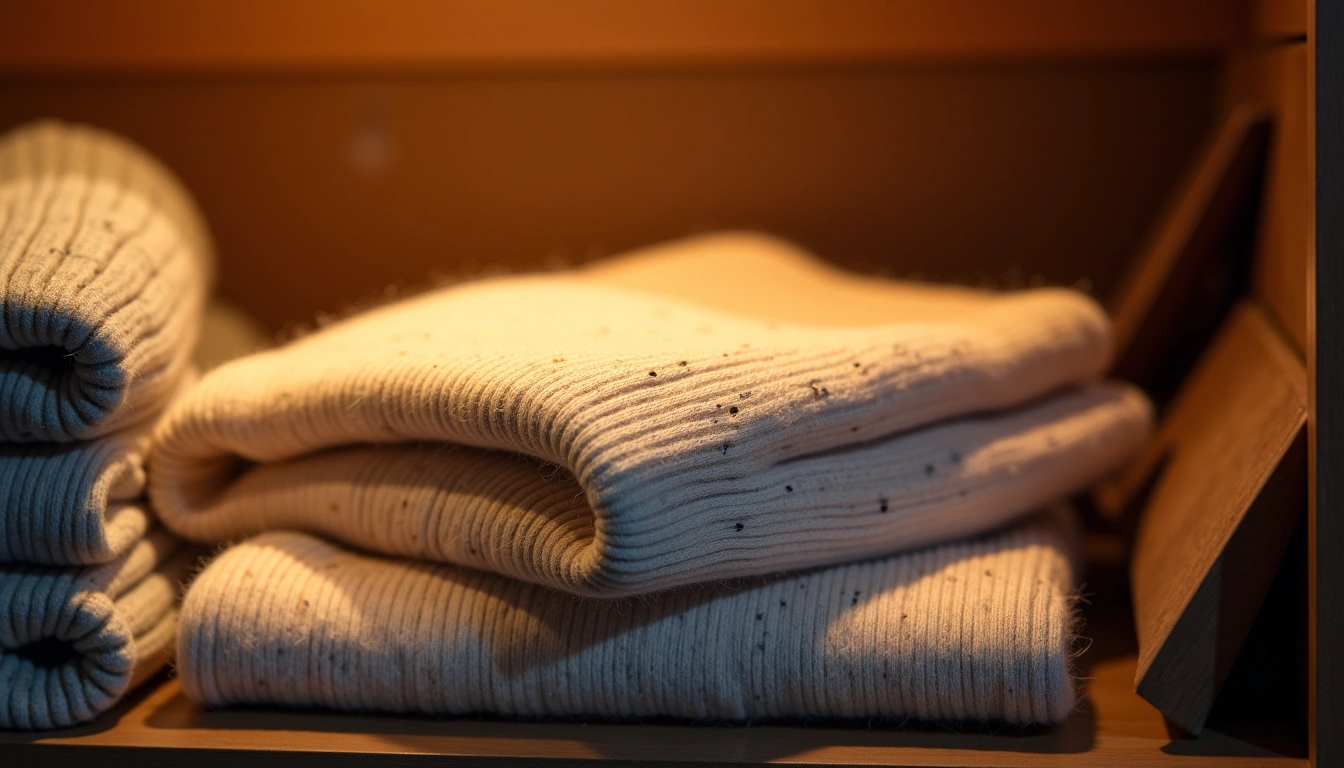
Two Species Damaging Westchester Wardrobes
Westchester homeowners who discover holes in wool, cashmere, or silk items are almost always dealing with the Webbing Clothes Moth (Tineola bisselliella) or the Casemaking Clothes Moth (Tinea pellionella). Both are small (about 1/2 inch wingspan), pale buff-colored, and strongly avoid light — which is why they are so rarely seen despite causing significant damage each season.
It is the larvae that cause all the destruction, not the adult moths. Adults do not eat. Females lay 40 to 50 eggs directly on natural fiber items, and the resulting larvae feed on keratin — the protein in wool, cashmere, silk, fur, and feathers. Synthetic fabrics are not affected.
Webbing vs. Casemaking Clothes Moth
| Feature | Webbing Clothes Moth | Casemaking Clothes Moth |
|---|---|---|
| Evidence | Silky webbing mats on fabric, damaged areas have webbing present | Small portable case carried by larva — looks like a fiber-colored grain of rice |
| Preferred fabrics | Wool, cashmere, angora, felt | Mixed fibers, fur, feathers |
| Adults | No spots on wings, run rather than fly | Three dark spots on each wing |
Wardrobe Audit Tool
Systematically inspect your wardrobe to assess risk and identify any active damage.
Clothes Moth Wardrobe Audit
Elimination Process
The effective process: freeze all affected items for 48 hours at 0°F or heat them at 120°F for 30 minutes (kills all life stages), thoroughly vacuum the closet including baseboards and corners, apply a residual insecticide to closet surfaces and drawer interiors, and install pheromone monitoring traps to confirm elimination.
Pheromone traps (about $15 at hardware stores) catch adult male clothes moths, confirming whether the population is eliminated. If traps still catch moths after three weeks, professional treatment is warranted.
Our general pest control service addresses clothes moth infestations as part of comprehensive interior management. For related stored-product pest issues, see our pantry pest guide. Contact Us to schedule.
Written by
Michael Corsetti
Board-Certified Entomologist
Cornell-educated entomologist with 20+ years in urban pest management.