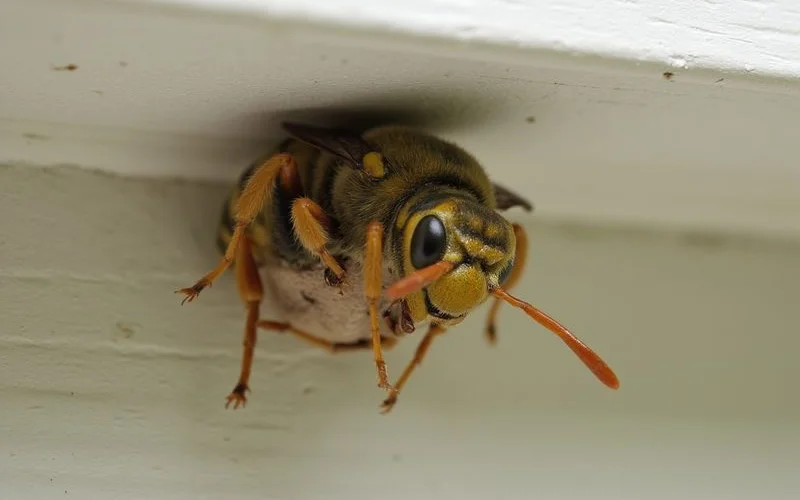
Understanding Wasps and Hornets
Scarsdale homeowners face encounters with several stinging insect species, including paper wasps, yellowjackets, bald-faced hornets, and hornets. Understanding their behavior is essential for safe management.
Unlike honeybees, wasps and hornets can sting multiple times. Their nests are annual—the colony dies in fall, but fertilized queens overwinter and establish new colonies each spring.
Common Nest Locations
- Under eaves and roof overhangs
- Wall voids and attic spaces
- Shrubs and trees
- Under decks and porch ceilings
- Underground (yellowjackets)
- Attached to structures like sheds and garages
When They're Most Dangerous
Stinging insects are most aggressive in late summer and fall when:
- Colonies are at maximum size (thousands of workers)
- Natural food sources decline
- Queens stop producing new workers
- Nest disturbance triggers defensive response
Professional Removal Process
Inspection
Technicians locate all nests, identify species, and assess the best removal approach based on nest location, size, and client circumstances.
Treatment
Professional treatments include:
- Dust insecticides for wall voids and enclosed spaces
- Aerosol sprays for immediate knockdown
- Wasp freeze sprays for aerial nests
- Remediation of nests in accessible locations
Safety Protocols
Our partners wear protective equipment and use specialized tools to safely remove nests without provoking defensive behavior.
Prevention Tips
- Seal entry points into walls and attics
- Install screens on vents and soffits
- Keep outdoor food and drinks covered
- Use sealed trash containers
- Remove fallen fruit from yards
- Inspect your property in early spring for new nests
Frequently Asked Questions
What should I do if stung?
Remove the stinger by scraping (not squeezing), wash the area, apply ice, and monitor for allergic reactions. Seek immediate medical attention if experiencing difficulty breathing, swelling, or dizziness.
Will wasps return to the same location?
Annual colonies die in fall. However, fertilized queens may return to similar areas the following spring to establish new nests.
Are wasps beneficial?
Yes. Wasps are predators that control other insect populations, including caterpillars and flies. However, nests near homes pose unacceptable risks.
Don't Risk Dangerous Stings
Leave nest removal to the professionals. Contact our network of licensed technicians for safe, complete removal.
Related Resources
Learn about stinging insect biology in our glossary.