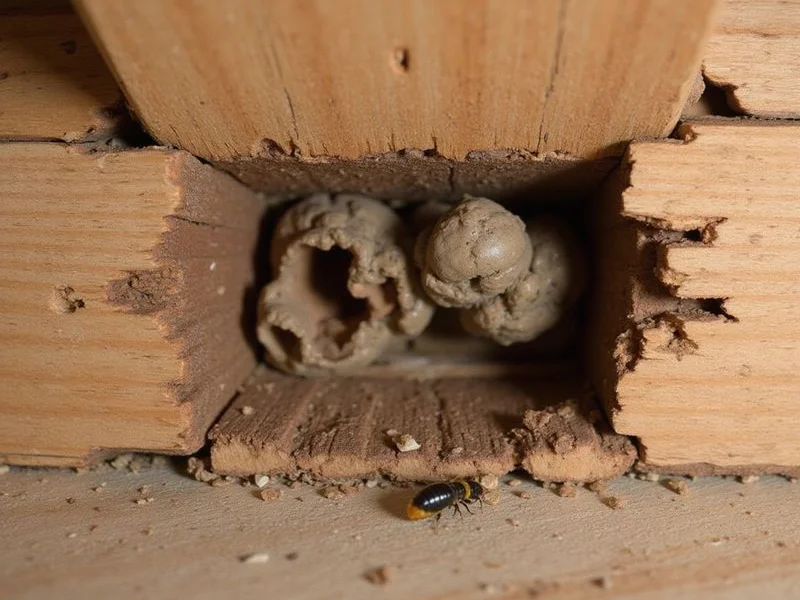
Termite Threats in Scarsdale
Subterranean termites represent the most significant structural pest threat to Scarsdale homes. These commensal insects live underground and seek wood moisture, making our foundation-heavy Tudor and Colonial architecture particularly vulnerable.
Termites cause over $5 billion in damage annually across the United States—and most homeowners insurance does not cover termite damage. Prevention and early detection are far less costly than repairs.
How Termites Enter Your Home
Subterranean termites require soil contact and moisture. They build mud tubes—tunnels made of soil, saliva, and feces—to travel from their underground colony to wooden structures.
Common entry points include:
- Foundation cracks and expansion joints
- Gaps where utility pipes enter the foundation
- Direct wood-to-soil contact (deck posts, porch columns)
- Concrete slabs with inadequate vapor barriers
- Damaged or deteriorated foundation walls
Signs of Termite Activity
Termites work silently inside wood. By the time you notice signs, significant damage may already exist:
- Mud tubes: Small tunnels on foundation walls (termite highways)
- Swarmers: Winged termites emerging in spring (reproductive stage)
- Discarded wings: Pile of translucent wings near windowsills
- Wood damage: Wood that sounds hollow when tapped
- Frass: Small pellets (termite droppings) near entry points
Professional Termite Solutions
Sentricon Always-Active Bait System
The Sentricon system represents the gold standard in termite management. Unlike liquid treatments that create a chemical barrier, Sentricon uses bait stations placed around your property:
- Worker termites feed on bait and return to colony
- Bait is transferred through pheromone communication
- Entire colony eliminated, including the queen
- Continuous monitoring and protection
- EPA-registered and environmentally responsible
Liquid Termite Barriers
Traditional residual spray treatments create a chemical barrier around your foundation. Modern pyrethroid-based products provide effective, long-lasting protection when properly applied to:
- Foundation walls (both interior and exterior)
- Expansion joints and utility penetrations
- Supporting structures like piers and posts
- Vapor barriers beneath concrete slabs
Protecting Your Investment
Your Scarsdale home is likely your largest investment. Termite damage can:
- Compromise structural integrity
- Reduce property value significantly
- Require extensive, expensive repairs
- Cause difficulty selling your home (WDI inspection failures)
Pre-Construction Protection
For new Scarsdale construction, our partners can install termite bait systems or liquid barriers during construction—providing protection from day one.
Real Estate Transactions
Termite inspections (WDI reports) are commonly required in Westchester County real estate transactions. Our partners provide NPMA-33 compliant Wood-Destroying Insect inspection reports for buyers and sellers.
Frequently Asked Questions
How long does treatment take?
Liquid treatments typically take 2-4 hours. Sentricon installation takes 1-2 hours.
Full colony elimination may take several weeks to months depending on colony size.
Are the treatments safe?
Yes. All products are EPA-registered and applied by licensed technicians following NYS DEC regulations. Your family and pets can safely remain in your home during and after treatment.
What's the difference between Sentricon and liquid treatment?
Sentricon eliminates the colony; liquid treatment prevents new infestations. Our partners may recommend a combination approach for comprehensive protection.
Do I need annual inspections?
Yes. Annual inspections are essential even with protection systems. Early detection of new activity prevents small problems from becoming major repairs.
Get Protected Today
Don't wait until termites cause visible damage. Our network of licensed termite specialists provides comprehensive inspections and customized treatment plans for Scarsdale homes.
Related Resources
Learn about termite biology in our glossary. For comprehensive termite information and control guidelines, see the EPA's Termite Control Guide and NYS DEC Wildlife and Pest Management.