Humane Wildlife Removal: What Westchester Homeowners Need to Know
NYS DEC regulations require humane wildlife removal. Learn what licensed technicians do differently and why DIY trapping can backfire in Westchester.
Sarah Nguyen

The Legal and Ethical Framework
You might think spotting a raccoon in your attic just requires a quick trip to the hardware store for a trap. We see this assumption all the time from homeowners in Westchester and Connecticut. The reality of pest control and wildlife management in our region is far more complex than simply catching an animal and driving it to a nearby park.
New York State enforces some of the strictest wildlife laws in the country. The Department of Environmental Conservation (DEC) dictates exactly how we interact with native species to ensure public safety and ecological balance. Ignorance of these laws does not exempt you from them. Violations can lead to significant fines ranging from $250 to over $2,000 per offense depending on the species and severity.
We handle these regulatory complexities so you don’t have to. Professional involvement protects you from legal liability while ensuring the animal is treated humanely.
New York State Wildlife Regulations
Nuisance Wildlife Control Operators (NWCOs)
Legally, you cannot just hire a handyman to remove wildlife. In New York, any individual charging a fee to manage nuisance wildlife must possess a valid Nuisance Wildlife Control Operator (NWCO) license. This credential requires passing rigorous exams on wildlife biology, state laws, and safe trapping techniques.
Our technicians all hold active NWCO licenses and stay updated on annual regulatory changes. This certification ensures that the methods used on your property are effective and legal.
Species-Specific Regulations
The rules change depending on what animal has moved into your home. We operate under specific protocols for each species to comply with Environmental Conservation Law (ECL).
Raccoons: The “No Relocation” Rule New York State law prohibits the relocation of raccoons beyond the property limits. We must either release the animal on-site after exclusion or humanely euthanize it if it is sick or aggressive. This regulation aims to stop the spread of the “raccoon rabies variant,” which is prevalent in Westchester County. Moving a raccoon also spreads distemper and parasites to new populations.
Bats: Strict Federal and State Protections You cannot legally harm a bat in New York. All bat species are protected, and the Northern Long-eared Bat has specific federal protections due to population collapse from White-Nose Syndrome. We are legally forbidden from performing bat exclusions during maternity season, which typically runs from June 1st through August 15th. sealing an entry point during these months traps flightless pups inside, leading to their death and a legal violation for the homeowner.
Gray Squirrels: Trapping vs. Exclusion Homeowners have slightly more leeway here, but specific rules still apply. While you can remove squirrels causing property damage, the disposal methods are strictly regulated. We focus on exclusion rather than lethal trapping, as this provides a long-term solution without the ethical burden of euthanasia.
Why DIY Wildlife Removal Often Backfires
The Trap-and-Relocate Myth
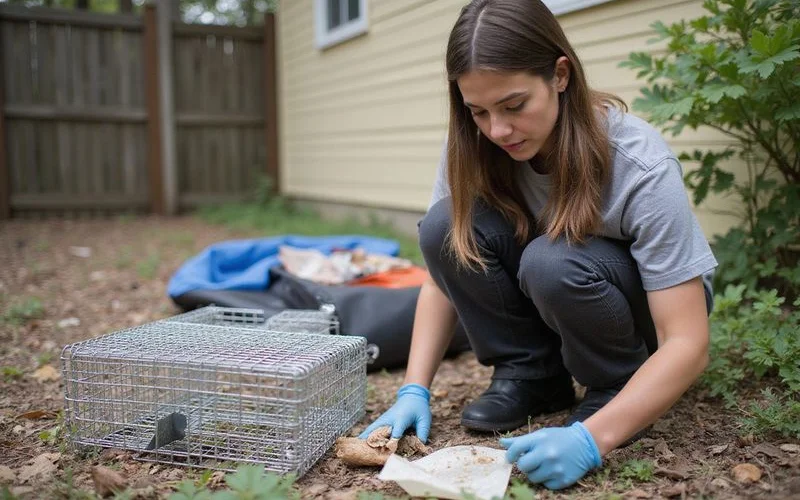
Many homeowners buy a cage trap, catch an animal, and release it five miles away. This sounds humane, but data suggests otherwise. A 2004 study published in the Journal of Wildlife Management found that relocated raccoons suffer mortality rates as high as 75% within the first year. They struggle to find water sources, lack den sites, and are often killed by resident animals defending their territory.
We use on-site exclusion because it allows the animal to remain in its known home range while simply denying access to your structure.
Incomplete Exclusion
The most expensive mistake we see is the “seal-up” done too early. If you close a hole while an animal is still inside, the damage escalates immediately. Raccoons are incredibly strong and will rip through standard roof shingles, plywood, and fascia boards to escape or reach their young.
The Cost of Improper Removal
Comparing the DIY approach to professional exclusion reveals the financial risks involved.
| Feature | DIY Trapping & Sealing | Professional Exclusion |
|---|---|---|
| Material Quality | Standard chicken wire (rusts, tears easily) | 16-gauge galvanized hardware cloth |
| Success Rate | Low (animals often return or learn to avoid traps) | High (physical barrier prevents re-entry) |
| Damage Risk | High (trapped animals cause structural damage) | Low (animals exit passively) |
| Typical Warranty | None | 1-Year to Lifetime Guarantees |
| Hidden Costs | Insulation replacement ($3k+), Roof repair | Included in service proposal |
Health and Safety Risks in Westchester
Disease Vectors in Your Home
Westchester County consistently reports some of the highest numbers of rabid animals in New York State. While most people fear bites, the biological waste left behind by wildlife is often the greater threat.
- Rabies: This viral disease is fatal if untreated. Raccoons are the primary vector in our area. Even handling a cage with a frightened raccoon can expose you to saliva or fluids.
- Raccoon Roundworm (Baylisascaris procyonis): This is a silent danger. A single raccoon latrine in your attic can contain millions of microscopic eggs. These eggs are resistant to common disinfectants and can cause blindness or severe neurological damage in humans if ingested via airborne dust.
- Histoplasmosis: Bat guano supports the growth of Histoplasma capsulatum. This fungus releases spores when disturbed. We use commercial-grade HEPA vacuums and full-face respirators to clean these sites because inhaling the dust causes serious lung infections.
Professional Safety Protocols
We never enter a contaminated attic without proper Personal Protective Equipment (PPE). Standard dust masks from the hardware store do not filter out roundworm eggs or fungal spores effectively. Our team uses Tyvek suits, heavy-duty gloves, and P100-rated respiratory protection to ensure the safety of your household and our technicians.
How Professional Humane Removal Works
Step 1: Comprehensive Assessment
We start by inspecting your home from the roofline to the foundation. A technician looks for rub marks, fur snags, droppings, and entry points as small as a dime. This step includes checking the attic for insulation damage and wiring issues, which occur in over 30% of wildlife infestations.
Step 2: The One-Way Door Strategy
We rarely rely on baited traps. Instead, we install custom-fitted one-way exclusion devices over the primary entry points. These devices utilize a spring-loaded or gravity-based door mechanism. The animal can push the door open to leave for food but cannot push it back open to re-enter.
Common devices we utilize include:
- The Bat Cone: A smooth, angled tube that allows bats to drop out and fly away but prevents them from landing and crawling back in.
- Heavy-Duty Raccoon Excluders: Steel boxes designed to withstand the strength of a 20-pound raccoon.
- Squirrel Repeater Doors: Multi-catch style doors that allow rapid exit for multiple animals.
Step 3: Monitoring and verification
Patience is key during this phase. We typically leave devices in place for 5 to 14 days. During this time, we may use “soft plugs” (wads of paper or tape) on other potential weak spots to verify that no animals are still active inside.
Step 4: Permanent Sealing
Once the animals are gone, we seal the entry point permanently. We do not use spray foam alone, as rodents chew right through it. Our repairs utilize 16-gauge galvanized steel mesh, heavy-duty flashing, and screws rather than nails to ensure the repair holds up against future attempts.
Step 5: Remediation and Cleanup
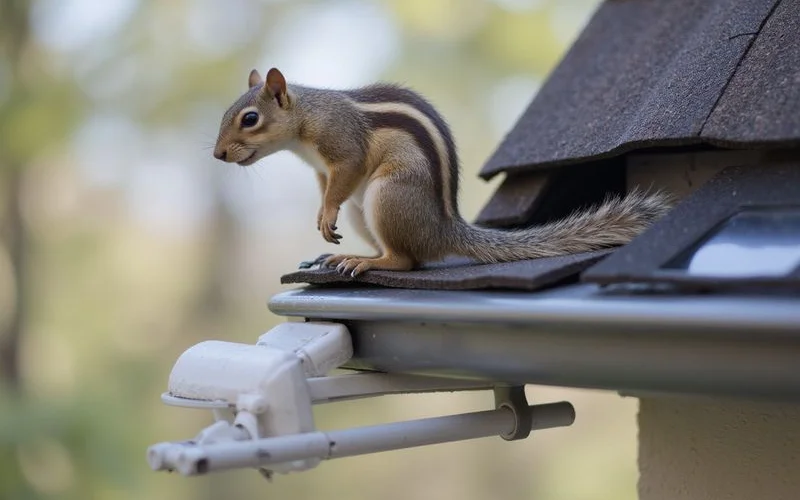
Evicting the animal is only half the battle. We then address the mess left behind. This involves removing soiled insulation, vacuuming droppings, and applying an enzyme-based sanitizer that breaks down organic waste. This step eliminates the pheromones (scent trails) that attract other wildlife to your home.
Seasonal Considerations for Westchester Homeowners
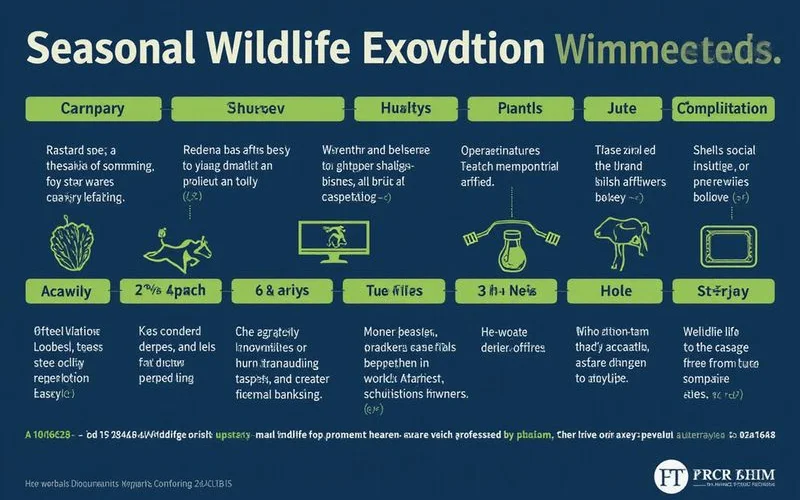
Wildlife behavior changes with the seasons. We adjust our methods based on the reproductive cycles of local species to ensure humane treatment.
Spring (March-May): The Baby Boom
This is the most delicate time for removal. Female raccoons and squirrels are actively birthing litters.
- The Risk: Using a standard one-way door now can separate a mother from her dependent young. She will destroy your roof to get back to them.
- Our Solution: We perform a “kits check” before installation. If babies are present, we use a specialized reunion box to let the mother move them safely.
Summer (June-August): Bat Blackout
Bat colonies are raising flightless pups.
- The Regulation: It is illegal to exclude bats during this window.
- Our Solution: We can seal the lower parts of the home and prep for exclusion, but the main exit points must remain open until August 15th.
Fall (September-November): The Prevention Window
As temperatures drop, mice and squirrels scout for winter shelter.
- The Opportunity: Young animals are grown and mobile.
- Our Solution: This is the ideal time for full-home exclusion services (“critter-proofing”) to prevent winter invasions.
Winter (December-February): The Hunker Down
Animals are less active and stay in attics for warmth.
- The Challenge: Snow on the roof makes inspections difficult, and animals may not leave the attic for days.
- Our Solution: We may use heated traps or specialized nose-cone excluders that function even in freezing conditions.
Protect Your Home the Right Way
Dealing with wildlife requires a balance of compassion, biology, and construction expertise. Pristine Pest employs licensed wildlife biologists and NWCO-certified technicians who specialize in humane wildlife control throughout Westchester County. We follow all NYS DEC regulations, use exclusion-based methods that prioritize animal welfare, and perform permanent repairs that prevent re-entry.
Your home is your biggest investment, and protecting it from wildlife damage shouldn’t be a gamble. From initial assessment through final cleanup, our team handles every aspect of the wildlife removal process professionally and responsibly. If you suspect wildlife in your attic or walls, Contact Us for a thorough assessment. The sooner the problem is addressed, the less damage your home sustains.
Fall is a particularly active scouting period for one species specifically: see our report on why raccoons are testing Westchester rooflines for winter dens right now, and what that means if you wait until spring to check.
Written by
Sarah Nguyen
Licensed Wildlife Biologist
Wildlife biologist specializing in humane removal and LymeShield deployment.
Keep Reading
Related Articles
How Often Should You Schedule Pest Control for Your Home?
Discover the ideal pest control service frequency for Westchester homes. Learn why quarterly IPM visits prevent infestations before they start.
How SMART Digital Pest Monitoring Works and Why It Matters
Anticimex SMART sensors detect rodent activity 24/7 without toxic baits. Learn how wireless pest monitoring technology protects Westchester homes.
How Much Does Termite Treatment Cost in Westchester County?
Get realistic termite treatment pricing for Westchester homes. Compare costs for Sentricon bait stations, liquid treatments, and annual monitoring plans.