Centipedes and Millipedes in Westchester Homes: Are They Dangerous?
Finding a house centipede in your basement is alarming but may actually signal a larger problem. Learn what centipedes and millipedes indicate about your home environment and how to address both.
Michael Corsetti
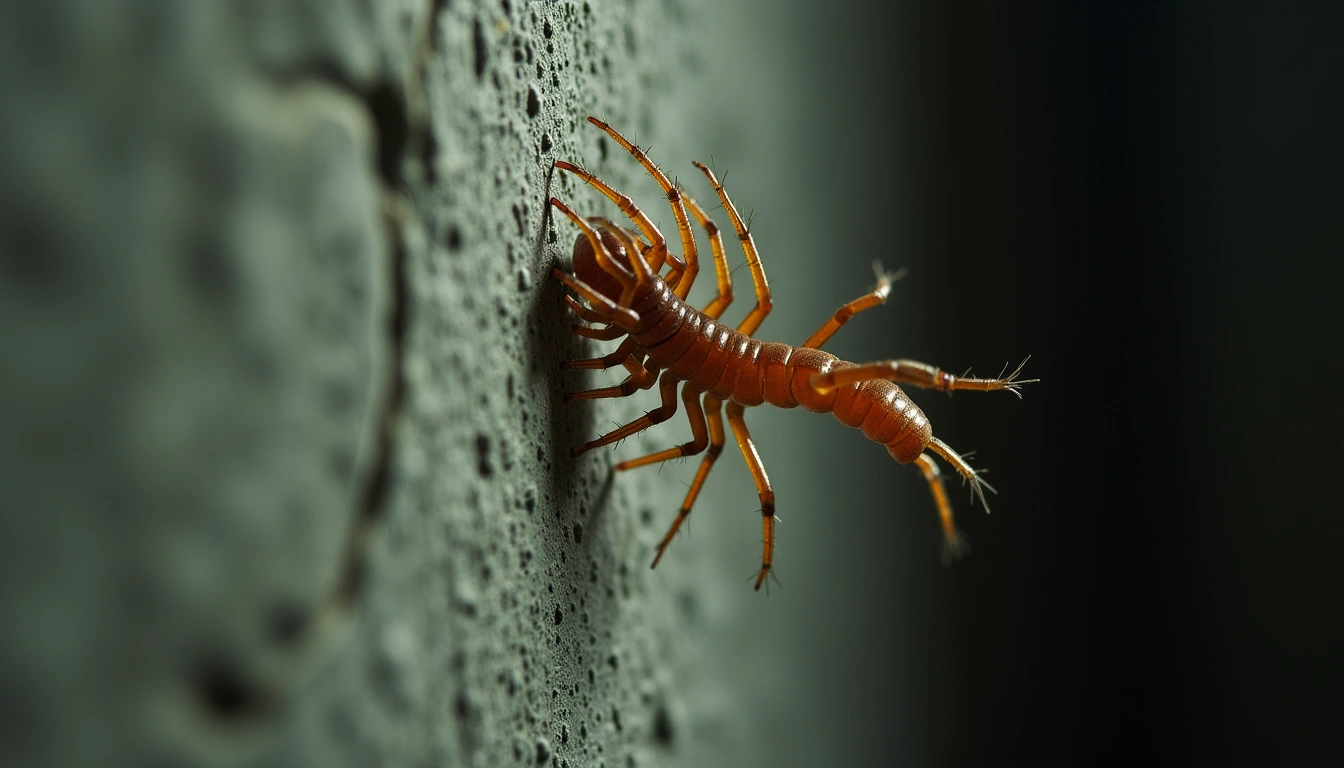
The Most Disturbing Pest That's Actually Helping You
The house centipede (Scutigera coleoptrata) is one of the most visually alarming insects a homeowner can find in their basement. Up to two inches long, with 15 pairs of extremely long legs and the speed to cross a room in under a second, it produces the kind of reaction that sends people immediately to the internet looking for "how to get rid of centipedes."
Here is what most of those search results don't tell you: the house centipede is a predator. It actively hunts and eats cockroaches, silverfish, spiders, earwigs, and other small insects in your home. A single house centipede can consume dozens of insects per week. In entomology circles, they are sometimes called "nature's pest control."
This does not mean you have to coexist with them. But it does mean that a centipede problem is really a symptom problem — something in your home's environment is attracting and sustaining the prey insects that centipedes feed on.
Centipede vs. Millipede: Key Differences
House Centipede
- One pair of legs per body segment
- Moves very fast (predator behavior)
- Flat, elongated body
- Can bite if handled — rarely pierces skin
- Found in damp basements, bathrooms
- Indicator of: prey insects present, high humidity
Danger Level: Very Low
Not a structural pest. Presence indicates underlying pest food source.
Millipede
- Two pairs of legs per body segment
- Moves slowly (detritivore behavior)
- Cylindrical, rounded body; curls when disturbed
- Does not bite; may emit defensive odor/fluid
- Enters homes from outside, especially after rain
- Indicator of: high outdoor moisture, leaf litter near foundation
Danger Level: None
Occasional invader from exterior. Not a structural pest.
What Your Centipede Problem Is Really Telling You
What Is This Pest Indicating?
Effective Control for Both Species
For house centipedes, the effective approach is to address the conditions that sustain their prey population — primarily reducing basement humidity and eliminating the insects they feed on. Residual insecticide applications along basement perimeters reduce both centipedes and their prey simultaneously.
For millipedes, the solution is exterior: remove leaf litter and organic debris from the foundation perimeter, correct drainage so water flows away from the structure, and seal entry points. A perimeter insecticide application in late September — just before the fall rain-driven invasion period — can significantly reduce entry rates.
Our general pest control service addresses both centipedes and the underlying conditions that attract them. For related moisture-driven pest issues, see our guide on overwintering insects in Westchester homes.
Written by
Michael Corsetti
Board-Certified Entomologist
Cornell-educated entomologist with 20+ years in urban pest management.